
HOW GORILLA TOURISM CAN SAVE THE ENDANGERED APES AND BOOST LOCAL ECONOMIES
Gorilla Tourism in East Africa
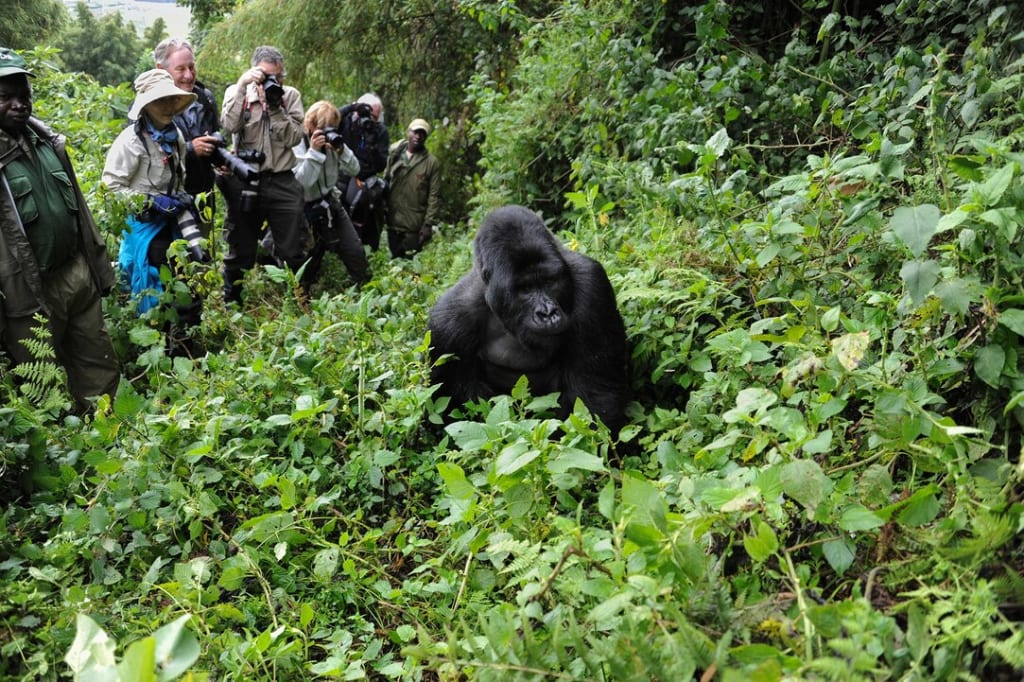
Gorillas are one of the most endangered animals in the world, facing threats such as habitat loss, poaching, disease, and human-wildlife conflict. However, there is a way to help protect these magnificent creatures and their habitats while also supporting the livelihoods and well-being of the local communities: gorilla tourism.
Gorilla tourism is a form of ecotourism that involves visiting gorillas in their natural habitats and observing them from a safe distance. Gorilla tourism is mainly practiced in three countries: Uganda, Rwanda, and the Democratic Republic of Congo (DRC), where the remaining populations of mountain gorillas and eastern lowland gorillas live.
Gorilla tourism has many benefits for both wildlife and people. Here are some of them:
Gorilla Tourism Benefits for Wildlife
• Gorilla tourism generates revenue for conservation. Gorilla tourism is a major source of income for the national parks and conservation organizations that protect the gorillas and their habitats. For example, in Uganda, a gorilla permit costs $700 USD per person per day, and 20% of this fee goes to community development projects around the parks. In Rwanda, a gorilla permit costs $1,500 USD per person per day, and 10% of this fee goes to community conservation initiatives. In DRC, a gorilla permit costs $400 USD per person per day, and part of this fee supports anti-poaching patrols and ranger salaries https://www.worldwildlife.org/stories/how-gorilla-tourism-can-benefit-wildlife-and-people http://www.gorillatourism.org/. These funds help to cover the costs of park management, law enforcement, research, monitoring, education, and outreach.
• Gorilla tourism raises awareness and appreciation for gorillas. Gorilla tourism gives visitors a unique opportunity to see gorillas up close and learn about their behavior, ecology, and culture. This can foster a sense of awe and respect for these animals and inspire people to support their conservation. Gorilla tourism also educates people about the threats that gorillas face and the actions that they can take to help them. For example, visitors are encouraged to follow strict rules to minimize the risk of disease transmission and disturbance to the gorillas https://www.tandfonline.com/doi/full/10.1080/14724049.2023.2176507. They are also advised to avoid buying products made from wildlife parts or plants that harm gorilla habitats.
• Gorilla tourism supports habitat protection and restoration. Gorilla tourism creates an incentive for preserving and restoring the forests where gorillas live. These forests are not only home to gorillas but also to many other species of plants and animals that are important for biodiversity and ecosystem services. Gorilla tourism helps to prevent deforestation and degradation by providing alternative sources of income and livelihoods for local people who might otherwise depend on unsustainable activities such as logging, mining, farming, or hunting. Gorilla tourism also supports reforestation efforts by planting trees and creating buffer zones around the parks.
Gorilla Tourism Benefits for People
• Gorilla tourism creates employment opportunities. Gorilla tourism provides direct and indirect jobs for local people who work as guides, porters, rangers, drivers, cooks, cleaners, or craftspeople. These jobs help to improve their skills, income, and living standards. For example, in Uganda, more than 1,000 people are employed as porters for gorilla treks https://igcp.org/tourism/. In Rwanda, more than 400 people are employed as guides for gorilla tours https://www.awf.org/blog/mountain-gorilla-tourism-drives-economic-growth-and-conservation. In DRC, more than 200 people are employed as rangers for gorilla protection.
• Gorilla tourism supports community development. Gorilla tourism contributes to community development by sharing a portion of the tourist fees with local communities. These funds are used to support various projects that benefit the people and the environment, such as building schools, health centers, water systems, roads, or bridges; providing scholarships or microcredits; promoting agriculture or agroforestry; or supporting women's empowerment or cultural preservation. For example, in Uganda, more than $3 million USD have been distributed to over 600 community projects since 1996. In Rwanda, more than $2 million USD have been allocated to over 700 community projects since 2005. In DRC
In DRC, more than $1 million USD have been invested in over 300 community projects since 2010.
• Gorilla tourism enhances peace and security. Gorilla tourism can promote peace and security by fostering cooperation and dialogue among different stakeholders who have an interest in gorilla conservation and development. These stakeholders include governments, park authorities, conservation organizations, local communities, private sector partners, and tourists. By working together, they can address common challenges such as poaching, conflict, or disease, and find solutions that benefit everyone. For example, in DRC, gorilla tourism has helped to reduce violence and instability in the Virunga region by creating economic opportunities, building trust, and supporting reconciliation among former enemies.
About the Creator
Keep reading
More stories from gorillas bwindi and writers in Earth and other communities.
DISPLACEMENT AND HUMAN MIGRATION
Amidst the fading light of the setting sun, a village nestled on the coast stood silently, caught between the lapping waves and the encroaching shadows. This was the home of Nari, a young woman whose heart beat to the rhythm of the sea and whose life was entwined with the ancient traditions of her ancestors. The village had been passed down through generations, a testament to resilience and a connection to the land that ran deeper than the roots of the tallest trees.
By gorillas bwindi3 years ago in Earth
Greenland News
Greenland News Greenland has increasingly drawn global attention in recent years due to its political developments, environmental changes, and growing strategic importance. As the world looks more closely at the Arctic region, news from Greenland reflects a unique mix of local priorities and international interest. From climate-related challenges to economic opportunities and governance issues, Greenland continues to shape its own path while remaining closely connected to global affairs.
By America today about 13 hours ago in Earth
Davos 2026: The Last-Chance Saloon to Save the Old World Order?
Every January, the Swiss town of Davos becomes a temporary capital for the world’s elite. Politicians, CEOs, bankers, and thought leaders converge on the snowy Alps for the World Economic Forum (WEF), a gathering that blends diplomacy, business strategy, and high-profile networking. But in 2026, Davos carries an unusually heavy weight: many are asking whether this year’s forum is the last-chance saloon to preserve the old world order. The “old world order” refers to the system of global governance, trade, and alliances dominated by Western powers since the end of World War II. It’s a framework built on liberal democracy, free markets, and institutions like the United Nations, NATO, and the International Monetary Fund. But cracks have been appearing for years—rising nationalism, economic inequality, technological disruption, and the ascent of new global powers are challenging the old guard. Davos 2026 may be where these challenges are addressed—or exposed. A Gathering of Uneasy Allies Davos has always been more than a conference; it’s a stage. World leaders like the U.S. president, Chinese premier, and European Union officials attend alongside CEOs of tech giants, investment banks, and energy conglomerates. In past years, it has been a place for deal-making, policy announcements, and networking in an environment removed from daily political pressures. This year, however, the tone is tense. With geopolitical rivalries intensifying—from U.S.-China competition to ongoing conflicts in Eastern Europe—the forum is less about optimism and more about survival. Many attendees see it as a final opportunity to steer global institutions in a way that sustains stability, economic growth, and cooperation in a rapidly shifting world. As one European diplomat reportedly told journalists: “We’re past casual discussion. This is about whether the rules of the game we’ve known for decades can continue to function.” Economic Uncertainty and the Quest for Stability The global economy is at a crossroads. Inflation, supply chain disruptions, and debt crises have put pressure on governments and corporations alike. Davos provides a platform to coordinate strategies, whether that’s stabilizing financial markets, agreeing on new trade frameworks, or tackling climate and energy crises. But the challenge is bigger than economics alone. The rise of digital currencies, artificial intelligence, and global tech conglomerates has shifted the balance of power. Traditional Western institutions are struggling to keep pace with these innovations, while emerging economies leverage technology and alternative governance models to increase their influence. In this context, Davos 2026 is not just about discussion—it’s about defining who sets the rules for the next era. The Climate Crisis as a Litmus Test One area where the old world order faces a major test is climate policy. Despite decades of conferences and commitments, global emissions continue to rise. The forum’s agenda includes discussions on renewable energy investment, carbon taxation, and sustainable finance—yet the real question is whether collective action can overcome national self-interest. For some attendees, climate is more than an environmental issue; it’s a proxy for global governance. Nations that fail to cooperate on climate risk destabilizing trade, migration, and economic security. Davos 2026 may reveal whether the old mechanisms for multilateral cooperation can still work—or whether the world is moving toward fragmented blocs of competing interests. The Rise of New Powers Another key dynamic is the shifting balance of global power. Emerging economies in Asia, Africa, and Latin America are asserting themselves politically, economically, and technologically. Countries like China, India, and Brazil are shaping new trade and financial networks, sometimes outside traditional Western-dominated institutions. This diversification of influence poses a challenge for Davos. While the forum has historically been Western-centric, ignoring emerging voices could make its conclusions irrelevant. In 2026, the question is whether the WEF can integrate new powers into a cooperative framework—or whether the old world order will crumble under the weight of its exclusivity. Technology, AI, and the Future of Governance Technology is another frontier where the old world order is on trial. Artificial intelligence, cyber warfare, and digital surveillance are reshaping economies and politics alike. CEOs and policymakers in Davos 2026 are expected to discuss regulatory frameworks, ethical AI use, and cybersecurity collaboration. The stakes are high: how nations and corporations govern technology today could determine whether global systems remain stable or fracture. If the old world order fails to set rules for emerging tech, alternative models led by new powers could take hold, redefining global norms. Why Davos 2026 Feels Like a “Last-Chance Saloon” The term “last-chance saloon” evokes urgency. For decades, the old world order relied on cooperation, multilateralism, and shared values to maintain relative peace and prosperity. Today, cracks are visible: rising populism, regional conflicts, economic nationalism, and technological disruption all threaten the status quo. Davos 2026 is unique because it isn’t just a forum for ideas—it’s a test of relevance for the institutions themselves. Leaders will attempt to negotiate solutions, but the outcomes may reveal whether the old structures are adaptable—or obsolete. What to Watch Some of the key signals to watch at Davos 2026 include: Trade agreements and economic cooperation: Will major powers commit to joint frameworks or pursue protectionist policies? Climate action pledges: Are countries willing to act collectively, or do national priorities dominate? Technological governance: Will there be consensus on AI, cybersecurity, and digital currency regulations? Representation of emerging powers: Are new voices integrated into the conversation, or marginalized? The answers could indicate whether the forum reinforces the old order—or marks its final chapter. Final Thoughts Davos 2026 is more than a gathering of the global elite; it’s a litmus test for the old world order. The forum’s success—or failure—may determine whether multilateralism, cooperation, and shared governance survive in an era of rising nationalism, technological disruption, and shifting power dynamics. For observers, policymakers, and citizens alike, the stakes couldn’t be higher. The snowy streets of Davos may once again host ambitious speeches, networking dinners, and visionary panels—but the real question remains: can the old world order be saved, or is it time to prepare for a new world entirely?
By Muhammad Hassanabout 9 hours ago in Earth



Comments
There are no comments for this story
Be the first to respond and start the conversation.