
How does electricity work?
Electricity is a fundamental force in nature, essential to modern life.


It powers homes, industries, and devices that make daily tasks easier. But how does it work? At its core, electricity is the movement of electric charge, typically carried by electrons, through conductive materials like wires. Let’s break it down further to understand the process.
1. What is Electricity?
Electricity is the flow of electric charge, often carried by electrons, the tiny negatively charged particles in atoms. This charge can move through conductive materials like metals, creating an electric current. Electric charge is typically produced by the movement of electrons in atoms, and this movement can be harnessed to perform work, such as lighting a bulb or powering machinery.
Electricity is commonly found in two forms:
Static electricity: This is the buildup of electrical charges on the surface of an object, which occurs when electrons are transferred from one material to another. A common example is when you rub a balloon against your hair and it makes your hair stand up.
Current electricity: This refers to the flow of electric charge through a conductor, like the wires in a circuit. This is the type of electricity that powers homes, gadgets, and machines.
2. What is Electric Current?
The flow of electrons through a conductor is called electric current. Electric current is measured in amperes (amps, A), and it depends on two key factors:
Voltage: This is the force that pushes electrons through the conductor. Voltage is similar to water pressure in a hose; the higher the voltage, the more forcefully the electrons move. Voltage is measured in volts (V).
Resistance: This is the opposition to the flow of electrons. Just as friction slows down water in a pipe, resistance slows down the flow of electric current. Resistance is measured in ohms (Ω). The higher the resistance, the harder it is for the current to flow.
3. How Does Electricity Flow?
Electricity flows in a closed circuit. A circuit is a pathway that allows electric charge to flow from a power source (like a battery or power plant), through the conductor (such as a wire), to the load (like a light bulb or appliance), and then back to the source. The flow of electricity follows a loop from the power source to the load and back again.
When an electric circuit is complete, electrons flow through the wire, carrying energy with them. This flow is driven by the voltage from the power source. When electrons move through a conductor, they encounter resistance, which causes them to lose some energy, which is often released as heat.
4. Types of Electric Current
There are two types of electric current:
Direct Current (DC): In DC, the flow of electric charge always moves in one direction. Batteries and solar cells produce direct current. For example, when you connect a battery to a light bulb, the current flows from one end of the battery to the other, powering the bulb.
Alternating Current (AC): In AC, the flow of electric charge periodically reverses direction. This type of current is used in most homes and businesses for powering household appliances. The current alternates between positive and negative directions, changing its flow many times per second (in the U.S., this is typically 60 times per second, or 60 Hz). The widespread use of AC is because it is easier to generate and transmit over long distances than DC.
5. How Is Electricity Generated?
Electricity is generated in various ways, but all methods involve the movement of electrons. Here are the most common methods:
Power Plants: In power plants, generators convert mechanical energy into electrical energy. A generator consists of a coil of wire (the conductor) and a magnet. As the magnet spins, it causes electrons in the wire to move, creating an electric current.
Fossil Fuels: In many power plants, coal, oil, or natural gas is burned to heat water, creating steam. This steam spins a turbine, which is connected to a generator that produces electricity.
Renewable Energy: Wind turbines, solar panels, and hydroelectric dams harness natural forces to produce electricity. Wind turbines convert the kinetic energy of wind into mechanical energy, while solar panels convert sunlight into electrical energy.
6. How is Electricity Transmitted?
Once electricity is generated, it must be transmitted over long distances to reach homes and businesses. Electricity travels through power lines, and the voltage is increased by transformers to allow it to travel long distances efficiently. High-voltage electricity is less likely to lose energy as heat during transmission. When it reaches your home, the Voltage is reduced by a transformer to a level that is safe for use in your devices.
7. Uses of Electricity
Electricity is used to power everything from light bulbs to industrial machines. Here are some common uses:
Lighting: Electric current flows through light bulbs, producing light.
Heating: Electric heaters use the flow of current to produce heat.
Communication: Phones, radios, and televisions rely on electrical circuits to transmit and receive signals.
Computers and Electronics: Computers, smartphones, and other electronics use electricity to power circuits that perform complex tasks.
8. Safety with Electricity
Because electricity can be dangerous, it’s important to follow safety precautions. Short circuits (where electricity takes an unintended path) can cause fires, and electrical shocks can cause harm or death. Using properly insulated wires, circuit breakers, and grounding systems helps prevent accidents.
Conclusion
Electricity is a powerful force that drives much of the technology we use every day. By understanding the flow of electric charge, the role of voltage, resistance, and current, and how electricity is generated, transmitted, and used, we can appreciate the incredible impact this invisible energy has on our world. Whether it’s lighting your home or running complex machinery, electricity is indispensable to modern life.
About the Creator
Badhan Sen
Myself Badhan, I am a professional writer.I like to share some stories with my friends.
Keep reading
More stories from Badhan Sen and writers in Earth and other communities.
The Most influential tech patents in history
These patents have allowed inventors to secure their intellectual property while influencing the evolution of industries, technologies, and the global economy. Below are some of the most influential tech patents that have shaped the modern world.
By Badhan Sen10 months ago in Earth
Himalayas Bare and Rocky After Reduced Winter Snowfall, Scientists Warn
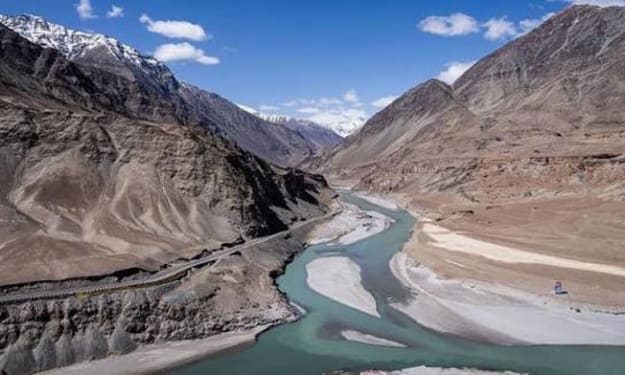
The Himalayas, often described as the world’s “Third Pole,” are facing a dramatic and worrying transformation. Scientists are warning that reduced winter snowfall is leaving vast stretches of the mountain range bare, rocky, and increasingly vulnerable to long-term environmental damage. Once known for their thick snow blankets and powerful glaciers, parts of the Himalayas are now showing exposed rock earlier than ever before—an alarming sign of climate stress in one of Earth’s most critical ecosystems. A Visible Change in the World’s Highest Mountains Winter snowfall plays a vital role in the Himalayan climate system. Snow acts as a protective layer, insulating glaciers and regulating the slow release of meltwater into rivers during warmer months. However, researchers monitoring satellite data and ground stations report that recent winters have brought significantly less snowfall across large areas of the range. As a result, snowlines are rising higher up the slopes, leaving lower and mid-altitude regions exposed. This has turned once-white mountain landscapes into expanses of dark rock, which absorb more heat from the sun, accelerating warming in a dangerous feedback loop. Why Reduced Snowfall Matters Snow is more than a scenic feature—it is essential to the health of Himalayan glaciers. When snowfall declines, glaciers lose their main source of replenishment. At the same time, exposed ice and rock melt faster under direct sunlight. Scientists warn that this imbalance is speeding up glacier retreat across the Himalayas. Many glaciers are now shrinking at rates not previously recorded, threatening the long-term stability of water systems that support nearly two billion people across South and Southeast Asia. Impact on Asia’s Major Rivers The Himalayas feed some of the world’s most important rivers, including the Indus, Ganges, Brahmaputra, Yangtze, and Mekong. These rivers depend on seasonal snow and ice melt to maintain consistent flow throughout the year. Reduced snowfall means less stored water for the dry season. In the short term, faster melting can cause floods and landslides. In the long term, however, shrinking glaciers could lead to water shortages, affecting agriculture, hydropower, and drinking supplies across multiple countries. A Growing Risk of Disasters Bare, rocky slopes are far more unstable than snow-covered ones. Snow helps bind loose material together, while exposed rock and soil increase the likelihood of landslides and avalanches. Scientists have already observed a rise in slope failures and glacial lake outburst floods in the region. As glaciers retreat, meltwater often accumulates in fragile lakes dammed by loose rock and ice. These lakes can burst suddenly, releasing destructive floods that threaten mountain communities and downstream infrastructure. Climate Change at the Core Researchers agree that climate change is the primary driver behind the declining snowfall. Rising global temperatures are altering weather patterns, causing more winter precipitation to fall as rain rather than snow. Even small temperature increases at high altitudes can drastically change how moisture behaves. Additionally, warming oceans and shifting atmospheric circulation are affecting the timing and intensity of winter storms that traditionally brought snow to the Himalayas. Effects on Local Communities and Wildlife Mountain communities that rely on predictable snowfall for farming, tourism, and water storage are already feeling the effects. Farmers report changes in planting cycles, while winter tourism has declined in some regions due to unreliable snow conditions. Wildlife is also under pressure. Species adapted to cold environments are losing habitat as snow cover shrinks. Plants that depend on snowmelt are struggling to survive in drier, warmer conditions, disrupting fragile alpine ecosystems. Scientists Call for Urgent Monitoring and Action Experts stress the importance of improved monitoring of snowfall, glacier health, and water flows across the Himalayan region. Better data can help governments plan for future water management challenges and disaster risks. At the same time, scientists emphasize that local adaptation alone is not enough. Reducing global greenhouse gas emissions remains critical to slowing temperature rise and preserving what remains of the Himalayan snow and ice. What the Future Holds If current trends continue, large parts of the Himalayas could see permanent changes within decades. Reduced snowfall and accelerating glacier loss may reshape landscapes, ecosystems, and human livelihoods on an unprecedented scale. The sight of bare, rocky Himalayan slopes is more than a visual change—it is a warning signal. The world’s highest mountains are responding rapidly to a warming planet, and the consequences will extend far beyond the peaks themselves.
By Fiazahmedbrohi about 12 hours ago in Earth



Comments
There are no comments for this story
Be the first to respond and start the conversation.