
How can we save ourselves if we accidentally encounter a venomous snake like the king cobra?
How to save yourself when you encounter a king cobra

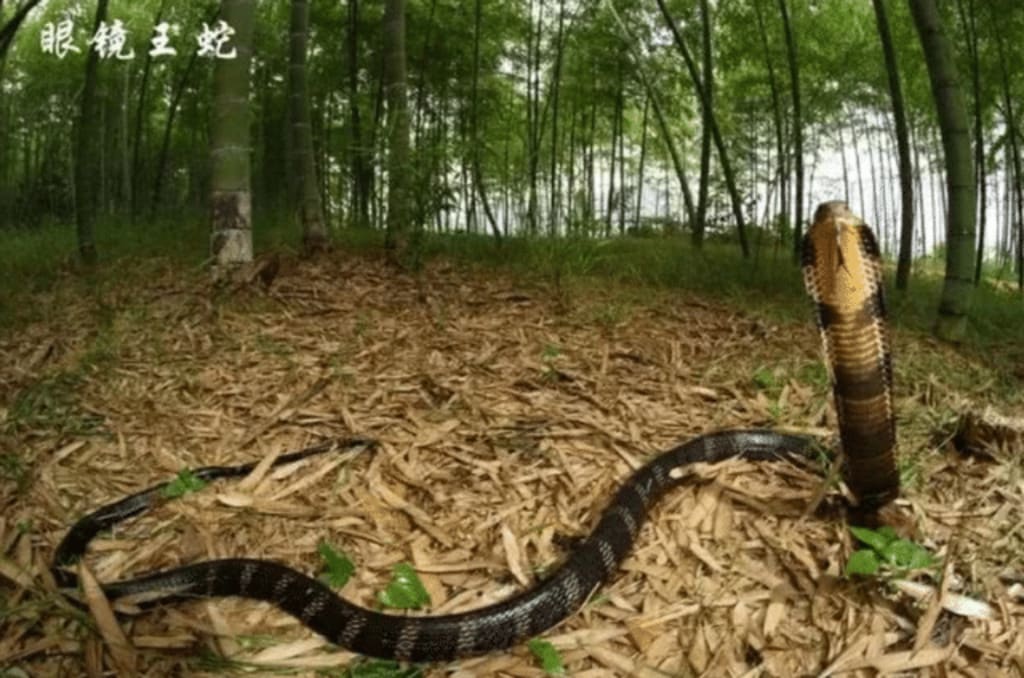
When I was a child, a few friends and I saw a big snake on the road. At that time, each of us felt that killing a snake was like doing a good thing, so we wanted to solve the snake on the spot.
Some of the little friends were holding stones, some carrying poles and wooden sticks. We surrounded the snake, but we were too young at that time, and no one dared to be the first to do it. At first, the snake was just for us. The mouth is open in a defensive and aggressive posture.
Until the little friend who was holding the pole threw it away because he was afraid, the snake started to attack us frantically, a few of us ran away, and the snake even chased after us - almost 20 or 30 after us. meters away.
Fortunately, an adult came over and chased the snake away, and our children were not injured, but they were quite frightened.
This is absolutely true, I still remember it fresh, and I already know that the snake was a non-venomous black-headed snake. It may have been provoked by us, so it ran after us.
In fact, most of the non-venomous snakes (except pythons) are very afraid of larger creatures like humans. They feel that someone is approaching from a long distance, and they will make an early choice to leave.
However, many venomous snakes, especially the highly venomous snakes, have a strong sense of territory. For example, the Cobra family venomous snakes are relatively widely distributed in China. This family includes the world's largest venomous snake, the king cobra, and the deadliest venomous snake in China, Yinhuan. Snakes, they can all attack intruders, and they can be deadly.
At the same time, since snakes are all ambush hunters, they are very good at disguising and concealing themselves. It is very easy for us to accidentally break into the territory of poisonous snakes, so how can we save ourselves?
In fact, there is a lot of research on snake behavior now, so it is already clear that some practices do increase the probability of being attacked, and some practices can reduce the risk.
How to protect yourself from these poisonous snakes?
First of all, for objects like humans, any snakes are reluctant to spend time or venom on us because we are too big to be their prey size.
If venomous snakes waste venom on us, it could mean their next hunt will run out of venom and fail.
So, first and foremost, if you have no experience in catching snakes, don't try to provoke these venomous snakes after spotting them.
For example, interfering with them with rocks and sticks can easily irritate them. As of now, most snakebites are the result of direct human intervention in snakes.
Secondly, the attack distance of snakes is not very far. The attack distance of venomous snakes is generally about half of their body length. Fortunately, the body length of venomous snakes is generally shorter; while those non-venomous snakes may be larger in size, But they actually attack a little closer because these non-venomous snakes tend to be more agile, and they are more accustomed to attacking at closer distances.
Humans are actually very sensitive to snakes. Compared with other animals, we can perceive the existence of snakes very easily.
Therefore, the second thing to do when you find a snake is to stop approaching and keep a safe distance.
Third, snakes judge intruders by lying on the ground and feeling the ground vibration. They can't hear us, but many snakes' eyes are very suitable for capturing fast-moving objects. They can judge themselves based on these sudden movements. How to do.
If the movement is very big, such as waving our hands or jumping around, the snake will have two judgments against us: some snakes will think that we are threatening them and will attack; other snakes may judge as prey, When attacking us, in fact, many snakes use this signal to determine whether to attack the prey, because most of the time the prey will suddenly make a big move after discovering the snake.
Therefore, the third thing to do after encountering a poisonous snake is to stop yourself, even if you want to move, don't make a big move.
At this time, you can observe the reaction of the snake. Most of the time, the snake is more nervous than us. After they find that we have no further action, they will basically choose to slip away to avoid us.
However, some snakes will not do this. For example, the king cobra will not avoid us with a high probability. At this time, ignore it and use the smallest possible movement to move.
Fourth, a snake's attention span is very brief, usually lasting less than a minute.
If we have accidentally irritated them when we encounter poisonous snakes, then try not to irritate them any more. What we have to do at this time is to keep quiet. After a few minutes, the snakes will basically forget our existence.
As long as the snakes are still probing or defending, and we don't provoke them further, they won't attack us.
There is another question, what if we really didn't notice the existence of snakes at all, and accidentally offended them, and the snakes have attacked us, what should we do?
What to do if attacked by a snake?
If you have been attacked by a snake, if you can avoid it, you should open the distance as soon as possible. If the snake fails to attack for the first time, it will basically run away.
Of course, most of the time it is another possibility, we can't escape at all and are directly bitten by them.
After being bitten by a snake, the first thing we do is to identify what kind of snake is biting. If possible, it is best to take a photo of the snake.
This is because the venom of each venomous snake is different, which means their antivenom is also different, and if the doctor doesn't know what kind of snake it is, they can't give us an antivenom treatment.
There are more than 200 kinds of snakes in China, of which there are more than 50 kinds of venomous snakes. In the world, there are actually far more non-venomous snakes than poisonous snakes (there are almost 3,000 kinds of snakes in the world, but only 600 kinds of poisonous snakes). In addition, there are non-venomous snakes. The richness of the degree is not only reflected in the species, but also in quantity. Most of the snakes we encounter are non-venomous snakes.
However, there is an interesting fact. According to the statistics of the World Health Organization, poisonous snakes account for more than half of the snakebite incidents in the world.
The second thing we have to do is to determine if a venomous snake bit us. There is a relatively simple criterion for judging this point, which is to look at the bite marks. The bite of a poisonous snake will have two obvious teeth marks, which are left by the poisonous teeth.
The third thing is to tie over the wound and do not run vigorously. This can effectively reduce the speed at which the venom flows in the body, allowing more time for treatment.
at last
Sometimes rural houses are prone to catching snakes. There are two main reasons: one is that the snake's prey is near the home, such as frogs, mice, etc., the other is that there are many hidden places for snakes, such as the grass is too high and abandoned Too much wood, rubble, etc.
The solution is to remove the snake's prey. You can keep a few geese, cats and other domestic animals or pets. Keep the house clean and tidy. If conditions permit, you can spread some gravel on the road. Snakes don't like to crawl in places with goose dung. , and don't like to crawl on the gravel, that will hurt them.
For outings, here is a tip for preventing snakes. If you have a pet dog, you can take it with you when you go out. The dog can easily spot the snake and scare the snake away. If the poisonous snake is not scared away, the dog will also Will stay in place and bark to remind us.
About the Creator
adalberto alejandrina
scientific exploration
Keep reading
More stories from adalberto alejandrina and writers in Earth and other communities.
Would the anaconda become the second titan if it lived in the same temperature as the titan?
On March 22, 2012, during the busy rush hour, New York's Grand Central Station "run" into a giant python, the largest snake in history, nearly 15 meters long, weighing more than 1,100 kilograms, with a body diameter of almost 1 meter, and It was now swallowing a large crocodile.
By adalberto alejandrina3 years ago in Earth
How Bad Is AI for the Environment, Really?
Artificial intelligence is rapidly becoming part of everyday life. From chatbots and image generators to recommendation algorithms and automated customer service, AI systems are now embedded in countless digital tools.
By Navigating the World2 days ago in Earth


Comments
There are no comments for this story
Be the first to respond and start the conversation.