
How Beston's Continuous Pyrolysis Plant is Transforming Recycling
Turning Plastic Waste into Value

Plastic waste is one of the most pressing environmental challenges of our time, and finding innovative ways to recycle or dispose of it sustainably has become increasingly critical. Enter Beston’s continuous pyrolysis plant—a groundbreaking solution for large-scale plastic waste management.
With an impressive capacity to process up to 6,000 tons of plastic waste annually, this advanced plant doesn’t just reduce landfill waste; it transforms it into valuable resources like oil, carbon black, and gas. By adopting this technology, industries can significantly reduce their environmental footprint while creating eco-friendly products from the very waste that harms our planet.
This article will explore how Beston’s continuous pyrolysis plant is revolutionizing the recycling industry and the future implications for global plastic waste reduction.
How Does the Beston Continuous Pyrolysis Plant Work?
Beston’s pyrolysis technology operates on a continuous basis, meaning that plastic waste is fed into the system without the need for stops or batch processing. The process involves heating the plastic in the absence of oxygen, which breaks it down into smaller hydrocarbons and converts it into oil, carbon black, and combustible gas.
This not only prevents the harmful burning of plastic but also maximizes the energy output from waste materials. The ability to process 6,000 tons of plastic annually means the plant can serve large municipalities, waste management companies, and manufacturing industries, offering a reliable, continuous method of waste reduction.
Key Benefits of the Continuous Pyrolysis Plant
1. Significant Environmental Impact
By processing up to 6,000 tons of plastic waste annually, Beston’s plant contributes directly to reducing plastic pollution. Instead of plastic sitting in landfills or floating in our oceans, it’s transformed into usable materials. This not only prevents long-term environmental degradation but also helps curb harmful emissions associated with plastic waste.
Moreover, by eliminating the need for plastic incineration (which generates harmful pollutants like dioxins and furans), the plant helps reduce air pollution and the release of toxic substances into the atmosphere.
2. Energy Generation and Resource Recovery
One of the most exciting benefits of the pyrolysis process is its ability to generate energy. Pyrolysis oil produced during the process can be used as a renewable fuel, replacing traditional fuels in various industrial applications. The combustible gases can be utilized to power the plant itself, making the process energy self-sufficient.
The carbon black produced is a valuable industrial material used in the manufacture of tires, batteries, inks, and other products. Instead of being discarded as waste, carbon black becomes an economically valuable byproduct, contributing to the circular economy.
3. Promoting Sustainability through Circular Economy
Beston’s continuous pyrolysis plant aligns with the growing trend of a circular economy. Rather than relying on the extraction of new resources, the pyrolysis process recycles existing waste materials and turns them into valuable, reusable products. This creates a sustainable loop, where waste becomes the input for new products, reducing the demand for virgin raw materials.
In a world increasingly focused on sustainability, adopting technologies like Beston’s pyrolysis plant is a key step toward achieving environmental goals. The technology also supports zero-waste initiatives by ensuring that no waste is left behind.
The Global Shift Towards Sustainable Waste Management
As global plastic consumption continues to rise, the need for large-scale, efficient waste management solutions will only become more urgent. Technologies like Beston’s continuous pyrolysis plant offer a comprehensive and scalable solution to the plastic waste crisis. With the capacity to process up to 6,000 tons of plastic annually, this system has the potential to drastically reduce the amount of plastic that ends up in landfills, oceans, and incinerators.
Adopting such technologies on a global scale can be a game-changer in our fight against plastic pollution, paving the way for cleaner, more sustainable cities and industries. By making better use of existing resources, we can reduce the environmental footprint of our consumption patterns and work toward a future where waste is minimized and resources are continuously recycled.
Conclusion: A Cleaner, Greener Future
The world’s plastic waste crisis is a complex challenge, but with technologies like Beston’s continuous pyrolysis plant, we have a promising solution. This plant not only processes large amounts of plastic waste but also turns it into valuable resources like oil, carbon black, and gas—key components in fostering a more sustainable, circular economy.
As the world moves toward more sustainable waste management practices, the continuous pyrolysis plant can become a cornerstone of the future of recycling. By integrating this innovative technology into waste management systems globally, we can significantly reduce our environmental impact and create a cleaner, greener planet for future generations.
About the Creator
Amazon sailfin catfish found in Sindh waters, experts warn of invasive spread
Foreign aquarium species reaches Karachi Fish Harbour, threatening aquatic biodiversity KARACHI: An unusual fish brought from a dhund, or shallow pond, near Sukkur to the Karachi Fish Harbour on January 4, 2026, has been identified as an Amazon sailfin catfish, officials and experts said.
By Dena Falken Esq7 days ago in Earth
Filipino Rescuers Detect “Signs of Life” in Garbage Avalanche That Killed 4 and Left Dozens Missing
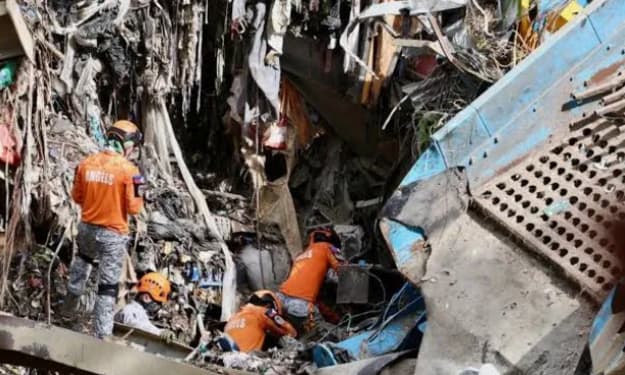
In the early hours following a devastating garbage avalanche in the Philippines, rescuers reported detecting “signs of life” beneath tons of waste, igniting a fragile sense of hope amid widespread grief and uncertainty. The deadly incident, which claimed at least four lives and left dozens missing, has drawn national attention to the dangers faced by communities living near massive waste disposal sites.
By Aqib Hussain3 days ago in Earth
Where's the Glory?
In breaking news, rehabilitated Republican Senator Johnnie Johnson (Pronouns: HE, HIM, HIS) called a press conference from the Men’s room of the New Orleans Louis Armstrong International Airport, Concourse B, across from the Ignatius Reilly’s Lucky Dog stand. The Senator had just returned from a sexual reorientation rehabilitation program in Memphis, TN after being publically disgraced at a Buckee’s Truckstop restroom soliciting sex from an undercover cop three months ago. He is a founding member of the Reformed Christians for Christ, a conservative, pro-family and ex-gay advocacy group. In the spirit of being reborn, Senator Johnson invited reporters to marvel at his plans for a major remodeling of airport bathrooms.
By Cathy Schieffelin6 days ago in Humor



Comments
There are no comments for this story
Be the first to respond and start the conversation.