
How Auroras are Formed?
Understanding How Auroras Are Formed Explained
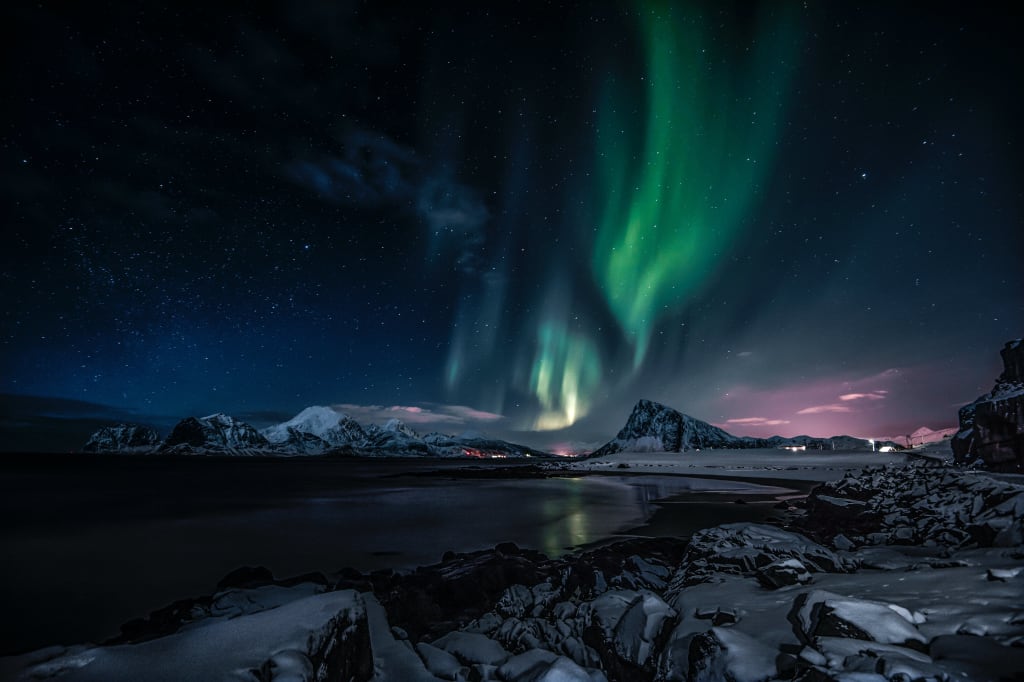
Auroras are one of the most enchanting natural phenomena, captivating people with their dazzling displays of light and color.
These mesmerizing lights grace the polar regions of our planet and provide a source of wonder and inspiration for people around the world.
In this article, we will explore how auroras are formed through the interaction of the Earth's magnetic field, solar winds, and atmospheric particles.
The most common type of aurora is the aurora borealis, also known as the northern lights, which is visible in the northern hemisphere.
The aurora australis, or southern lights, is the same phenomenon but occurs in the southern hemisphere.
The Science Behind Auroras
The science behind auroras involves understanding the phenomena of solar wind, geomagnetic storms, and the Earth's magnetic field.
Solar wind is a stream of charged particles, primarily electrons and protons, that are continuously blowing from the sun. On Earth, some of these particles are trapped by the planet's magnetic field and directed towards the polar regions. This creates a ring-shaped region called the auroral oval.
Geomagnetic storms, on the other hand, are caused by bursts of energy from the sun, called coronal mass ejections (CMEs), that interact with the Earth's magnetic field. This causes the magnetic field to distort and creates a disturbance in the Earth's atmosphere.
When these charged particles collide with the Earth's atmosphere, they create stunning light displays in the sky. The colors of the aurora depend on the type of gas particles that collide with the charged particles. For example, green auroras are created when charged particles collide with oxygen, while red auroras are created when charged particles collide with nitrogen.
Scientists continue to study these breathtaking displays, using auroras as a way to understand the Earth's magnetic field and atmosphere. It is an ongoing field of research that has contributed to our understanding of space physics and how our planet responds to solar activity.
The Cultural Significance of Auroras
- Auroras have entranced people from all cultures and backgrounds for centuries. The indigenous peoples of northern regions have long celebrated the celestial displays as spiritual and cultural icons, imbued with unique meanings and legends.
- According to Finnish folklore, northern lights were seen as the result of a mystical fox brushing its tail against the snow, while the Sami people of Scandinavia believed they were the spirits of their ancestors.
- The Inuit believed that the auroras were the spirits of animals, such as the walrus, caribou, and beluga whale. Similarly, the Cree people of Canada believed that the auroras were the spirits of their departed loved ones, guiding them to the afterlife.
- Auroras have also influenced art and literature across the world. From the 19th-century paintings of J.M.W. Turner to the modern-day work of photographer Paul Nicklen, auroras have inspired countless artists to capture their beauty and wonder.
Best Locations for Aurora Viewing:
To increase your chances of viewing auroras, head to locations closer to the magnetic poles. Some of the best places to observe this celestial display are:
Yellowknife - canada
Abisko National Park - Sweden
Tromso - Norway
Ivalo- Finland
Reykjavik - Iceland
These locations have clear skies, low light pollution, and a higher probability of aurora sightings.
Tips for Aurora Watching:
Make sure to follow these tips to ensure you have an unforgettable aurora viewing experience:
- Check the weather and aurora forecast before making your trip.
- Dress warmly in layers to protect yourself from cold temperatures.
- Bring hot drinks and snacks to stay comfortable during long waiting periods.
- Choose a place away from light pollution to have better visibility.
- Be patient, auroras can take time to appear, and the wait is worth it!
- With these tips and locations, you're ready to embark on a spectacular aurora viewing adventure. Don't forget to pack your camera to capture the mesmerizing beauty of these natural wonders.
In conclusion, auroras are a natural wonder that have captivated mankindfor centuries. We have explored the scientific explanation behind these colorful displays, including the role of solar wind, Earth's magnetic field, and the atmosphere
About the Creator
Milano Cortina 2026: When Winter Sports Meet History, Innovation, and the Italian Soul
The 2026 Winter Olympics, officially known as Milano Cortina 2026, are set to redefine what a modern Olympic Games can look like. Scheduled to take place from February 6 to February 22, 2026, these Games will bring the world’s top winter athletes to Italy, blending elite competition with centuries of culture, alpine beauty, and forward-thinking sustainability.
By Story Prism4 days ago in Earth
AFG vs WI, Between Overs and Silence
The first ball hadn’t been bowled yet, and already my chest felt tight. AFG vs WI flickered on the screen, bright jerseys against a washed-out sky. The stadium buzzed softly, like it didn’t want to scare away whatever fragile promise hovered above the pitch. I leaned forward without realizing it. I always do when something still matters.
By Story Prism4 days ago in Earth



Comments
There are no comments for this story
Be the first to respond and start the conversation.