


How About a New Theory of Earth Formation ?
so we don't have all the details about
how the universe our solar system and
its planets came to be but one thing's
for sure Earth didn't just pop out of
thin air.
scientists have recently made
an intriguing discovery that suggests
our planet may have formed way faster
than we previously thought.
you see up until now experts believe it
took over a hundred million years for
Earth to take shape the common belief
was that lucky collisions with
water-rich asteroids brought water to
our planet.
a recent study however
proposes A Whole New Perspective
according to these researchers there's
evidence that Earth formed through the
rapid accumulation of tiny Pebbles each
roughly the size of your fingernail in
this scenario our awesome Planet emerged
in only a few million years and here's
the mind-blowing part they suggest that
water being here isn't just some happy
accident but a natural result of the
formation process
now this discovery has implications that
go beyond Earth itself if our planet
formed quickly and water was an integral
part of the process it means the chances
of finding habitable planets in other
solar systems are way higher than we
ever imagined if we stumble upon other
planetary systems with planets orbiting
sun-like Stars at the right distance
there's a good chance we'll find water
there too that's a nice Intergalactic
real estate that we might just be able
to relocate to should we ever get in
trouble here on Earth
the old school view was that planet
slowly took shape through countless
collisions over millions of years
according to that theory water on Earth
would have been a random Stroke of Luck
may be caused by comets packed with
water crashing into the planet during
its later stages of formation
the new study introduces an alternative
Theory too picture this a young son
surrounded by a disc where the planets
are popping up this disc is filled with
tiny dust particles now here's where it
gets exciting once a planet reaches a
certain size it acts like a cosmic
vacuum cleaner swiftly hoovering up all
the dust in his path in just a few
million years this tiny planet grows
into the size of Earth
this not only shapes our incredible
Planet but guarantees water's existence
too as the planet gobbles up the dust it
also snags icy particles floating around
in the disc so if we use Earth as an
example it suggests that whenever a
similar Planet forms it's bound to have
water naturally
there's no way for us to travel back in
time and see for ourselves so there are
more theories about how planets are born
into a different scenario called The
Core accretion Theory picture a big
cloud of dust twirling around in space
as where the action begins over time
this Cloud starts pulling in an
astounding 99.8 percent of all the
matter eventually creating our sun right
at the center of our solar system
soon enough solar winds join the party
bringing in lighter atoms like hydrogen
and helium that are closer to the Sun
but those heavier elements the sun can't
pull them in because well they're too
heavy so what do they do they gather
together and stick to each other forming
their own little planets that's how
Earth Mars Venus and the Gang got
together to create round spheres the
heavyweights like zinc and iron sank to
the middle forming the core while the
lighter elements meshed on top creating
the crust but wait we can't forget about
Jupiter its gravitational force and the
suns were locked in an epic tug of war
perfectly balancing each other out
that's why we have that fascinating
asteroid belt hanging out between Mars
and Jupiter those poor asteroids never
got the chance to become fully fledged
planets on their own
this explains why the planets in our
solar system are arranged the way they
are the inner ones known as the
terrestrial planets like Mercury Venus
Earth and Mars are closest to the Sun
they're made of denser stuff like iron
silicon and aluminum on the flip side
the gaseous giants like Jupiter Saturn
Uranus and Neptune are chilling on the
outer edges of the solar system these
big celestial bodies are composed of
lighter materials such as hydrogen
helium and methane now let's take a trip
to the outermost layer of our solar
system where the Kuiper belt and the
Oort cloud reside these distant areas
are home to ice bodies space debris and
comets while there may be plenty of them
they're relatively small and don't
contribute much to the total volume of
our solar system
the quest to understand Planet formation
doesn't end here there's another
mind-boggling mystery that's causing a
stir among scientists the existence of a
Celestial body dubbed the planet that
shouldn't exist let's rewind a bit
astronomers have been on a roll with
exoplanet discoveries and we've already
spotted over 4 000 of them most of these
exoplanets resemble the gas giants in
our own solar system like Jupiter and
Saturn do you know why it's because
those massive exoplanets close to their
stars are the easiest to detect but
here's the twist a new study suggests
that there's a whole bunch of
jupiter-like exoplanets just waiting to
be found and they're probably hanging
out nearby
by The Impossible name
jg3512b and it's remarkably similar to
Jupiter only orbiting a tiny red dwarf
star
Discovery shook things up because it
defied the most popular theory of Planet
formation according to the prevailing
ideas it should have been impossible for
such a giant planet to form around such
a small star
so what's the deal with this impossible
exoplanet well it turns out that core
accretion the theory we discussed
earlier can't explain its existence
according to this Theory the mass of the
debris disc surrounding a young star
should be directly proportional to the
star's Mass but here we have a star much
smaller than our sun hosting a planet
that should be way too massive for it
something doesn't add up either the
original debris disc was insanely
enormous compared to the star or core
accretion didn't play out as expected in
this particular planetary system
we've established that when talking
about the Earth formation there's still
much we don't know but hey we've come a
long way back in the 18th century a
philosopher named Emmanuel Kant had his
own intriguing theory about planets
popping up in the universe he based his
ideas on Newton's law of gravity but
added his own little twist Kant believe
that the Universe started with an
original substance made up of super cold
solid particles just chilling out then
thanks to gravity these particles began
colliding and heating up and you know
what happens when things Collide right
they get hot according to Kant this
Cosmic twirling and heating up caused
some serious forces to come into play
it's like when you spin around so fast
that you feel like you're about to take
off these forces led to the formation of
rings of matter like Cosmic hula hoops
and as these Rings cooled down they
transformed into planets and satellites
now not everyone was convinced by Khan's
wild idea of Planet formation critics
raised their eyebrows and started
questioning the whole Theory they
pointed out that Kant failed to address
the origin of this primordial matter
where did it come from in the first
place moreover he overlooked the source
of energy that propelled these particles
from a state of cold Stillness to a
frenzy Cosmic dance-off as creative as
his theory was it soon faced dismissal
in the scientific community in short
they said this can't happen
nevertheless conch theory was still a
step forward compared to older beliefs
about Earth's origin take the ancient
Egyptians for example they believe that
primordial Spirits often depicted with
frog heads in their native artwork were
responsible for our planet's existence
why frogs you ask well they Associated
the first substance in the universe with
water and frogs just love humid
environments so out of that initial
water a primordial Hill emerged followed
by the elements of air and moisture
ribbit.
About the Creator
yuky Dz
Hello,
you are welcome to my page, enjoy reading.
Himalayas Bare and Rocky After Reduced Winter Snowfall, Scientists Warn
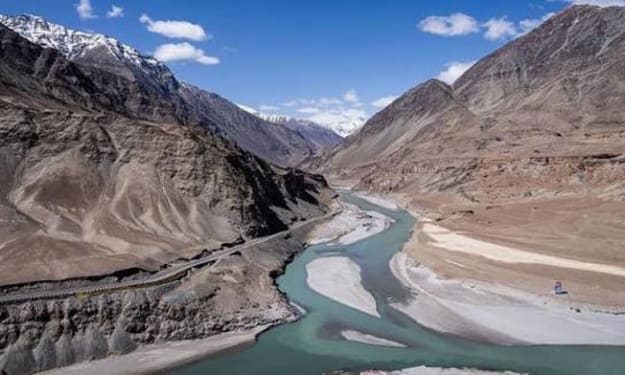
The Himalayas, often described as the world’s “Third Pole,” are facing a dramatic and worrying transformation. Scientists are warning that reduced winter snowfall is leaving vast stretches of the mountain range bare, rocky, and increasingly vulnerable to long-term environmental damage. Once known for their thick snow blankets and powerful glaciers, parts of the Himalayas are now showing exposed rock earlier than ever before—an alarming sign of climate stress in one of Earth’s most critical ecosystems. A Visible Change in the World’s Highest Mountains Winter snowfall plays a vital role in the Himalayan climate system. Snow acts as a protective layer, insulating glaciers and regulating the slow release of meltwater into rivers during warmer months. However, researchers monitoring satellite data and ground stations report that recent winters have brought significantly less snowfall across large areas of the range. As a result, snowlines are rising higher up the slopes, leaving lower and mid-altitude regions exposed. This has turned once-white mountain landscapes into expanses of dark rock, which absorb more heat from the sun, accelerating warming in a dangerous feedback loop. Why Reduced Snowfall Matters Snow is more than a scenic feature—it is essential to the health of Himalayan glaciers. When snowfall declines, glaciers lose their main source of replenishment. At the same time, exposed ice and rock melt faster under direct sunlight. Scientists warn that this imbalance is speeding up glacier retreat across the Himalayas. Many glaciers are now shrinking at rates not previously recorded, threatening the long-term stability of water systems that support nearly two billion people across South and Southeast Asia. Impact on Asia’s Major Rivers The Himalayas feed some of the world’s most important rivers, including the Indus, Ganges, Brahmaputra, Yangtze, and Mekong. These rivers depend on seasonal snow and ice melt to maintain consistent flow throughout the year. Reduced snowfall means less stored water for the dry season. In the short term, faster melting can cause floods and landslides. In the long term, however, shrinking glaciers could lead to water shortages, affecting agriculture, hydropower, and drinking supplies across multiple countries. A Growing Risk of Disasters Bare, rocky slopes are far more unstable than snow-covered ones. Snow helps bind loose material together, while exposed rock and soil increase the likelihood of landslides and avalanches. Scientists have already observed a rise in slope failures and glacial lake outburst floods in the region. As glaciers retreat, meltwater often accumulates in fragile lakes dammed by loose rock and ice. These lakes can burst suddenly, releasing destructive floods that threaten mountain communities and downstream infrastructure. Climate Change at the Core Researchers agree that climate change is the primary driver behind the declining snowfall. Rising global temperatures are altering weather patterns, causing more winter precipitation to fall as rain rather than snow. Even small temperature increases at high altitudes can drastically change how moisture behaves. Additionally, warming oceans and shifting atmospheric circulation are affecting the timing and intensity of winter storms that traditionally brought snow to the Himalayas. Effects on Local Communities and Wildlife Mountain communities that rely on predictable snowfall for farming, tourism, and water storage are already feeling the effects. Farmers report changes in planting cycles, while winter tourism has declined in some regions due to unreliable snow conditions. Wildlife is also under pressure. Species adapted to cold environments are losing habitat as snow cover shrinks. Plants that depend on snowmelt are struggling to survive in drier, warmer conditions, disrupting fragile alpine ecosystems. Scientists Call for Urgent Monitoring and Action Experts stress the importance of improved monitoring of snowfall, glacier health, and water flows across the Himalayan region. Better data can help governments plan for future water management challenges and disaster risks. At the same time, scientists emphasize that local adaptation alone is not enough. Reducing global greenhouse gas emissions remains critical to slowing temperature rise and preserving what remains of the Himalayan snow and ice. What the Future Holds If current trends continue, large parts of the Himalayas could see permanent changes within decades. Reduced snowfall and accelerating glacier loss may reshape landscapes, ecosystems, and human livelihoods on an unprecedented scale. The sight of bare, rocky Himalayan slopes is more than a visual change—it is a warning signal. The world’s highest mountains are responding rapidly to a warming planet, and the consequences will extend far beyond the peaks themselves.
By Fiaz Ahmed Brohi6 days ago in Earth
Trump’s Proposed Ban on Buying Single-Family Homes Introduces Uncertainty for Family Offices
Former President Donald Trump has proposed a controversial measure that would ban certain investors from purchasing single-family homes, sparking concern among family offices, real estate professionals, and affluent households across the United States. While the proposal is still in its early stages, it highlights tensions between housing affordability, investment strategies, and government regulation. Family offices—private wealth management firms that handle investments for high-net-worth families—are particularly affected, as single-family homes often form a key part of their diversified portfolios. Understanding the Proposed Ban The proposed policy aims to limit institutional investors and large-scale buyers from purchasing single-family homes, a move intended to increase housing availability for individual homebuyers and first-time families. Proponents argue that investment firms and private equity groups have increasingly dominated the single-family housing market, driving up prices and limiting access for ordinary buyers. Trump’s proposal, however, extends concerns to family offices. Unlike institutional investors, family offices often operate with smaller scale and focus on preserving wealth while generating steady returns. By restricting their ability to purchase single-family homes, the policy could inadvertently impact legitimate private wealth management strategies. Family Offices and Real Estate Family offices typically manage wealth for ultra-high-net-worth families, investing in a mix of assets including stocks, bonds, private equity, and real estate. Single-family homes are attractive for several reasons: Diversification: Real estate offers a hedge against market volatility. Stable Cash Flow: Rental properties provide recurring income. Appreciation Potential: Over time, well-chosen properties can increase in value. Legacy Planning: Homes are often used for long-term wealth transfer within families. By restricting access to single-family homes, family offices may need to rethink asset allocation and seek alternative investment avenues, potentially increasing reliance on commercial real estate, REITs, or other asset classes. Implications for the Housing Market A ban on single-family home purchases by certain investors could have both positive and negative effects on the housing market: Potential Benefits: Limiting investor activity might improve affordability and access for first-time homebuyers. In areas where institutional buyers have been driving prices up, the policy could reduce competition and slow price growth. Potential Drawbacks: Reduced investor activity might decrease liquidity in the market. Family offices and private investors often maintain properties, ensuring maintenance and stable rental supply. Limiting their participation could inadvertently reduce housing quality or slow new housing development. Moreover, uncertainty surrounding the proposal may influence market behavior, as buyers, sellers, and investors wait to understand regulatory details. This could temporarily cool investment activity, affect home valuations, and complicate financing decisions. Legal and Regulatory Considerations Implementing a ban of this scale would require complex legislation and enforcement mechanisms. Regulators would need to define which entities are restricted, how to monitor compliance, and what penalties would apply for violations. Family offices often operate in a hybrid space, blending private investment strategies with professional management structures. Defining which offices fall under restrictions could be legally challenging and may lead to lengthy court battles if policy implementation is unclear or inconsistent. Additionally, the proposal raises questions about federal vs. state authority in regulating housing markets. Real estate has traditionally been a mix of local zoning laws, state property rights, and federal regulations. A sweeping ban could create conflicts and require careful coordination across multiple levels of government. Reactions from Stakeholders Family Offices Family offices are expressing concern about the potential disruption to investment strategies and wealth management practices. Many offices rely on predictable legal frameworks to make long-term decisions. A sudden restriction could force them to divest existing holdings or abandon planned acquisitions, potentially reducing returns for families who depend on these investments. Real Estate Professionals Real estate brokers, developers, and property managers are also watching closely. While some welcome policies that improve access for individual buyers, others warn that restricting investment could reduce overall market activity. “We need to balance affordability with investment incentives,” says Sarah Jenkins, a real estate analyst. “Family offices and private investors play an important role in maintaining the housing supply and keeping rental markets stable.” Homebuyers and Advocacy Groups First-time homebuyers and housing advocacy groups largely support efforts to reduce institutional competition for single-family homes. Limiting large-scale investors could make it easier for ordinary buyers to compete in popular markets. However, the impact on wealthy private investors, like family offices, remains a point of debate. Broader Economic Considerations The proposed ban highlights the tension between housing affordability and private wealth management. Single-family homes are not only a place to live—they are also investment assets. Policies that affect one group of buyers may have unintended consequences for another. For family offices, the shift could prompt a broader reevaluation of asset allocation strategies, leading to increased focus on commercial real estate, international property markets, or alternative investments like private equity and infrastructure. This could ripple through financial markets, affecting liquidity, valuations, and even lending practices. Conclusion Trump’s proposed ban on purchasing single-family homes introduces significant uncertainty for family offices and other private investors. While the policy aims to improve housing accessibility for first-time buyers, it also poses challenges for wealthy families relying on real estate as a key component of their investment strategy. Navigating this uncertainty requires careful analysis, proactive planning, and legal guidance. Family offices may need to diversify holdings, explore alternative asset classes, or reconsider long-term strategies to ensure stability in an evolving regulatory environment. Ultimately, the proposal underscores a broader debate in the U.S. housing market: how to balance affordability, private investment, and the preservation of wealth in a way that supports both communities and investors. The coming months will be critical in shaping the future of housing policy and its impact on family offices nationwide.
By Muhammad Hassanabout 23 hours ago in Earth



Comments
There are no comments for this story
Be the first to respond and start the conversation.