
History of Pakistan
"From Indus Valley Civilization to Modern Nation-State

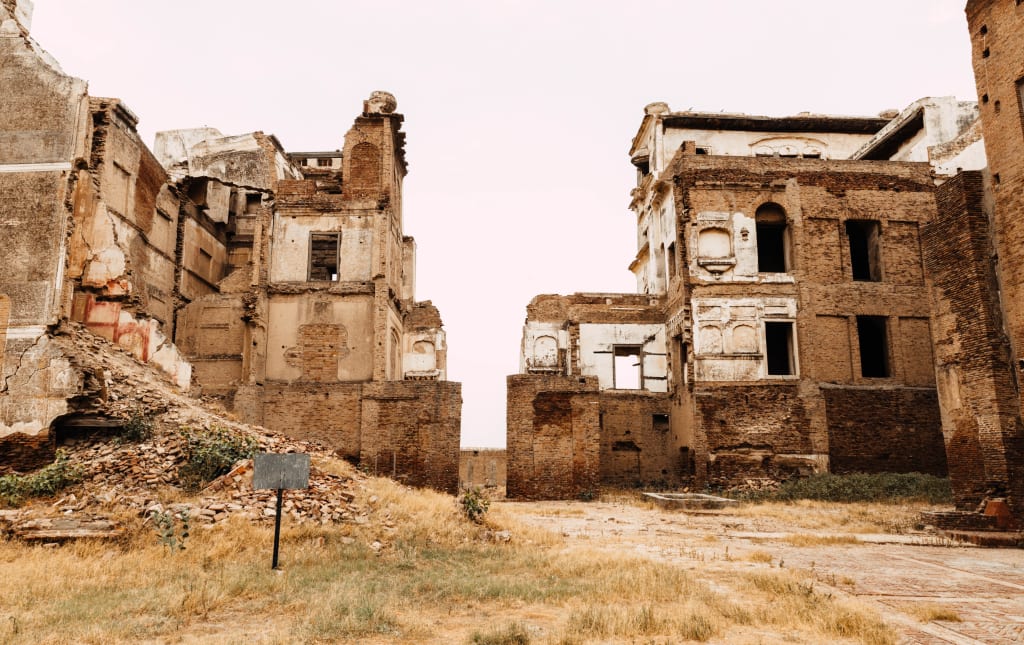
Start writing...Pakistan is a nation in South Asia, bordered by India to the east, Afghanistan and Iran to the west, and China to the north. It has a long and complex history, shaped by a variety of cultural, religious, and political influences over thousands of years.
The earliest known civilization in what is now Pakistan dates back to the Bronze Age, around 3300 BCE. The Indus Valley Civilization was one of the world's earliest urban civilizations, with a sophisticated system of trade, agriculture, and governance. The people of this civilization built large cities with advanced plumbing and sewage systems, brick houses, and public baths. The ruins of this civilization can be seen at sites such as Mohenjo-daro and Harappa, which are located in modern-day Pakistan.
From the 7th century CE onwards, various Islamic empires ruled over what is now Pakistan. The Umayyad, Abbasid, and Mughal empires all left a lasting legacy on Pakistan's culture and architecture. During this period, the region became a center of Islamic scholarship and culture, producing great thinkers and writers such as the poet Rumi.
In the 19th century, the British Empire began to take control of what is now Pakistan. By the mid-1800s, the British had established control over most of the region, and implemented policies that favored the interests of colonial rulers over those of local populations. The British also introduced modern education and infrastructure, which had a significant impact on Pakistan's development.
In 1947, India and Pakistan gained independence from British rule. However, the region was divided into two separate nations along religious lines, with India being predominantly Hindu and Pakistan being predominantly Muslim. This partition resulted in widespread violence and displacement, as millions of Hindus and Muslims were forced to migrate to the new nations.
Pakistan struggled to establish a stable government in its early years of independence. Its first constitution, adopted in 1956, established a federal parliamentary republic, with a president as the head of state and a prime minister as the head of government. However, the country was plagued by political instability, with frequent changes in leadership and periods of martial law.
In 1971, East Pakistan (which later became Bangladesh) declared independence from Pakistan, after a bitter conflict with the Pakistani government. The war resulted in the loss of territory and significant economic and social challenges for Pakistan.
Throughout the latter half of the 20th century, Pakistan's politics were dominated by military rule. In 1977, General Zia-ul-Haq seized power in a military coup and ruled the country until his death in 1988. Zia's regime was marked by strict Islamization policies, which included the introduction of harsh punishments for criminal offenses and the imposition of Islamic dress codes.
In the 1990s, Pakistan returned to civilian rule, with a series of democratic governments taking power. However, the country continued to face significant challenges, including poverty, corruption, and terrorism. In 2001, Pakistan became a key ally of the United States in its war on terror, which had a major impact on the country's security and politics.
In recent years, Pakistan has made progress in some areas, such as economic growth and social development. However, it continues to face significant challenges, including political instability, poverty, corruption, and terrorism. The country's future remains uncertain, but its rich history and diverse cultural heritage provide a foundation for continued growth and development.
About the Creator
Keep reading
More stories from Khubaib Ahmad and writers in Earth and other communities.
Climate change in Pakistan
Climate Change in Pakistan: Challenges and Opportunities Introduction Climate change is one of the most critical environmental and socio-economic issues of our time. Its impacts are visible and affecting every country in the world. Pakistan is also one of the countries that are highly vulnerable to the adverse impacts of climate change. The country is already facing numerous challenges in the form of floods, droughts, heat waves, and glacial melting, which are all linked to climate change. In this article, we will discuss the various aspects of climate change in Pakistan, including its causes, impacts, and future prospects.
By Khubaib Ahmad3 years ago in Earth
The Reality of the Illusion of Time
Recently, as I strolled along the short stretch to my strength training session, I aimlessly took in the row of tatty shops and shabby buildings along the route and passed an off-street, in which one of my sisters used to live, around thirteen years ago.
By Chantal Christie Weiss2 days ago in Earth
One Hard Thing
Stop me if you’ve heard this one before: You have the number, you know your schedule- you’ve even picked out the perfect day and time to make this appointment. Shoot, you’ve even picked out alternative days and times just in case their schedules can’t accommodate you!
By Taylor Rigsby7 days ago in Motivation


Comments
There are no comments for this story
Be the first to respond and start the conversation.