
Hiking in the mountains of Lebanon to see nature
National Human Geography
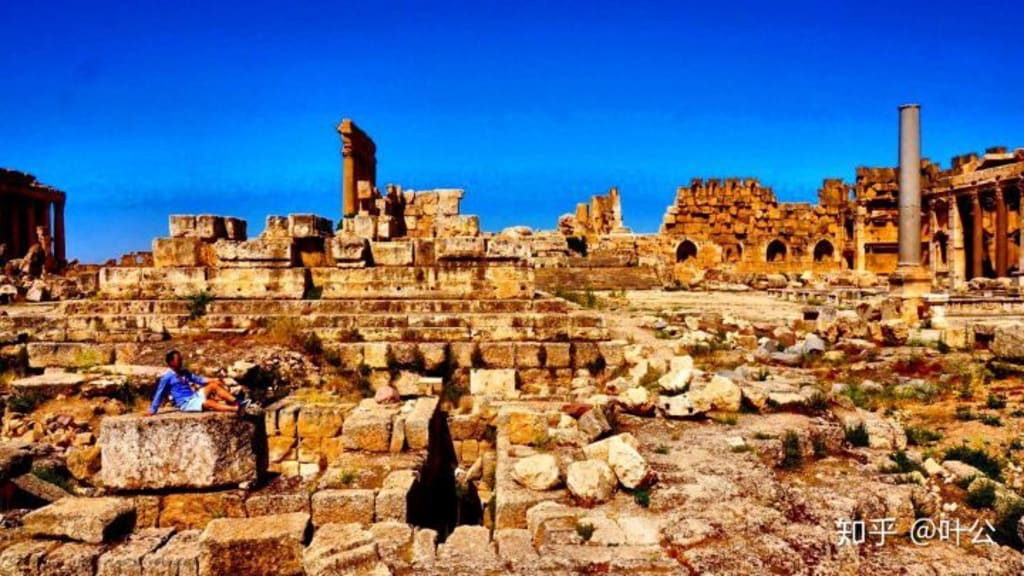
When you talk about the Middle East, the first thing that comes to mind is mostly desert sand sea -- a few camels carrying travelers to explore the secret, shuttling between the desert. Yet Lebanon, in the far west of the Middle East and on the eastern shore of the Mediterranean Sea, seems to have been blessed by the heavens alone. It is a land of quiet green valleys and cloud-rising mountains, unlike the rest of the world, where the sun and sand are mixed. The secluded valleys and paths of Lebanon are not nearly as busy as the city itself, and it is this seclusion that has become the go-to destination for many tourists who want to relax in nature.
From the olive groves on the Mediterranean coast to the cedar forests that greet the first rays of dawn, Lebanon's colorful landscapes and people are hidden in the villages along the 470-kilometer-long walkway through the country. But a pair of hiking boots is not enough for such a long walk, and it is difficult to explore the secrets of Lebanon's mountains without the right means of transportation. Renting a car suitable for mountain roads can help travelers move quickly from village to village without losing sight of the scenery. With a combination of human and fuel-powered mobility, Lebanon's natural scenery is at hand.
The Qadisha Valley is often the first stop for tourists exploring Lebanon's natural beauty. "Khadisha" means "holy, holy", so the Khadisha Valley is also called "Holy Valley". In the valley, the sallow cliffs are tinted with the green of cypress and oak, the red tiles of the village houses are glimpsed through the cascading green woods, and the various orchards of the valley add to the color of the valley. Even in winter, Khadisha Valley is never covered by a single white snow, and there are always unrestrained colors that stubbornly break out of the white and show their unique brilliance in the warm winter sun.
After visiting the Kadisha Valley, the nearby cedar forest of Basari is the next stop. Cedar, a witness to the history of Lebanon, is the symbol of Lebanon. Cedars appear in many historical records as far back as 4,500 years ago, when the seafaring Phoenicians sent them to every corner of the Mediterranean, from the ships of Egyptian pharaohs to the thrones of Roman emperors. When smelt carefully, the cedar of Lebanon gives off a faint fragrance. In ancient civilizations, cedar was once regarded as a "sacred wood" that only high officials and dignitaries could use to show their status. Both the cedar forest and the Khadisha Valley are on the UNESCO World Heritage List. Walking in the jungle, accompanied by the fragrance of cedar, feel the natural scenery spanning thousands of years, the world can only be found here.
Among the many hiking trails is a place called Hell Valley. Perhaps because the name is scary, few people want to go. However, the slightly more daring visitor will find the view of Hells Valley so breathtaking that one wonders if the ancestors who gave it its name intended it for exclusive beauty. In the valley, where the river has accumulated ice all year round and the oak and cypress trees have accompanied, a beautiful mountain picture unfolds here. The deep canyon outside the valley and the steep cliff form a natural arch, seems to want to "dissuade" backpackers who want to explore the valley with its precipitous appearance. Many tourists, after visiting Hell Valley, exclaim the opposite of the name -- "Beautiful as heaven!"
The natural beauty of Lebanon is much more than that. The mountains, the water, the trees, the villages... The harmony between man and nature is perfectly played here. If you want to see more of Lebanon's natural scenery, please go and see for yourself.
About the Creator
Keep reading
More stories from Rahm Gilliam and writers in Earth and other communities.
AI restoration of 600-year-old paintings, Li's definition of AIGC will disrupt the content industry
"Dwelling in The Mountains of Fuchun" is the work of Huang Gongwang, the master of painting in the Yuan Dynasty. This painting depicts the varied landscape scenery of the Fuchun River with elegant brush and ink, which also implies the author's love for landscape and life attitude of pursuing nature. It is praised as one of the "Top ten Famous Paintings handed down in China". In the early Qing Dynasty, the painting was burned and divided into two sections, one long and one short. The first half is named "Remaining Mountain", which is now collected in Zhejiang Provincial Museum. The latter part is named "Useless Master Volume" and is now in the Collection of the Taipei National Palace Museum.
By Rahm Gilliam3 years ago in Futurism
“If You’re Flushing the Toilet with Grey Water, People Should Know”: How China Turned Rain into an Asset
Water scarcity is one of the most pressing challenges facing the world today, and China is confronting it with bold, large-scale innovations. From sprawling cities to rural communities, the country has been transforming rainwater and grey water — wastewater from baths, sinks, and washing machines — into usable resources, addressing shortages while boosting sustainability. The approach is as much about engineering ingenuity as it is about public transparency and social trust. As one Chinese water engineer put it: “If you’re flushing the toilet with grey water, people should know.” This candid acknowledgment captures the essence of China’s strategy: utilize every drop of water efficiently while educating and involving the public. The Scale of China’s Water Challenge China faces a unique set of water challenges: Rapid urbanization, leading to increased demand for potable water Uneven distribution of water resources, with the north of China significantly drier than the south Industrial expansion, which consumes enormous quantities of freshwater Traditional water systems, reliant solely on rivers, lakes, and underground aquifers, are increasingly inadequate. Water shortages threaten agriculture, public health, and economic growth. Enter grey water and rainwater recycling, which turns previously discarded or seasonal water into a strategic asset. Grey Water: From Waste to Resource Grey water refers to domestic wastewater from sinks, showers, and washing machines — excluding sewage. While not suitable for drinking, it can be treated and reused for: Flushing toilets Irrigating gardens and parks Industrial processes requiring non-potable water China has implemented city-wide grey water recycling systems, often in high-rise residential blocks and industrial complexes. These systems involve: Collection: Grey water from sinks, showers, and laundry is routed through a separate piping network. Treatment: Basic filtration, chemical treatment, or UV sterilization removes contaminants. Reuse: Treated water is stored and reused for flushing toilets or irrigation, drastically reducing fresh water demand. In some cities, nearly 30–40% of household water consumption can be offset by grey water reuse, easing pressure on municipal water supplies. Rainwater Harvesting: Turning Precipitation into Opportunity Rainwater is another crucial asset, especially in regions where seasonal rains are abundant but water storage is limited. China’s rainwater harvesting initiatives include: Rooftop collection systems in urban and rural buildings Underground cisterns and reservoirs for storage Integration into public parks and community irrigation networks Collected rainwater can be used for irrigation, cleaning streets, or replenishing urban lakes — effectively reducing reliance on potable water while enhancing urban greenery. Cities like Beijing, Shanghai, and Shenzhen have led the way, embedding rainwater storage tanks and treatment units directly into infrastructure planning. This holistic approach turns rainfall from a transient resource into a stable, managed supply. Urban Integration and Smart Technology China’s approach goes beyond simple collection. Smart sensors, IoT devices, and AI analytics are being used to: Monitor grey water quality in real time Optimize rainwater collection and storage based on weather forecasts Reduce overflow and contamination risks By integrating these technologies, water managers can balance supply and demand dynamically, ensuring that recycled water is safe, efficient, and reliable. Public transparency is central. Residents are clearly informed when grey water is being used, often through visible signage in buildings or public awareness campaigns. This trust-building is essential to encourage adoption and avoid resistance. Environmental and Economic Benefits China’s grey water and rainwater initiatives yield substantial environmental and economic dividends: Conservation of freshwater: Reduces extraction from rivers, lakes, and aquifers, helping ecosystems survive droughts. Lower energy costs: Treating grey water locally uses less energy than pumping and purifying municipal water. Flood mitigation: Rainwater storage helps manage urban runoff during heavy rainfall, reducing flood risk. Economic savings for residents: Households using recycled water can reduce water bills significantly. By aligning environmental stewardship with cost-effectiveness, these projects illustrate a sustainable model for densely populated nations. Cultural Shifts and Public Perception Using recycled water for toilets or irrigation required a shift in public perception. Initially, residents expressed skepticism about safety and hygiene. China addressed this by: Implementing stringent water quality standards Educating the public through campaigns and signage Demonstrating transparency about treatment methods Over time, grey water reuse became normalized, particularly in new urban developments, where residents take pride in contributing to water conservation. Lessons for the World China’s water recycling strategy offers valuable lessons for other countries facing water scarcity: Urban planning must integrate water recycling from the start Technology can optimize efficiency, but transparency builds public trust Multiple water sources — grey water, rainwater, and municipal supply — can be combined strategically Community engagement is essential, especially when water reuse intersects with everyday routines Countries in the Middle East, Africa, and parts of the U.S. have already looked to China for insights on urban grey water and rainwater management. Challenges Ahead Despite progress, challenges remain: Infrastructure costs are high for retrofitting existing buildings Maintenance and monitoring are crucial to prevent contamination Public skepticism persists in some regions, requiring ongoing education and outreach Scaling these systems nationally requires both financial investment and cultural adaptation, but China’s experience shows it is achievable. Looking Forward China’s ambitious water recycling projects illustrate a paradigm shift in urban water management. Grey water and rainwater are no longer seen as waste or nuisance; they are valuable resources that can sustain cities, agriculture, and industry. As global water scarcity intensifies, lessons from China may inspire other nations to rethink how they treat water — not as a disposable commodity, but as a precious asset to manage wisely. Final Thoughts The statement, “If you’re flushing the toilet with grey water, people should know,” encapsulates the balance of innovation and transparency that makes China’s approach successful. By turning rain and grey water into assets, the country is conserving freshwater, protecting the environment, and setting a model for sustainable urban living. As other nations look to address water shortages, China’s example proves that with technology, planning, and public engagement, cities can transform perceived waste into a strategic resource for the future.
By Muhammad Hassan4 days ago in Earth
Wild Card Weekend Recap: What Happens Now?
I think I figured out why I love Wild Card Weekend so much. It's because it's the first playoff anything of the calendar year. The NFL season starts in the fall, and once upon a time, the champion was crowned either on or slightly before New Year's. The evolution of the NFL schedule has resulted in the playoffs starting just into the New Year, and currently, the final week of the season falls on the first weekend of the New Year, with Wild Card Weekend coming a week after that. So yes, chronologically, the NFL's Wild Card Weekend serves as the first playoff anything of the calendar year.
By Clyde E. Dawkins7 days ago in Unbalanced




Comments
There are no comments for this story
Be the first to respond and start the conversation.