
Hezbollah After the Ceasefire: Victory or Vulnerability in Post-War Lebanon?
Hezbollah Post-Ceasefire: Assessing the Aftermath of the Conflict with Israel
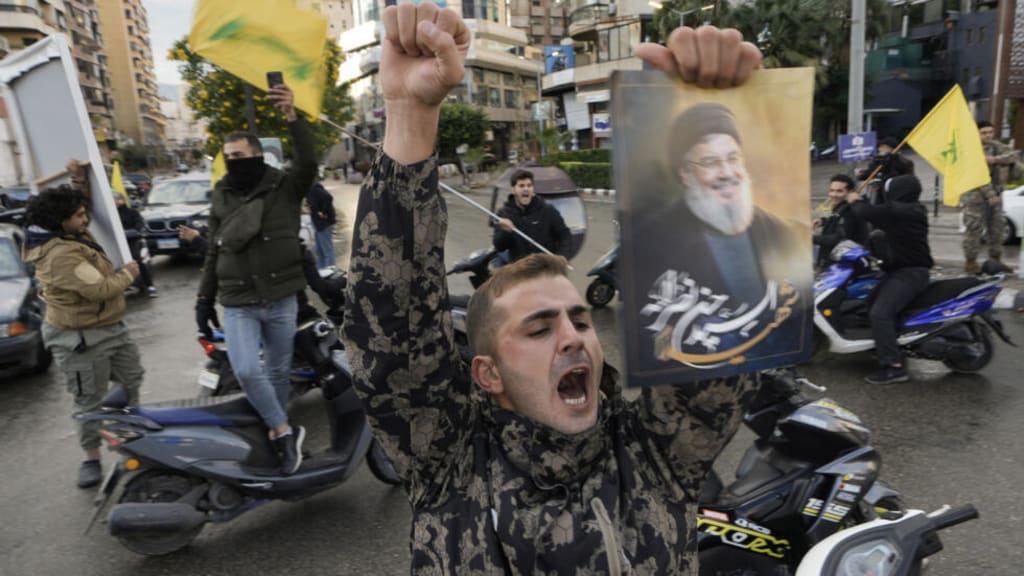
As Lebanon and Israel observe a newly implemented ceasefire, the Hezbollah party faces a moment of reckoning. While its leaders claim victory, critics within Lebanon paint a different picture, describing the group as weakened and vulnerable. As the region begins to rebuild, the challenges for Hezbollah are far from over.
The Return of Displaced Communities
Hours after the ceasefire took effect on November 27, thousands of displaced Lebanese, primarily from Hezbollah strongholds in southern Lebanon, the Bekaa Valley, and the southern suburbs of Beirut, began returning to their homes. This mass movement was portrayed as a victory by Hezbollah, with returnees waving the party's iconic yellow flags and displaying images of the group’s late leader, Hassan Nasrallah, who was killed in an Israeli airstrike on September 27.
“We’ve endured loss and destruction, but we’ve won because we’re returning to our land,” said Abou Hassan, a resident of Tyre, echoing the party’s defiant rhetoric. Hezbollah framed this homecoming as a symbolic victory, reminiscent of similar claims following the 2006 war.
Israel’s Strategy and Public Perception
The return of displaced Lebanese and accompanying celebrations have not gone unnoticed by Israel, which has sought to limit the psychological impact of such scenes. Israeli forces barred residents of certain areas in southern Lebanon from returning home until further notice, citing security concerns.
In areas like Kfarchouba and Kfar Kila, tensions flared as Israeli tanks fired warning shots at groups attempting to return. Journalists were also caught in the crossfire, with reports of injuries near Khyam, a town of strategic significance.
Debate over the Outcome of the War
The conflict, which left 3,800 dead and more than 15,000 injured, has ignited a contentious debate in Lebanon. Hezbollah and its allies tout the ceasefire as a triumph, while opposition figures view it as a significant setback for the group.
Israeli Prime Minister Benjamin Netanyahu declared the war a success for Israel, stating, “We’ve set Hezbollah back by a decade.” He highlighted the deaths of key Hezbollah leaders, including Nasrallah, and the destruction of infrastructure in southern Lebanon and Beirut’s suburbs as proof of Israeli gains.
However, some experts dispute Netanyahu’s narrative. “Victory in war is measured by achieving strategic objectives,” said historian Ahmad Noureddine. He noted that while Israel inflicted heavy losses on Hezbollah, it failed to achieve its goal of neutralizing the group’s military capabilities.
Hezbollah’s Resilience
Despite suffering leadership losses and infrastructure damage, Hezbollah’s operational capacity remained largely intact. The group continued firing rockets and deploying drones throughout the conflict, indicating that its command structures were still functional.
Elias Farhat, a retired Lebanese army general, suggested that Hezbollah will recover quickly from the damage. “Their ability to sustain coordinated operations under heavy fire shows that their command and logistics systems are robust,” he said.
Opposition Voices and Internal Challenges
Opponents of Hezbollah argue that the group’s military power has been significantly eroded. Charles Jabbour, a media official from the Christian Lebanese Forces party, asserted, “Hezbollah is finished as a military force.”
Critics are also leveraging the post-war political climate to push for Hezbollah’s disarmament. They cite United Nations resolutions, including Resolution 1559, which calls for the disarmament of all militias in Lebanon. While the ceasefire agreement does not explicitly demand Hezbollah’s disarmament, it includes provisions for dismantling unauthorized military facilities and confiscating illegal weapons.
Hezbollah, however, rejects these calls, asserting its role as a legitimate resistance force enshrined in Lebanon’s constitution and political agreements.
The Cost of Reconstruction
One of Hezbollah’s most pressing challenges is the reconstruction of its devastated strongholds. Initial estimates place the cost of rebuilding at $5 billion—a daunting figure for a party reliant on dwindling resources.
Abdel Halim Fadlallah, a researcher affiliated with Hezbollah, acknowledged the scale of the task. “Our focus will shift to repairing material damage and restoring destroyed regions, especially in areas deliberately targeted to weaken the bond between Hezbollah and its base,” he said.
Farhat, however, questioned whether Hezbollah could secure the necessary funds. “With an incapacitated state and a lack of major donors, rebuilding will be a formidable challenge,” he warned.
Hezbollah’s Political Future
Despite its struggles, Hezbollah remains a dominant political force in Lebanon, buoyed by its broad support base. However, its weakened state may open the door for political concessions, particularly in Lebanon’s ongoing presidential deadlock.
Fadlallah dismissed attempts to marginalize the group, emphasizing its resilience. “Netanyahu’s goal of reshaping Lebanon’s political landscape has failed. Hezbollah remains Lebanon’s largest party by popular support,” he said.
A Post-War Landscape Fraught with Challenges
The military confrontation with Israel has ended, but Hezbollah’s battles are far from over. The group faces mounting internal and external pressures, from rebuilding shattered communities to navigating Lebanon’s volatile political terrain. How it addresses these challenges will determine its long-term survival and influence.
About the Creator
Keep reading
More stories from GoldenSpeech and writers in Earth and other communities.
Everything You Need to Know About Spotify Wrapped 2024: Release Date and Features
As November draws to a close, Spotify users eagerly await one of the most anticipated events of the year: the release of Spotify Wrapped. This annual campaign, which allows users to reflect on their listening habits over the past year, is a celebration of music and podcasts that many fans look forward to every holiday season. With the release of Wrapped around the corner, here's everything you need to know about the 2024 version of this much-loved feature.
By GoldenSpeechabout a year ago in Earth
Filipino Rescuers Detect “Signs of Life” in Garbage Avalanche That Killed 4 and Left Dozens Missing
In the early hours following a devastating garbage avalanche in the Philippines, rescuers reported detecting “signs of life” beneath tons of waste, igniting a fragile sense of hope amid widespread grief and uncertainty. The deadly incident, which claimed at least four lives and left dozens missing, has drawn national attention to the dangers faced by communities living near massive waste disposal sites.
By Aqib Hussain6 days ago in Earth
Top Australian Writers’ Festival Cancelled After Palestinian Author Barred
One of Australia’s most respected literary festivals has been cancelled following a fierce backlash over the decision to bar a Palestinian author from participating. What began as a programming dispute quickly escalated into a national debate about free speech, cultural inclusion, and political pressure in the arts. The cancellation has sent shockwaves through Australia’s literary community, raising urgent questions about whose voices are allowed on public platforms and at what cost.
By Aarif Lashari2 days ago in Earth


Comments
There are no comments for this story
Be the first to respond and start the conversation.