
Heeding the Pandemic’s Warnings
The trade in legal wildlife is a ticking time bomb


When Katey Hedger walked into the Satria Bird Market in Bali in March 2021, the first thing to hit her was the smell. “There were droppings everywhere, all over the floor, and the floor was wet,” Hedger says. “I tried my best not to touch anything.”
While browsing the market, Hedger—the Indonesia project lead for the Little Fireface Project, a nonprofit group focused on civet conservation—saw for sale live reptiles, fish, puppies, kittens, guinea pigs, rabbits, and other rodents. But the hundreds upon hundreds of birds were the main event. In 10 or so open shops, Hedger counted at least 50 species kept in filthy floor-to-ceiling cages. “My main shock was just how many birds were in each cage,” Hedger says. “They really were crammed so full, and all of the birds were agitated and trying to get out.”
Hedger noted, too, that none of the shop keepers wore masks, and neither did most of customers, some of whom were parents with small children. “COVID isn’t really a concern here, unfortunately,” Hedger says.An estimated 100 major live animal markets and countless smaller ones are operating across Indonesia. Similar markets in other countries and regions—from Laos and Bangladesh to the Amazon and Central Africa—have also resumed operation, if they were ever closed at all. The next pandemic could very well spring from one of these places. When this will happen is impossible to predict—it could be tomorrow, or it could be next year—but without significant changes in how we approach wildlife trade, it will almost certainly happen.
Up to 75 percent of all emerging infectious diseases come from animals, primarily from those that live in the wild and come into contact with humans through trade, exotic animal farming, or deforestation. Experts have been warning about the disease risk of these activities for at least three decades, so for weary scientists, COVID-19’s almost certain link to wildlife, and very likely link to legal trade, came as no surprise. As the new coronavirus reached pandemic proportions, they once again began to insistently remind the world of the need to clamp down on the reckless ways in which we deal with—and deal in—wild animals.
Yet now, more than a year and a half after the pandemic began, very little action has been taken on the most likely source of the world’s collective, immeasurable suffering. “In a globalized world of almost 8 billion people, and in the midst of a global pandemic, why are we still allowing and facilitating a highly risky trade in live birds and mammals as luxury foods and pets?” asks Sue Lieberman, vice president of international policy at the Wildlife Conservation Society.
Fortunately, though, there are major efforts afoot to secure a safer future for us all. A large number of countries are actively involved in negotiations to create a health-focused pandemic treaty, and experts like Lieberman are advocating that it be expanded to also include pandemic prevention at its source. Ideally, this would take the form of a new, legally binding international framework designed to significantly reduce the risk of future disease spillovers by changing our relationship with wildlife and nature. Success with this global undertaking is by no means guaranteed, and the window of opportunity for taking advantage of the urgency of COVID-19 is quickly closing. But there is still time for the world to act.
“We have to use this moment, while memories are fresh and we’re still experiencing the catastrophic impact of a spillover,” says John Scanlon, chair of the Global Initiative to End Wildlife Crime. “If we don’t make these changes now, we’ll be exposed to the same or worse threats in the future.We may never know exactly how COVID-19 found its way into humans. Evidence points to the virus having originated in a horseshoe bat and then either being directly transmitted from bats to people, or else—like SARS and MERS, other recent coronaviruses—jumping into an intermediary species, such as a pangolin or an exotic animal farmed for human consumption, and then finding its way to us from there. The exact transmission path isn’t really of crucial importance, though, because the fact remains that wildlife trade presents myriad opportunities for such events to transpire. “The overarching message is that there is a spectacular amount of wildlife trade that’s simply unregulated,” says Stuart Pimm, the Doris Duke professor of conservation at Duke University.
The vast majority of wildlife trade is also legal. Since the pandemic began, however, much of the focus in the media and the scientific literature has been on the risks posed by illegal trade. While the illegal wildlife trade is significant internationally, worth some $23 billion annually, it is dwarfed by legal trade, valued at more than $400 billion annually. The value disparity is also reflected in the quantity of animals involved, with those legally traded likely outnumbering those illegally traded by a factor of 20 or more.
“People have a skewed idea of how large the illegal wildlife trade is relative to the legal trade, so everything negative—in this case, the spread of diseases—is attributed to the illegal part of the trade,” says Vincent Nijman, a conservation biologist at Oxford Brookes University in England. “But if I was worried about the spread of diseases, I would worry about the legal trade first.”
Among other regulatory problems with the legal wildlife trade—including a paucity of documentation about which species a shipment may contain, and where those animals have been—wildlife that crosses international borders is typically not subject to health inspections. The United States, for example, is one of the largest importers of live animals in the world, including exotic pets. But despite the tens of millions of living creatures that the US allows across its borders each year, only about 150,000 shipments are inspected, and of those, the majority are checked only for suspected violations of laws such as the Endangered Species Act rather than possible diseases. “The reality is that countries and traders, and ultimately consumers, do want goods to flow freely,” Nijman says. “So for most of the border crossings, all that is to be inspected is the paperwork, and if that is fine, the animals move.There are clear ways to reduce the risk of disease from the wildlife trade—things that seem obvious yet are hardly ever done. As a starting point, countries could enforce hygienic standards for capturing, farming, transporting, holding, and slaughtering wild animals. When shipping species across borders, authorities could start performing more regular, rigorous health inspections and, in some cases, require that animals be vaccinated or quarantined. Better documentation is also needed from start to finish, including information identifying the species being shipped, where it came from, where it has been, and who has come into contact with it throughout the process.
“There are gaps in the system that are very obvious, and we need to move now to fill them,” Scanlon says. “The costs associated with these changes are infinitesimal when you compare them to the cost and consequences of just one spillover.”
Outright bans for commercial trade of key, high-risk species groups, including many mammals and birds, would also greatly reduce the opportunities for new infectious maladies and pandemics to emerge. Taking a step in this direction, in April, the World Health Organization advised all governments to stop the trade of live wild-caught mammals, particularly for food. If governments complied, this would eliminate trade of some of the most high-risk types of wild animals, including bats, rodents, and primates.
So far, China has taken the most serious steps toward clamping down on disease risk from wildlife trade. In early 2020, the government temporarily banned the consumption of almost all wildlife for food, and in 2021, elevated that decision to law. China also created a new biosafety law and amended its Animal Pandemic Prevention Law, which formerly applied primarily to livestock, to include wildlife.
“Because of public safety and health issues, suddenly, we realized that if we lower the risk from wildlife, there’s huge economic losses we can avoid,” says Binbin Li, an environmental scientist at Duke Kunshan University in Suzhou, China.
The new wildlife consumption ban, which was widely publicized in the Chinese media, does seem to be having the desired effect. Relative to the country’s population, not that many people in China eat wildlife to begin with, Li says, and most who do try it out of curiosity. Unlike many other countries, Chinese consumers also don’t depend on wildlife as a source of protein. Now that the government has clearly spelled out that eating wild-caught animals is illegal, Li expects demand for those products to decline significantly. And while underground trade will probably continue for some diehard consumers, law enforcement has become much stricter around wildlife-related rules, she says.
There are still significant loopholes, though. China’s legal changes do not apply to the traditional medicine industry, for example, or to the fur industry. Around 13 species of wild animals are also still permitted to be eaten, but only if they come from farms with regulations mirroring those of the livestock industry. “I think there’s still a lot that needs to be done,” Li says. “But what happened in the last year is still pretty encouraging, and I think it’s a good start.”
Prolonged progress could be delayed, however, by politics. Specifically, in seeking to distance itself from the pandemic, Li fears that China might hesitate to publicly promote any further legislative changes it makes. In early 2020, China seemed to be emerging as a global leader in reforming the wildlife trade industry. But ever since Donald Trump and others began using the racist slur “China virus,” and seeking to place blame for the pandemic wholly on China, the Chinese government has clamped down on media stories related to COVID-19 and wildlife, Li says. “There’s actually been some really positive actions in China, but China does not want to publicize it anymore.”
The silence is not only a shame, Li continues, it may actually hinder further global progress by removing China as a trailblazer for change. “Other countries may feel like this is too complicated to do, but China shows that this is possible, that you can change the system,” she says. “If we don’t talk about what China is doing, people won’t know what changes happened here and why they are important.Even with the example of China’s early, strong lead, other countries have not been as proactive. In March 2020, Gabon, for example, officially banned the sale and consumption of pangolins and bats, but stopped short of forbidding other forms of wild meat trade. Vietnam, a center for live wildlife trade, also acted quickly, issuing a directive that forbade wildlife imports into the country and halted the movement of wildlife between provinces. The Vietnamese prime minister also called for heightened enforcement of existing wildlife laws. But there’s no confirmation that these temporary changes will be made permanent, and much more is needed if Vietnam and other Southeast Asian countries are to effectively curb disease threats from wildlife trade, says Amanda Fine, the associate director of the Asia health program at the Wildlife Conservation Society.
“Legal reform is clearly required to update existing laws and regulations around wildlife trade,” Fine says. “When you couple the extinction risk associated with the wildlife trade with the risk of viral disease emergence along wildlife supply chains, the costs to our societies and our planet are clearly too high to allow the practice of wildlife trade to continue.”
There’s been only limited movement in Western countries, as well. Germany is looking to establish a one health office, for example, while in the United States, several bills are making their way through the Senate and the House. The bills would address development aid to help countries transition away from wildlife markets, as well as close live animal markets in the US. (The latter are not primary avenues for disease transmission, however.)
On the other hand, some countries, including Indonesia, Brazil, and Russia, have actually reversed course, relaxing environmental laws in an effort to make up for pandemic-driven economic losses by attempting to spur development. “Indonesia is going to be a huge concern coming out of the pandemic,” says Alice Hughes, a conservation scientist at the Chinese Academy of Sciences in Yunnan. “Their response so far is environmental deregulation.”
“When countries talk about recovery, that can’t include more deforestation and exploitation of wildlife,” Lieberman adds. “From a health perspective, that’s a recipe for another disaster.”
Indeed, as COVID-19 has so devastatingly shown, viruses do not respect national borders. Globalization ensures that what happens in one corner of the world quickly affects every other. “Zoonotic outbreaks have never been rare, but they’ve normally been small scale because they typically occurred in rural, unconnected areas,” Hughes says. “Now we all live in an interconnected society, and that tiny village is no longer isolated.Meanwhile, some two dozen countries have also called on the World Health Organization to create an international pandemic treaty. But that effort deals more with containment of future viruses and vaccine rollouts than with preventing outbreaks in the first place. While these plans are important to develop and could be a good starting point, on their own they fail to address the driver of the problem, Lieberman says. “Saying ‘We won’t change the wildlife trade but maybe we can get vaccines faster next time’ is not the solution.”
The tendency to fixate on the immediate crisis rather than big-picture drivers may come down to a fault of our psychology. As wildlife ecologist Alonso Aguirre told me back in January 2020, “Once a disease jumps into humans, all the responses are reactive and the focus is on human health. We never go back to the source of why these things happen in the first place.” To our species’ detriment, we are hardwired to minimize threats that seem distant or intangible—even if they pose a very real risk. Climate change, Nijman says, is a perfect example.
As COVID-19 vaccinations increased and face masks were cast aside earlier this year, many of us, Nijman says, quickly resumed our lives and forgot about the disease’s root cause. And in the midst of recent Delta-variant-driven outbreaks, few of us will spend much time or energy thinking about the next pandemic, or how to prevent it. It is essential, however, that the decision-makers upon whom we depend to secure our future do continue to think about this, even when the world returns to some semblance of normalcy. “I really don’t want to be having the conversation in five years about why we didn’t do enough,” Lieberman says
About the Creator
Keep reading
More stories from lupu alexandra and writers in Earth and other communities.
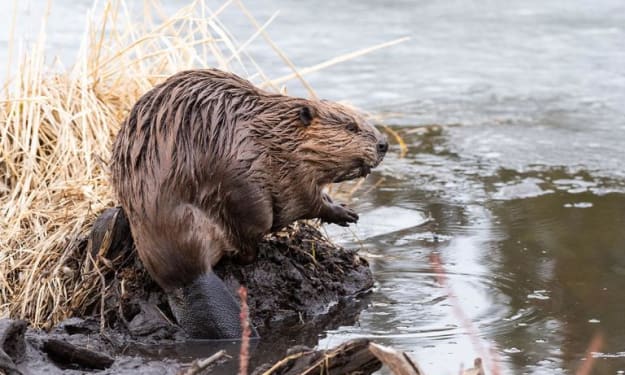
We Don't Deserve Beavers
Tar Creek doesn’t seem like an inviting home for wildlife. For more than 70 years, miners blasted open the earth underneath the Oklahoma waterway in search of lead and zinc. Today, mountains of waste material from the mines tower above what is now classified by the EPA as a Superfund site. Groundwater that flows through the abandoned mines flushes toxic heavy metals, including cadmium and lead—both potent neurotoxins even at low concentrations—into the creek. The water runs bright orange.
By lupu alexandra3 years ago in Earth
Stanislav Kondrashov on the Backbone of the Energy Transition: Why Strategic Infrastructures Matter Now More Than Ever
As the world steadily moves away from traditional fuels and toward renewable energy sources, one truth is becoming increasingly clear: the energy transition is not just about new technologies—it's about the infrastructures that support them. For energy systems to evolve in a meaningful, lasting way, the scaffolding beneath them must be reimagined, reinforced, and in some cases, rebuilt entirely.
By Stanislav Kondrashov5 days ago in Earth
Gunmen Raid Village in Northern Nigeria, Killing at Least 30 People and Abducting Others
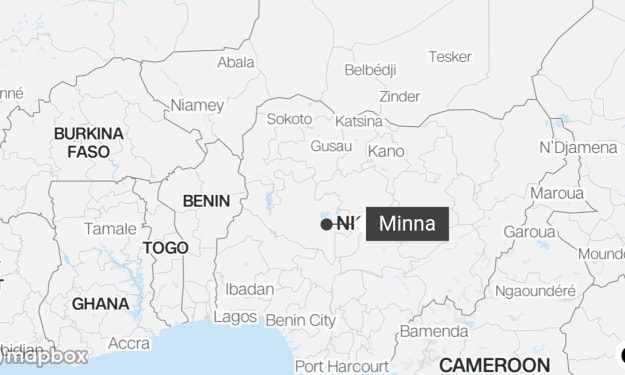
Northern Nigeria has once again been plunged into mourning after gunmen raided a rural village, killing at least 30 people and abducting several others, according to local authorities and residents. The deadly assault is the latest in a long series of violent attacks that have turned large parts of the region into zones of fear, displacement, and chronic instability. The incident underscores Nigeria’s deepening security crisis, where armed groups operate with alarming ease, targeting vulnerable communities and overwhelming local defenses. The Night of the Attack The attack occurred in the late hours when armed men stormed the village on motorcycles, firing indiscriminately and setting homes ablaze. Survivors described scenes of chaos as residents fled into nearby bushes in a desperate attempt to escape the violence. Witnesses say the attackers moved from house to house, killing civilians and forcibly abducting several villagers, including women and children. By the time security forces arrived, the gunmen had already retreated, leaving behind burned homes, lifeless bodies, and traumatized survivors. Local officials confirmed that at least 30 people were killed, though the death toll may rise as search efforts continue. A Region Trapped in Violence Northern Nigeria has become a hotspot for armed violence over the past decade. What began as localized criminal activity has evolved into a complex web of banditry, terrorism, and communal conflict. Armed groups — often referred to as bandits — carry out raids for ransom, cattle theft, and territorial control. Entire villages have been emptied as residents flee repeated attacks, contributing to a growing internal displacement crisis. In many areas, residents say they feel abandoned, with limited security presence and slow emergency response times. Abductions as a Weapon of Terror One of the most disturbing aspects of the attack was the abduction of villagers. Kidnappings have become a defining feature of insecurity in northern Nigeria, used both as a source of income and a tactic to instill fear. Victims are often held in remote forest camps, with families forced to negotiate ransoms they can barely afford. In some cases, abducted individuals are never seen again. Human rights organizations warn that mass abductions are becoming normalized, eroding trust in authorities and leaving communities feeling helpless. Security Forces Under Pressure Nigeria’s military and police face immense challenges in combating armed groups operating across vast and difficult terrain. While security forces have launched operations against bandits, limited resources, intelligence gaps, and difficult geography hinder sustained success. Residents often complain that security personnel arrive only after attacks have occurred. In remote villages, warning systems are weak, and communication infrastructure is limited. The latest attack has reignited criticism of the government’s security strategy, with calls for better intelligence, faster response times, and increased protection for rural communities. Humanitarian Impact and Displacement Beyond the immediate loss of life, attacks like this leave lasting humanitarian consequences. Survivors are often forced to abandon their homes, seeking refuge in overcrowded camps or neighboring towns. Food insecurity worsens as farmlands are abandoned, contributing to rising hunger across the region. Children miss school, healthcare access declines, and communities that once relied on farming and trade are pushed deeper into poverty. Aid organizations warn that without improved security, humanitarian needs in northern Nigeria will continue to grow. Government Response and Public Outrage Nigerian authorities have condemned the attack and vowed to pursue those responsible. Statements from officials emphasized the government’s commitment to restoring peace and bringing perpetrators to justice. However, public frustration is mounting. Many citizens question why attacks continue despite repeated promises of improved security. Social media platforms have been flooded with calls for accountability, reform, and stronger protection for vulnerable communities. For many Nigerians, words are no longer enough — they are demanding tangible results. The Broader Security Crisis The village raid is part of a broader national security challenge that includes insurgency in the northeast, separatist violence in the southeast, and widespread banditry in the northwest and north-central regions. Experts argue that addressing the crisis requires more than military action. Poverty, unemployment, weak governance, and the proliferation of illegal weapons all fuel instability. Without tackling these root causes, analysts warn that violence will continue to resurface in new forms and locations. Lives Lost, Questions Unanswered For the families who lost loved ones, the tragedy is deeply personal. Funerals are being held amid fear that attackers could return. Survivors grapple with trauma, loss, and uncertainty about the future. Many villagers are asking painful questions: Why was there no protection? Why do these attacks keep happening? And how many more lives must be lost before meaningful change occurs? These questions echo far beyond one village, resonating across a nation struggling to protect its citizens. Conclusion The deadly raid on a village in northern Nigeria, which left at least 30 people dead and others abducted, is a stark reminder of the country’s ongoing security crisis. It highlights the vulnerability of rural communities and the urgent need for effective, sustained solutions. Until security improves, villages will remain targets, civilians will continue to suffer, and the cycle of violence will persist. For Nigeria, the challenge is not only to respond to each attack but to create conditions where such atrocities no longer occur. The lives lost in this latest raid demand more than sympathy — they demand action, accountability, and a renewed commitment to protecting the most vulnerable.
By Muhammad Hassan7 days ago in Earth
Day 4 of Quitting
If this is how sobriety feels, maybe it’s better to go through life a little buzzed… this, along with other hits like, I want to kill myself, I wish I was dead, and I’m going to throw myself off a bridge have been the only thoughts on rotation these past few days. I promise myself that if, in a month, I still feel like this (‘this’ meaning despondent, full of rage, and simultaneously numb) I can go back to smoking. Until mid-February though? Nicotine is off the table.
By sleepy drafts5 days ago in Longevity


Comments
There are no comments for this story
Be the first to respond and start the conversation.