
HAWAII FIRE
Unraveling the Causes Behind the Devastating Hawaii Fire

Introduction
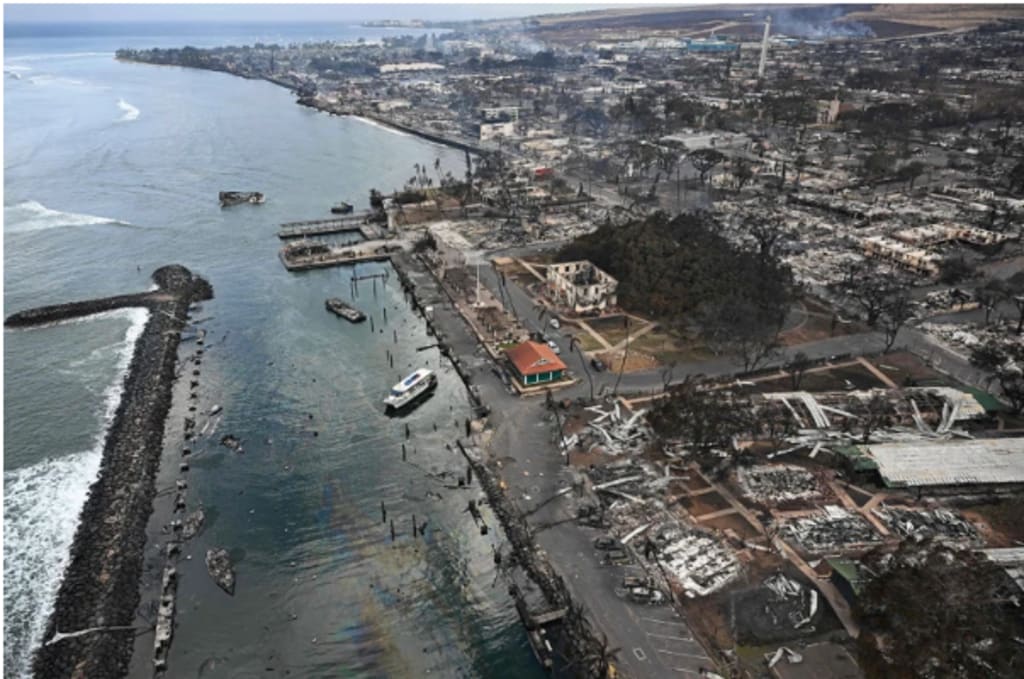
In recent times, the picturesque landscapes of Hawaii have been marred by a massive fire, leaving destruction and despair in its wake. The impact of such a catastrophic event prompts a crucial examination of the underlying reasons that led to the blaze. While pinpointing a single cause can be complex, a confluence of factors often contributes to the ignition and spread of wildfires. This article delves into the reasons behind the massive Hawaii fire, shedding light on the interactions between climate conditions, human activities, and ecological factors.
Climate Conditions and Drought
One primary contributor to the severity of wildfires is climate conditions, particularly drought. Hawaii, though known for its lush greenery, is not exempt from drought conditions. Extended periods of reduced rainfall create dry vegetation that is highly susceptible to ignition. Elevated temperatures, exacerbated by climate change, can further intensify these conditions, leading to increased evaporation, reduced soil moisture, and a heightened fire risk.
Invasive Species and Non-Native Plants
Invasive species and non-native plants play a significant role in altering the landscape's flammability. Hawaii's unique ecosystem has been disrupted by the introduction of non-native vegetation, which often possesses different fire behaviors than native species. These plants can grow more densely and carry higher fuel loads, making wildfires more intense and difficult to control.
Human Activities
Human activities are often a leading cause of wildfires, unintentional or otherwise. Accidental ignition sources, such as discarded cigarettes or unattended campfires, can quickly escalate into large fires when conditions are favorable. Additionally, intentional acts of arson, though less common, can result in catastrophic consequences. Moreover, development in fire-prone areas can increase the likelihood of ignition, as electrical infrastructure, construction, and other human interventions can inadvertently spark fires.
Land Use Practices
Unwise land use practices can significantly contribute to the spread of wildfires. Poor land management, such as inadequate clearance of vegetation around structures or failure to create firebreaks, can enable fires to advance more easily. In areas where fire has been historically suppressed, the accumulation of fuels over time can lead to larger and more severe fires when they eventually ignite.
Limited Resources for Fire Management
The effectiveness of firefighting efforts is often constrained by resource availability. In remote or difficult-to-access regions, firefighting personnel and equipment may struggle to contain the fire quickly, allowing it to grow larger and more destructive. Limited resources can also hinder timely evacuation efforts and coordination between different agencies.
Wind Patterns and Topography
Local wind patterns and topography can drastically affect the behavior of wildfires. Strong winds can carry embers over long distances, igniting spot fires ahead of the main blaze and making containment efforts more challenging. Additionally, the shape of the land, such as canyons and slopes, can funnel the fire and accelerate its spread.
Climate Change and Vegetation Patterns
Climate change exacerbates many of the aforementioned factors, intensifying fire risks. As temperatures rise, vegetation becomes more prone to drying out, increasing its flammability. Shifts in precipitation patterns can alter vegetation distribution, leading to changes in fuel availability and fire behavior. These shifts may be particularly pronounced in sensitive ecosystems like those found in Hawaii.
Lack of Public Awareness and Education
Prevention plays a crucial role in mitigating the impact of wildfires. However, a lack of public awareness and education about fire safety, particularly in fire-prone areas, can contribute to the frequency and severity of these events. People might not take adequate precautions, inadvertently increasing the likelihood of ignition.
Conclusion
The massive fire in Hawaii serves as a stark reminder of the complex interplay between various factors that contribute to such devastating events. Climate conditions, invasive species, human activities, land use practices, resource availability, wind patterns, and topography all contribute to the ignition and spread of wildfires. Addressing the problem requires a multi-faceted approach that encompasses better land management, fire prevention education, climate change mitigation, and improved firefighting capabilities. By understanding and tackling these various factors, communities can better prepare for, respond to, and recover from wildfires, ultimately working towards a more resilient and fire-resistant future for Hawaii and beyond.
About the Creator
Juliet
An intellectual writer & publisher who writes top-notch events/insight around human life & the world at large
Greenland: New Shipping Routes, Hidden Minerals – and a Frontline Between the US and Russia?
Once seen as a remote and largely isolated Arctic territory, Greenland is rapidly emerging as a focal point of global geopolitics. Climate change, melting ice, and technological advances are transforming the island into a strategic hub defined by new shipping routes, vast mineral resources, and growing rivalry between major powers, particularly the United States and Russia. As the Arctic opens up, Greenland’s geographic position and untapped potential are pushing it to the center of international attention, raising questions about security, sovereignty, and sustainable development. Melting Ice and the Opening of New Shipping Routes One of the most visible impacts of climate change in the Arctic is the reduction of sea ice, which is making previously inaccessible waters navigable for longer periods each year. New Arctic shipping routes, including passages near Greenland, promise shorter travel times between Europe, Asia, and North America. Compared to traditional routes like the Suez Canal, Arctic pathways can reduce shipping distances by thousands of kilometers, cutting fuel costs and emissions. For global trade, this could be transformative. Greenland’s coastal waters are increasingly important as potential transit corridors and support hubs for these routes. However, the expansion of Arctic shipping also raises concerns about environmental risks, maritime safety, and the lack of robust emergency infrastructure in the region. Hidden Mineral Wealth Beneath the Ice Beyond shipping, Greenland holds significant reserves of critical minerals, many of which are essential for modern technologies and the global energy transition. These include rare earth elements, lithium, graphite, uranium, and other strategic resources used in electric vehicles, wind turbines, batteries, and defense systems. As demand for these materials grows, Greenland is being viewed as a potential alternative to existing supply chains dominated by a small number of countries. This has increased interest from Western governments seeking to diversify mineral sourcing and reduce strategic dependencies. However, mining in Greenland is controversial. Local communities and policymakers must balance economic opportunities with environmental protection and cultural preservation. Greenland’s harsh climate and fragile ecosystems make resource extraction both technically challenging and politically sensitive. The United States’ Strategic Interest in Greenland The United States has long considered Greenland strategically vital, largely due to its location between North America and Europe. The US already maintains a military presence at Pituffik Space Base (formerly Thule Air Base), which plays a key role in missile warning systems and space surveillance. In recent years, Washington has renewed its focus on Greenland, emphasizing Arctic security, infrastructure investment, and cooperation with Denmark, which oversees Greenland’s foreign and defense policy. US interest is driven by several factors: protecting transatlantic security routes, countering rival powers in the Arctic, and ensuring access to critical minerals. Greenland is increasingly viewed as a frontline in maintaining Western influence in the High North. Russia’s Arctic Ambitions Russia, meanwhile, sees the Arctic as central to its economic and military strategy. It has invested heavily in Arctic military bases, icebreaker fleets, and energy projects, particularly along its northern coastline. Although Greenland is geographically distant from Russia’s main Arctic territories, Moscow closely monitors developments there. The island’s proximity to key Arctic sea lanes and North Atlantic routes makes it strategically relevant in any broader confrontation between Russia and NATO. As tensions between Russia and the West remain high, Greenland’s location places it near the intersection of competing security interests, increasing its geopolitical significance. Greenland Between Global Powers The growing attention from major powers puts Greenland in a delicate position. While the island seeks greater economic independence and development, it must navigate complex relationships with Denmark, the United States, and other international actors. Greenland’s government has emphasized the importance of maintaining control over its resources and ensuring that development benefits local populations. At the same time, geopolitical competition risks turning Greenland into a strategic chessboard rather than a partner in decision-making. This balancing act is becoming more difficult as Arctic competition intensifies. Environmental and Social Challenges Greenland is on the front lines of climate change. Melting ice sheets contribute to global sea-level rise, while local communities face changes to traditional livelihoods such as fishing and hunting. The expansion of shipping and mining could bring jobs and infrastructure, but it also threatens fragile ecosystems and raises concerns about pollution, habitat disruption, and long-term sustainability. Any future development in Greenland will require careful regulation, international cooperation, and meaningful engagement
By Aarif Lashari4 days ago in Earth
Top Australian Writers’ Festival Cancelled After Palestinian Author Barred
One of Australia’s most respected literary festivals has been cancelled following a fierce backlash over the decision to bar a Palestinian author from participating. What began as a programming dispute quickly escalated into a national debate about free speech, cultural inclusion, and political pressure in the arts. The cancellation has sent shockwaves through Australia’s literary community, raising urgent questions about whose voices are allowed on public platforms and at what cost.
By Aarif Lashari5 days ago in Earth
The Devil's Cut
“Comrade, finally you’re awake.” The voice was smooth, sensual. A flickering incandescent bar was all that lit the white, sterile room. All Vladimir remembered was everything going black. He tried to move his arms and found them strapped to the gurney.
By Matthew J. Fromm5 days ago in Fiction




Comments
There are no comments for this story
Be the first to respond and start the conversation.