
Guardians of the Green: The Indigenous Peoples Protecting Rainforests and Preserving Ancient Traditions
very interesting


Rainforests, lush expanses teeming with life, are often described as the lungs of our planet, vital for maintaining the delicate balance of ecosystems and climate regulation. Yet, these vital ecosystems face relentless threats from deforestation, industrial exploitation, and climate change. Amidst this peril, there exists a group of unsung heroes – the indigenous peoples who have inhabited these regions for millennia, serving as guardians of the green. Their deep-rooted connection to the land, profound ecological knowledge, and steadfast commitment to preserving their ancestral territories make them indispensable stewards of our planet's most precious natural resources.
For countless generations, indigenous communities across the globe have lived in harmony with their surroundings, practicing sustainable land management techniques passed down through oral traditions. Their intricate understanding of local flora and fauna, coupled with a profound respect for nature, has enabled them to thrive within the intricate web of life found in rainforests. From the Amazon basin to the Congo Basin, from the forests of Southeast Asia to the Pacific Islands, indigenous peoples have forged profound spiritual, cultural, and ecological connections with their ancestral lands.
One of the most remarkable aspects of indigenous stewardship is their holistic approach to conservation, which integrates environmental protection with cultural preservation. For these communities, the forest is not merely a source of timber or land for agriculture; it is a sacred space imbued with spiritual significance and cultural heritage. Traditional ecological knowledge, passed down through generations, informs their sustainable practices, ensuring the longevity of both their communities and the ecosystems they inhabit.
Central to indigenous conservation efforts is the concept of territorial sovereignty – the recognition of their rights to own, manage, and protect their ancestral lands. However, despite international recognition of these rights through instruments such as the United Nations Declaration on the Rights of Indigenous Peoples (UNDRIP), indigenous communities continue to face systemic challenges to their land tenure and resource rights. Encroachment by extractive industries, government-sanctioned land grabs, and encroaching urbanization threaten not only the physical integrity of indigenous territories but also the cultural fabric of these communities.
In response to these threats, indigenous peoples have become increasingly vocal and organized in defending their rights and territories. Grassroots movements, such as the Indigenous Environmental Network and the Global Alliance of Indigenous Peoples and Local Communities on Climate Change, have emerged as powerful advocates for indigenous land rights and environmental justice. Through advocacy, legal action, and direct action protests, these movements have amplified indigenous voices on the global stage, demanding recognition, respect, and protection for their lands and livelihoods.
Moreover, indigenous peoples are at the forefront of innovative conservation initiatives that blend traditional knowledge with modern technologies and practices. Community-led forest management projects, participatory mapping efforts, and eco-cultural tourism ventures empower indigenous communities to take control of their destinies while preserving their cultural heritage and natural resources. By harnessing the power of indigenous wisdom and local governance structures, these initiatives offer a compelling alternative to conventional conservation models driven by external actors.
In addition to their role as environmental stewards, indigenous peoples are also invaluable repositories of traditional knowledge, languages, and cultural practices that are intricately linked to the forests they inhabit. From medicinal plants and sustainable harvesting techniques to storytelling and ceremonial rituals, indigenous cultures offer a wealth of wisdom that has the potential to enrich global efforts towards sustainability and resilience. However, the erosion of indigenous languages and cultural traditions poses a significant threat not only to the identity of these communities but also to the diversity of knowledge systems essential for navigating an uncertain future.
As we confront the escalating climate crisis and biodiversity loss, the wisdom of indigenous peoples has never been more pertinent. Recognizing the vital role of indigenous guardianship in safeguarding our planet's ecological integrity requires a paradigm shift in how we perceive and engage with these communities. True conservation must be grounded in principles of justice, equity, and respect for indigenous rights, acknowledging their inherent sovereignty over their ancestral lands and the invaluable contributions they make to global biodiversity and cultural diversity.
In conclusion, the guardians of the green – the indigenous peoples protecting rainforests and preserving ancient traditions – embody a profound ethos of stewardship and resilience that serves as a beacon of hope in an uncertain world. Their unwavering commitment to safeguarding the natural world, rooted in deep-seated cultural values and traditional knowledge, offers a blueprint for sustainable coexistence between humans and nature. As we navigate the challenges of the 21st century, it is imperative that we listen to and learn from the wisdom of indigenous communities, honoring their rightful place as custodians of the Earth's most biodiverse and culturally rich landscapes.
About the Creator
Alexander Mensah
With a blend of expertise, creativity, and dedication, my article promises to captivate and entertain. Backed by thorough research and a passion for storytelling, each word is crafted to inform and engage readers. Join the conversation
Keep reading
More stories from Alexander Mensah and writers in Earth and other communities.
"The Secret Life of Left Socks: Unraveling the Conspiracy"
**Introduction:** In the mysterious depths of every household, there exists a phenomenon that has baffled humanity for centuries: the disappearance of left socks. You know the drill—you put a pair of socks in the laundry, but when it's time to fold them, one always seems to vanish into thin air. But what if there's more to this than meets the eye? What if left socks have a secret life of their own, hidden from our unsuspecting gaze? Join us as we delve into the conspiracy theory surrounding the enigmatic existence of left socks.
By Alexander Mensah2 years ago in Earth
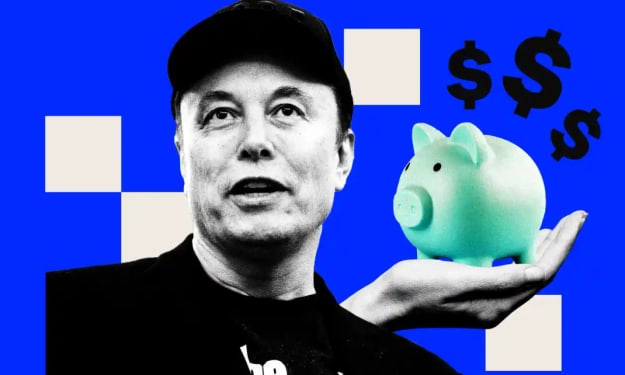
Elon Musk Says Retirement Savings “Won’t Matter” in 20 Years—Here’s What Experts Think
Recently, Elon Musk sparked a heated debate on social media with a bold claim: in 20 years, traditional retirement savings “won’t matter.” The Tesla and SpaceX CEO suggested that the way people think about money and retirement today might be completely obsolete in a couple of decades. As usual, Musk’s statements are equal parts provocative and visionary, leaving many wondering whether they should rethink their financial plans entirely. To get clarity, we reached out to seven personal finance and AI experts to hear their thoughts on Musk’s prediction. Their insights provide a mix of caution, optimism, and futuristic thinking. 1. The Case for Obsolescence: AI and Automation AI strategist Dr. Karen Liu believes Musk isn’t exaggerating when he talks about the diminishing importance of retirement savings. “If AI and automation continue at the current pace, many traditional jobs could disappear,” she explains. “By 2046, people might earn income from AI-driven ventures, digital assets, or royalties rather than a 9-to-5 paycheck. In that case, the way we save for retirement could indeed look very different.” She emphasizes that new financial models might emerge, such as universal basic income (UBI) or AI-managed wealth portfolios, making conventional retirement accounts less critical. “People might no longer need 401(k)s or IRAs in the same way we do now,” she adds. 2. The Human Factor: Some Things Don’t Change Personal finance advisor Marcus Bell takes a more conservative view. “Even if the economy changes drastically, money management skills won’t be irrelevant,” he says. “Musk may be right that retirement savings as we know them may evolve, but having a financial cushion will always matter. Emergencies, healthcare costs, and life changes won’t disappear.” Bell suggests a hybrid approach: continue contributing to traditional retirement accounts while exploring alternative investments like digital currencies, AI-managed funds, or entrepreneurial ventures. 3. Cryptocurrency and the Digital Asset Revolution Crypto expert Priya Desai sees Musk’s comment as a nod toward the rise of digital assets. “By 2046, much of personal wealth may reside in cryptocurrencies, tokenized real estate, and NFTs rather than bank accounts or pensions,” she says. Desai believes that blockchain technology could redefine ownership and wealth accumulation, making traditional retirement savings less central. However, she cautions: “Digital assets are highly volatile. While they may replace some retirement vehicles, they aren’t a guaranteed substitute. Diversification will remain crucial.” 4. AI-Powered Wealth Management AI entrepreneur Rohan Kapoor points out that AI itself could make traditional retirement planning almost obsolete. “Imagine AI systems that continuously optimize your investments, taxes, and spending in real-time,” he says. “If AI handles wealth accumulation more efficiently than humans, you may not need to manually save and plan decades in advance.” Kapoor predicts that by 2046, AI advisors could create personalized financial lifelines that automatically adjust for inflation, market changes, and lifestyle goals. In this scenario, traditional 401(k)s might feel outdated. 5. The Social Safety Net Factor Economist Dr. Elise Morgan reminds us that social and political structures will also play a role. “Even if technology changes how wealth is accumulated, government programs like Social Security, healthcare, or UBI will shape retirement,” she explains. “Musk’s statement assumes a high-tech, highly automated economy, which is just one possible scenario.” Morgan urges caution: relying solely on futuristic predictions could be risky. Traditional savings may still act as a fallback if economic or technological disruptions fail to deliver as Musk anticipates. 6. Mindset and Wealth Beyond Money Financial psychologist Sandra Liu emphasizes that wealth isn’t only monetary. “Even if retirement accounts lose their traditional meaning, financial literacy, resourcefulness, and the ability to leverage technology will remain critical skills,” she says. “Musk’s prediction is more about mindset than accounts. People who can adapt, innovate, and use technology to generate income will thrive regardless of conventional savings.” 7. Preparing for the Future, Not Panicking Finally, futurist Jared Thompson encourages a pragmatic approach: “Don’t panic or abandon your retirement plan just because Elon Musk said so. Think of it as a signal to diversify—invest in tech, learn AI skills, and explore new income streams.” Thompson suggests a “layered strategy”: keep some traditional retirement savings while experimenting with AI-driven investment platforms, cryptocurrencies, and entrepreneurial projects. What Does This Mean for You? Musk’s prediction may sound extreme, but the expert opinions reveal a spectrum of possibilities. Here’s a practical takeaway: Keep saving, but diversify: Don’t abandon retirement accounts, but explore AI-driven investments, crypto, or digital assets. Invest in skills: AI, coding, and tech literacy may be as valuable as cash reserves in 20 years. Embrace flexibility: Financial plans should be adaptable to rapid technological and societal changes. Mind the basics: Emergency funds, debt management, and smart spending remain essential regardless of tech trends. In short, Musk’s warning isn’t necessarily a call to abandon traditional retirement planning—it’s a reminder that the future of money is changing rapidly. Those who combine conventional strategies with an eye on emerging technologies may be the ones who truly thrive in 2046. Conclusion: Elon Musk’s claim that retirement savings “won’t matter” in 20 years is provocative, but it opens an important conversation about the intersection of finance, technology, and the future of work. While some experts see it as a harbinger of radical change, others stress prudence and flexibility. Either way, the message is clear: the next two decades will demand both financial savvy and tech literacy. The question isn’t whether retirement savings will disappear—it’s whether you’ll adapt to the evolving financial landscape.
By Muhammad Hassan5 days ago in Earth
Things you don't know about Africa
Africa: What You Probably Didn’t Know Article No. 1671 Tuesday, 25 February 2020 By Wardah Baloch In terms of land area, Africa is the second-largest continent in the world. It covers nearly 22 percent of the world’s total landmass and about 6 percent of the Earth’s total surface area. Only Asia is larger than Africa in size.
By Sudais Zakwan5 days ago in Earth



Comments
There are no comments for this story
Be the first to respond and start the conversation.