
Groundwater depletion
Groundwater is one of the most essential natural resources on Earth, serving as a critical source of fresh water for drinking, agriculture, and industrial use.

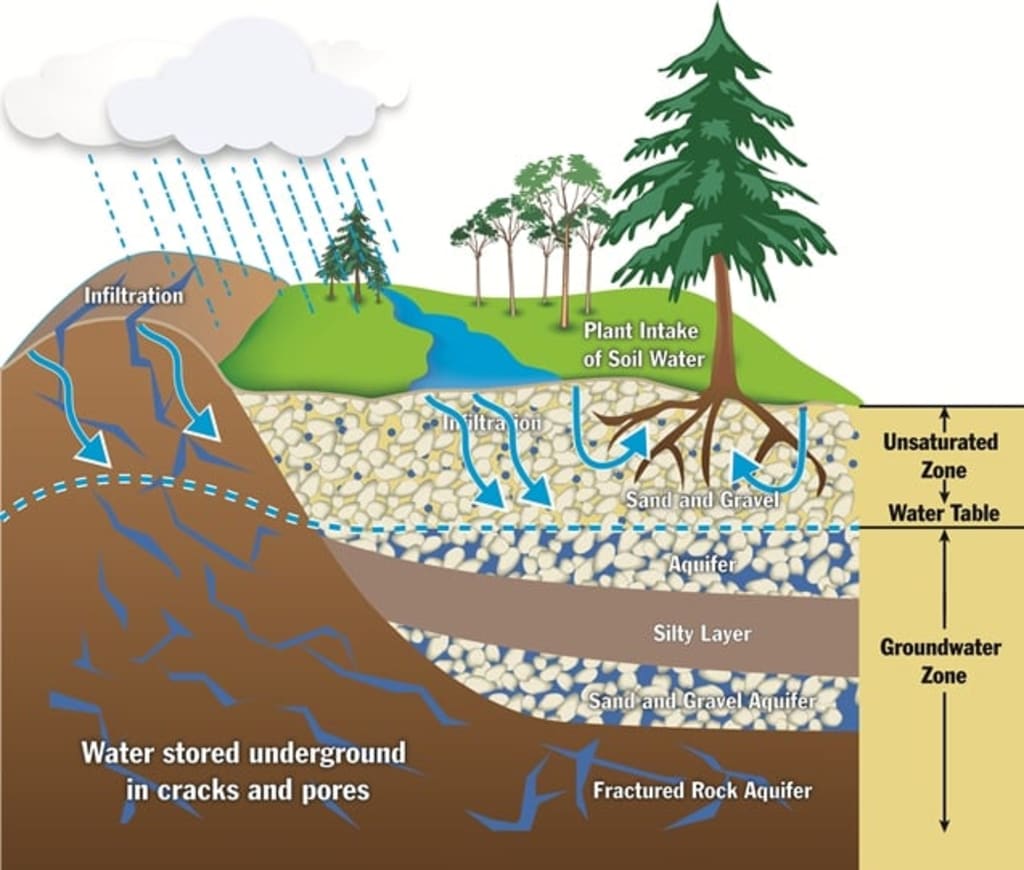
Groundwater is stored beneath the Earth's surface in aquifers—permeable rock layers that hold water. However, excessive extraction of groundwater beyond its natural replenishment rate leads to groundwater depletion, posing a serious threat to water availability, ecosystems, and human livelihoods. This article explores the causes, consequences, and possible solutions to the growing issue of groundwater depletion.
Causes of Groundwater Depletion
Over-extraction for Agriculture
Agriculture is the largest consumer of groundwater, accounting for nearly 70% of global freshwater withdrawals. Intensive irrigation, particularly in arid and semi-arid regions, leads to excessive depletion of aquifers. High-demand crops such as rice, wheat, and cotton require large volumes of water, further stressing underground reserves.
Urbanization and Population Growth
Rapid urban expansion and population growth have increased water demand for domestic and industrial uses. Many cities rely on groundwater due to inadequate surface water supplies, leading to excessive pumping and declining water tables.
Climate Change and Reduced Recharge
Climate change has altered precipitation patterns, resulting in reduced groundwater recharge. Prolonged droughts decrease surface water availability, prompting increased reliance on underground reserves. Additionally, higher temperatures increase evapotranspiration, reducing the water available for recharge.
Deforestation and Land-Use Changes
Forests play a crucial role in maintaining the hydrological cycle. When trees are removed, soil erosion increases, reducing the ability of land to absorb and retain water. Urbanization and industrial development replace natural landscapes with impermeable surfaces, preventing rainwater from percolating into the ground.
Industrial and Commercial Exploitation
Industries, including manufacturing and mining, extract significant amounts of groundwater for operations. In some cases, water-intensive industries, such as bottled water production, contribute to localized groundwater depletion, severely impacting nearby communities.
Consequences of Groundwater Depletion
Declining Water Tables
Excessive extraction lowers the water table, making it more difficult and costly to access groundwater. Farmers and municipalities often need to drill deeper wells, leading to increased energy consumption and financial strain.
Land Subsidence
When groundwater levels drop significantly, the land above may compact and sink, causing land subsidence. This phenomenon can lead to infrastructure damage, including cracked roads, sinking buildings, and disrupted sewer systems, especially in urban areas.
Reduced Water Quality
Over-extraction can cause saline water intrusion in coastal areas, making groundwater unfit for consumption and agriculture. Additionally, when aquifers are depleted, contaminants from the surface, such as pesticides and industrial chemicals, can seep into groundwater supplies, degrading water quality.
Loss of Ecosystems
Many rivers, lakes, and wetlands rely on groundwater to sustain their flow, particularly during dry periods. Depleting groundwater reserves can lead to the drying up of these ecosystems, threatening biodiversity and disrupting habitats for aquatic and terrestrial species.
Food and Water Scarcity
Groundwater depletion reduces water availability for agriculture, directly affecting food production. This can lead to food shortages, increased prices, and economic instability, particularly in regions heavily dependent on irrigation.
Solutions to Groundwater Depletion
Sustainable Water Management
Implementing policies that promote efficient water use in agriculture, industry, and households is essential. Governments and organizations should enforce water conservation measures, including restrictions on over-extraction and incentives for sustainable practices.
Improved Irrigation Techniques
Farmers can adopt efficient irrigation methods such as drip irrigation and sprinkler systems to reduce water wastage. These techniques deliver water directly to plant roots, minimizing losses due to evaporation and runoff.
Groundwater Recharge and Rainwater Harvesting
Artificial recharge methods, such as building recharge wells, check dams, and percolation tanks, help replenish groundwater levels. Rainwater harvesting can also be implemented in urban and rural areas to collect and store rainwater for future use.
Afforestation and Land Conservation
Restoring forests and protecting natural landscapes enhance groundwater recharge by allowing rainwater to infiltrate the soil. Sustainable land-use practices, such as maintaining green spaces in urban areas, also contribute to groundwater replenishment.
Desalination and Alternative Water Sources
In water-scarce regions, desalination of seawater can provide an alternative to groundwater extraction. While expensive, advancements in technology are making desalination more viable as a supplemental water source.
Public Awareness and Community Engagement
Educating communities about the importance of groundwater conservation is crucial. Governments, NGOs, and educational institutions should conduct awareness campaigns to promote responsible water usage and local groundwater management initiatives.
IN THE END
Groundwater depletion is a pressing global issue that requires immediate action to ensure water security for future generations. By adopting sustainable water management practices, improving irrigation efficiency, enhancing groundwater recharge, and raising public awareness, we can mitigate the adverse effects of over-extraction. Policymakers, industries, and individuals must work together to implement long-term solutions that balance water consumption with natural replenishment. Only through collective effort can we safeguard this invaluable resource for the well-being of both people and the planet.
About the Creator
Badhan Sen
Myself Badhan, I am a professional writer.I like to share some stories with my friends.
Keep reading
More stories from Badhan Sen and writers in Earth and other communities.
Hydrological cycle (evaporation, precipitation)
The hydrological cycle, also known as the water cycle, is a continuous process by which water circulates through the Earth's atmosphere, surface, and underground reservoirs. This cycle is essential for maintaining ecological balance and supporting life on our planet. The two most significant processes in this cycle are evaporation and precipitation, which facilitate the movement of water between different states and locations. This article explores the fundamental aspects of the hydrological cycle, emphasizing evaporation and precipitation and their roles in sustaining the global water balance.
By Badhan Senabout a year ago in Earth
The Angry Man in Your House
"If you grow up with an angry man in your house, there will always be an angry man in your house" This statement has caused plenty of controversy online, people say its a statement that blames victims while also undermining those who break traumatic cycles to form health relationships... but if I'm honest now that I'm in my 30s it makes more sense to me than ever, and I'd argue that its not just about fathers and uncles.
By S. A. Crawforda day ago in Humans



Comments (2)
Ground water is essential! Great work!
Love this story! Awesome story