
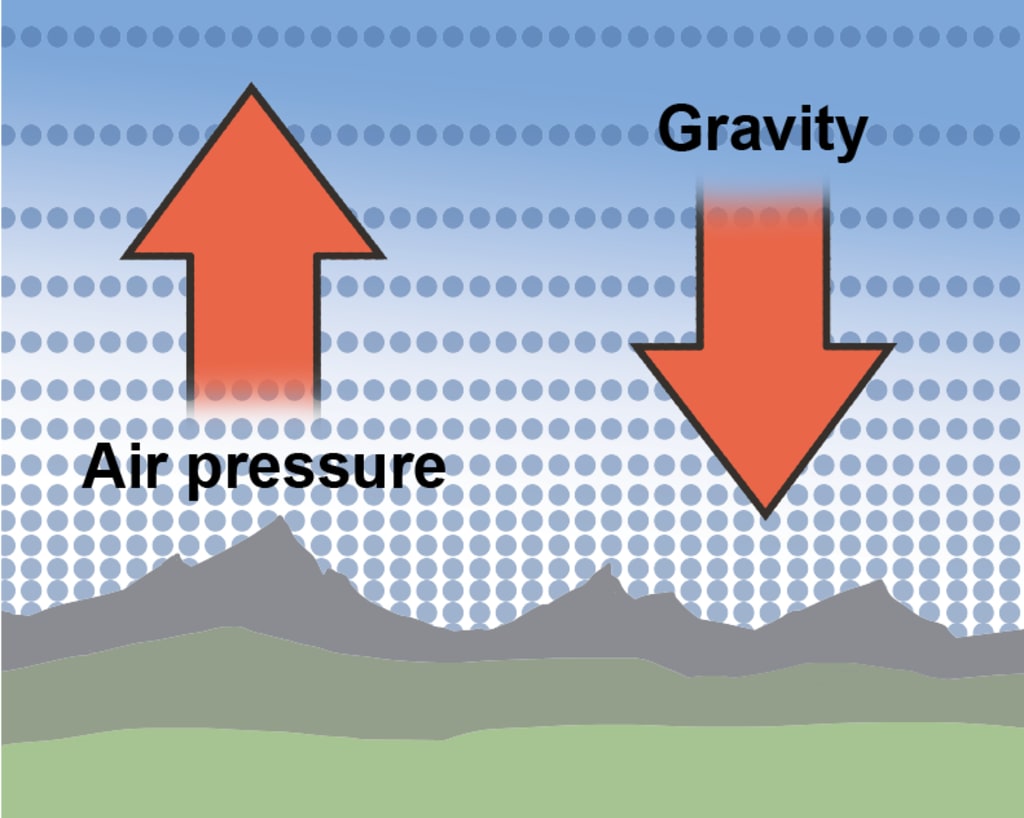
Ladies and gentlemen, get ready to witness the grandest showdown in the making of the universe. Brace yourselves for the epic clash of powers in the event known as the Big Bang! In one corner, we have the mighty force that draws all matter together, reaching infinitely far—the one and only gravity! And in the opposite corner, our formidable contender possesses the remarkable strength to repel matter with great vigor. When faced with challenges, this fighter only grows stronger—give it up for pressure! Over the next several hundred thousand years, these two contenders will engage in a cosmic wrestling match that will determine the destiny of the universe. Yes, folks, the ripple effects of this monumental battle will shape the very fabric of the universe we inhabit today. But what is at stake in this cosmic showdown? The answers will unfold as we witness the explosive arrival of the Big Bang! Let's zoom in for a thrilling play-by-play commentary.
This extraordinary event gives birth to three essential components in our infant universe. Dark matter, which interacts solely with gravity. Baryonic matter, the building blocks of all observable matter, influenced by both gravity and pressure. And the radiant energy consisting of countless particles of light, known as photons. In the immediate aftermath of the Big Bang, all three components coexist in equilibrium, with no discernible difference in density between locations. However, as the universe begins to expand, variations in density gradually emerge.
Gravity wastes no time in pulling matter closer, as dark matter starts accumulating at the centers of these increasingly dense regions, forming the foundation of future galaxies. Meanwhile, pressure gathers its strength. In this hot, high-energy environment, protons and electrons are unable to join forces and create atoms. Thus, these free particles engage in energetic interactions with ambient photons, resulting in a near-fluid state of baryonic matter and radiation. Yet, as baryonic particles draw closer together, the fluid grows hotter, leading to a powerful repulsion by photons. This fierce battle represents the force of pressure, specifically radiation pressure, fiercely pushing matter apart. With each relentless tug from gravity, compressing photons and matter together, pressure counteracts with a forceful shove. In this titanic struggle, the fluid is heaved back and forth, generating colossal waves known as baryonic acoustic oscillations (BAOs). These BAOs ripple across space at nearly two-thirds the speed of light, leaving an indelible mark on the universe's grand tapestry. They dictate the distribution of matter throughout space, explaining why galaxies are more likely to be found at their peaks, while empty space resides in their troughs. And that's not all. The remnants of these ripples persist in the background radiation of the universe, serving as a permanent testament to this legendary clash.
After a prolonged stalemate of approximately 370,000 years, the tides of battle gradually shift. The tremendous heat generated by the Big Bang dissipates significantly, cooling the universe to a point where loose electrons begin pairing up with protons. This pivotal era, known as the "era of recombination," halts the reckless movement of electrons. As a result, light can now travel freely for the first time, illuminating the cosmos. The photons' influence on neutral atoms weakens, gradually diminishing the power of pressure. Thus, it is time to crown our champion—the undefeated and omnipresent force of gravity! However, this rivalry is far from over. A similar contest endures to this day within every star, as gravity draws in a star's gases while pressure pushes the matter outward. This delicate balance sustains the stability of the Sun and all other stars for billions of years. In fact, this ongoing battle of the titans is the reason why Earth's atmosphere does not collapse onto the ground. So while their greatest clash
About the Creator
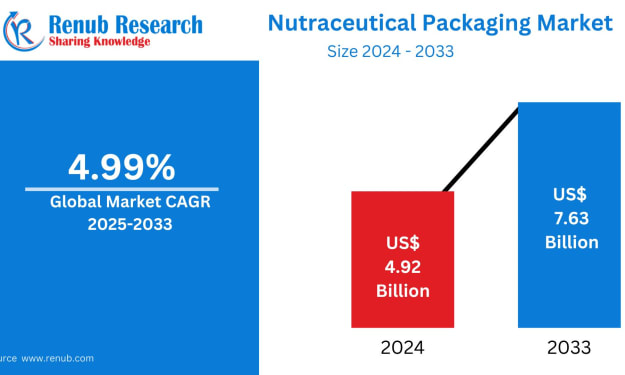
Neutraceutical Packaging Market Size and Forecast 2025–2033
Neutraceutical Packaging Market at a Glance The Neutraceutical Packaging Market is projected to expand from US$ 4.92 billion in 2024 to US$ 7.63 billion by 2033, growing at a CAGR of 4.99% from 2025 to 2033. This steady growth reflects the accelerating global demand for dietary supplements, functional foods, herbal products, and wellness beverages. Rising health awareness, aging populations, sustainability expectations, the rapid growth of e-commerce, and evolving regulatory frameworks are reshaping how nutraceutical products are packaged, protected, and presented.
By jaiklin Fanandish3 days ago in Earth
Man Shot Dead by Police After Aiming Bow and Arrow at Officers
A man has been shot dead by police after allegedly aiming a bow and arrow at officers, authorities have confirmed. The fatal encounter has triggered public debate over police use of force, crisis response protocols, and how law enforcement handles situations involving unconventional weapons.
By Aarif Lashari3 days ago in Earth


Comments