

Delhi’s air quality reached alarming levels in November 2024, pushing its Air Quality Index (AQI) into the severe category for 32 consecutive days. Despite stringent court-mandated measures under the Graded Response Action Plan (GRAP-IV), the city resembled a gas chamber, raising serious concerns about the implementation and enforcement of these measures. The situation sheds light on widespread violations, lack of coordination among authorities, and systemic inefficiencies that contributed to the deteriorating air quality.
A Broken System of Enforcement
The Supreme Court invoked GRAP-IV in mid-November to tackle the escalating crisis. This included a ban on pollution-causing vehicles, construction, and demolition activities. However, reports from court-appointed commissioners highlighted grave violations in Delhi and neighboring regions like Noida, Faridabad, and Meerut. Rampant construction activities, particularly in upscale areas like South Delhi and Greater Noida, continued unchecked. Renovation and painting at government officials' residences further undermined the ban.
One glaring instance involved a commissioner being threatened while inspecting GRAP violations in New Delhi. Such incidents not only expose lax enforcement but also the risks faced by those attempting to hold violators accountable.
#### **Unattended Construction Dust and Factory Emissions**
Construction material left unattended along roads in South Delhi contributed significantly to airborne dust, further worsening air quality. Reports pointed out insufficient dust suppression measures, with only two water sprinklers assigned to vast areas. Meanwhile, factories in Greater Noida continued operations, emitting smoke and exacerbating pollution levels.
#### **Vehicular Pollution and Traffic Mismanagement**
Despite GRAP-IV banning the entry of diesel trucks into Delhi, numerous violations were observed. Diesel vehicles entered unchecked due to the lack of CCTV cameras or personnel at key border points like the Delhi-Noida Direct Flyway (DND). Traffic jams caused by poorly managed police barricades further compounded the pollution problem. Over one crore outdated vehicles continued to ply in Delhi-NCR, with limited facilities for scrapping or testing these polluting vehicles.
Additionally, defaulting trucks sent back from checkpoints traveled kilometers within Delhi before exiting, contributing to emissions. Experts recommended pre-border inspections to curb this issue.
#### **Burning of Waste and Biomass**
The burning of biomass and waste added another layer to the pollution crisis. Daily, over 5.5 lakh kilograms of wood were burned across Delhi’s slums due to a lack of access to LPG cylinders. Reports also documented large-scale garbage burning in regions like Greater Noida, Gurgaon, and North Delhi. Instances of live stubble burning in areas like Jharoda village went unpunished due to police inaction.
#### **Coordination Failures Among Authorities**
One of the most significant factors contributing to the failure of GRAP-IV was the lack of coordination among stakeholders, including the Municipal Corporation of Delhi (MCD), Delhi Police, and Delhi Pollution Control Committee (DPCC). Court commissioners found no officials manning critical checkpoints, no CCTV cameras at major border points, and slow e-challan systems due to poor connectivity. These lapses rendered enforcement efforts ineffective, allowing violators to go unchecked.
#### **Health Implications and Public Outcry**
Delhi’s toxic air had severe health implications. Inhaling the city’s air on December 1 was equated to smoking 14 cigarettes in a day. While studies highlighted the long-term health impacts of air pollution, the government downplayed the issue, attributing health risks to multiple factors beyond air quality.
The crisis underscored the dire need for systemic reforms, improved governance, and public accountability. Short-term solutions like improving wind conditions temporarily eased AQI levels, but without robust action, Delhi’s air quality will remain precarious.
#### **The Road Ahead**
To prevent such crises in the future, immediate and long-term measures are essential:
1. **Strict Enforcement:** Strengthening monitoring mechanisms at border points with CCTV cameras and well-trained personnel.
2. **Enhanced Resources:** Increasing water sprinklers and manpower for dust suppression.
3. **Vehicle Scrapping Facilities:** Expanding scrapping and testing facilities for old vehicles in Delhi-NCR.
4. **Public Awareness and Subsidies:** Providing LPG cylinders to slum households to reduce biomass burning.
5. **Accountability:** Ensuring coordination among authorities and penalizing violators through effective monitoring and enforcement.
Until these issues are addressed, Delhi’s struggle for breathable air will remain a recurring nightmare. The November 2024 crisis serves as a stark reminder of the consequences of neglecting environmental policies and the urgent need for proactive governance.
About the Creator
Police Warn Against ‘Ridiculous’ Parking at Beauty Spot Amid Snow Disruption
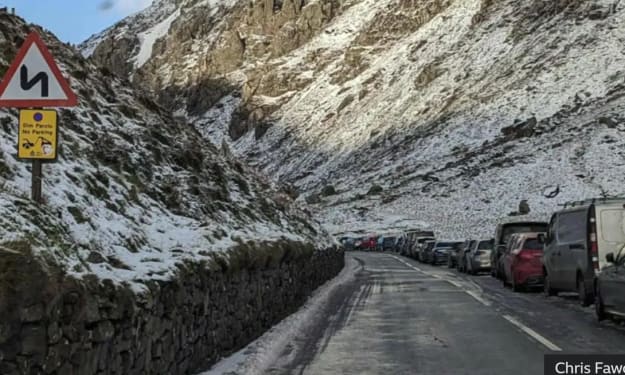
Heavy snowfall may transform beauty spots into winter wonderlands, but it also brings serious risks when visitors ignore basic safety and parking rules. Police have issued a strong warning against what they describe as “ridiculous” parking at a popular beauty spot, after snow disruption led to blocked roads, stranded vehicles, and delayed emergency access. As wintry conditions continue to affect travel, authorities are urging the public to prioritise safety over scenic photographs, reminding drivers that poor parking decisions can have life-threatening consequences during severe weather. Snowfall Turns Scenic into Hazardous The recent spell of snow attracted large numbers of visitors eager to enjoy picturesque landscapes blanketed in white. Hillsides, national parks, and rural viewpoints quickly became hotspots for walkers, families, and amateur photographers. However, police say the surge in visitors coincided with widespread parking chaos. Cars were left abandoned on narrow roads, grass verges, gateways, and even blocking access routes meant for emergency vehicles and local residents. What may appear to drivers as a harmless decision to “park for just a few minutes” can quickly escalate into a major safety issue—especially when snow and ice reduce road space and visibility. Police Response and Public Warning Local police forces have taken to social media and public statements to express frustration at the situation. Officers described some parking behaviour as not only irresponsible but dangerous, particularly given the weather conditions. Police warned that emergency vehicles, including ambulances and mountain rescue teams, were struggling to reach areas due to blocked roads. In severe weather, response times are already under pressure, and illegally parked vehicles can mean the difference between life and death. Authorities have also made it clear that enforcement action will be taken where necessary. Drivers risk fines, towing, and penalty points if their vehicles obstruct roads or endanger others. Impact on Emergency Services One of the most serious consequences of poor parking during snow disruption is its impact on emergency services. Narrow rural roads, already difficult to navigate in icy conditions, become completely impassable when cars are parked irresponsibly. Fire crews, paramedics, and rescue teams rely on clear access routes, particularly in popular beauty spots where accidents such as slips, falls, or stranded walkers are more likely in winter conditions. Police stressed that emergency vehicles do not have the luxury of “finding another way around” when roads are blocked. Delays caused by inconsiderate parking put both responders and the public at risk. Local Residents Left Frustrated It is not only emergency services that are affected. Residents living near popular beauty spots often bear the brunt of snow-related disruption. Driveways are blocked, access to homes becomes difficult, and essential journeys for work, medical appointments, or supplies are delayed. Many locals report feeling ignored by visitors who treat rural communities like seasonal attractions rather than lived-in areas. During winter weather, this frustration is magnified, as residents may already be dealing with power outages, poor road conditions, and limited access to services. Police have echoed these concerns, reminding visitors that beauty spots are often surrounded by working communities, not just open spaces for leisure. Why Snow Makes Parking More Dangerous Snow significantly reduces road safety margins. It narrows carriageways, hides road markings, and makes verges unstable. A car parked partly on a road might seem manageable in normal conditions, but in snow it can create blind corners, force vehicles into oncoming traffic, or cause skidding accidents. Additionally, snowploughs and gritters require space to operate effectively. Poorly parked vehicles can prevent these essential services from clearing roads, prolonging disruption for everyone. Authorities warn that even experienced drivers can underestimate how quickly conditions can change in winter weather. Social Media and the “Snow Day” Effect Police have also pointed to social media as a contributing factor. Viral images of snow-covered landscapes often encourage spontaneous trips without proper planning. People see beautiful photos and head out without considering parking availability, road conditions, or weather warnings. This “snow day” mentality can overwhelm rural infrastructure not designed for large volumes of traffic, particularly during adverse weather. Police urge visitors to check local advice before travelling and to be prepared to turn back if conditions are unsafe. Advice for Safe Winter Visits In response to the ongoing disruption, authorities have shared clear guidance for anyone planning to visit beauty spots during snowy conditions: Avoid unnecessary travel during severe weather warnings Park only in designated areas, never on roads or verges Do not block gateways, tracks, or emergency access routes Check weather and road conditions before setting off Be prepared to leave if parking is unavailable Police emphasise that no photograph or short walk is worth risking lives or causing serious disruption. Enforcement and Accountability While officers prefer to rely on public cooperation, they have confirmed that enforcement will be stepped up if irresponsible behaviour continues. Vehicles may be ticketed or removed, particularly if they pose a danger or obstruction. Authorities stress that enforcement is not about spoiling enjoyment but about ensuring public safety. Winter conditions demand higher levels of responsibility from drivers, not less. A Shared Responsibility Snow transforms landscapes, but it also tests public behaviour. Police warnings against “ridiculous” parking are not just expressions of frustration—they are urgent reminders that safety must come first. Enjoying nature is a privilege, not a right, especially during extreme weather. By parking responsibly and respecting local communities, visitors can help ensure that beauty spots remain accessible, emergency services remain effective, and winter days do not turn into preventable disasters. As snow disruption continues, the message from police is clear: think before you park, or don’t park at all
By Muhammad Hassan4 days ago in Earth
How Wind Energy Works: A Closer Look with Stanislav Kondrashov
As the world pushes further into the 21st century, the demand for sustainable and clean sources of energy has never been greater. At the heart of this shift is wind energy—a technology as old as the first sailboat, yet as modern as the towering turbines dotting coastlines and countrysides. Stanislav Kondrashov, an independent energy researcher and commentator, has long studied the mechanics and potential of wind power. His insights help demystify what’s often seen as a complex system driven by forces we can’t see.
By Stanislav Kondrashov 6 days ago in Earth



Comments
There are no comments for this story
Be the first to respond and start the conversation.