
Global warming
The consequences of global warming

Global warming is a pressing issue that affects every corner of the world. It is a phenomenon that has been caused by the increase in greenhouse gases in the atmosphere, primarily due to human activities such as burning fossil fuels and deforestation. The consequences of global warming are far-reaching and severe, including rising sea levels, extreme weather events, and the loss of biodiversity.
One of the most striking examples of the impact of global warming can be seen in the Arctic region. The Arctic is warming at a rate twice as fast as the rest of the world, leading to the rapid melting of ice caps and glaciers. This not only threatens the unique ecosystems of the region but also has serious implications for global sea levels. As the ice melts, it contributes to the rise in sea levels, putting coastal communities at risk of flooding and displacement.
In the small coastal village of Kivalina, Alaska, the effects of global warming are all too real. The village, home to around 400 Inupiat people, is facing the imminent threat of being swallowed by the sea. The once-frozen ground is now thawing, causing the land to erode and the shoreline to recede. The villagers have been forced to build sea walls and relocate their homes further inland, but they know that these measures are only temporary solutions.
Elder Qanak, the spiritual leader of the village, has seen the changes firsthand. He remembers a time when the sea ice would stretch as far as the eye could see, providing a stable platform for hunting and fishing. Now, the ice is thin and unreliable, making it dangerous for the villagers to venture out onto the frozen sea. Qanak worries about the future of his people and their way of life. He knows that if nothing is done to address global warming, the village of Kivalina may cease to exist within his lifetime.
Despite the challenges they face, the people of Kivalina are resilient and determined to fight for their survival. They have formed a community task force to raise awareness about the impacts of global warming and advocate for action at the local and national levels. They have also partnered with scientists and environmental organizations to monitor the changes in their environment and develop adaptation strategies.
One of the key initiatives that the villagers have undertaken is the construction of a seawall made from recycled materials. The seawall is designed to protect the village from storm surges and erosion, providing a buffer against the rising sea levels. The project has brought the community together, with everyone pitching in to help build the wall and ensure its success.
As the seawall nears completion, the villagers gather for a ceremony to bless the structure and give thanks for the support they have received. Elder Qanak leads the ceremony, offering prayers for the safety and well-being of the village. He speaks of the importance of preserving their culture and traditions in the face of adversity, and the need to work together to address the challenges of global warming.
The ceremony is a poignant reminder of the resilience and strength of the people of Kivalina. Despite the uncertainty of their future, they remain hopeful and determined to protect their homeland for future generations. As the sun sets over the Arctic landscape, casting a golden glow over the village, the villagers stand united in their commitment to fight against global warming and ensure the survival of their community.
The story of Kivalina is just one example of the many communities around the world that are being impacted by global warming. From the low-lying islands of the Pacific to the coastal cities of the United States, the effects of climate change are being felt far and wide. It is a reminder that we are all connected by the same planet, and that we must work together to address the root causes of global warming and protect the future of our world.
As the villagers of Kivalina continue their fight against the rising tides, they serve as a beacon of hope and inspiration for us all. Their story is a testament to the power of community, resilience, and determination in the face of adversity. It is a reminder that we have the ability to make a difference, to change the course of our planet's future, and to ensure a sustainable and thriving world for generations to come.
Individuals and governments both have a responsibility to address global warming and take action to mitigate its effects.
On an individual level, people can reduce their carbon footprint by making small changes in their daily lives, such as using energy-efficient appliances, reducing water usage, carpooling or using public transportation, and recycling. Individuals can also support businesses and organizations that are committed to sustainability and reducing greenhouse gas emissions.
Governments play a crucial role in addressing global warming through policy and regulation. Governments can implement laws and regulations to limit greenhouse gas emissions, promote renewable energy sources, and incentivize businesses and individuals to reduce their carbon footprint. Governments can also invest in infrastructure and technology to adapt to the impacts of climate change and protect vulnerable communities.
Ultimately, both individuals and governments must work together to address global warming and protect the planet for future generations. By taking collective action, we can make a significant impact in reducing greenhouse gas emissions and mitigating the effects of climate change.
About the Creator
Keep reading
More stories from AKANJI ABDULAFEEZ and writers in Earth and other communities.
Climate change and increasing number of natural disaster in United States of America
Climate change is a global issue that has been gaining more and more attention in recent years. The increase in extreme weather events, such as hurricanes and wildfires, in America is a clear indication of the impact of climate change. These natural disasters not only cause damage to the environment, but also have significant economic and social consequences. In this essay, we will explore the effects of climate change on the increase in natural disasters in America and the steps that can be taken to mitigate its impact.
By AKANJI ABDULAFEEZabout a year ago in Earth
BRICS Wargames: Why They Matter — And Why India Chose to Sit Out
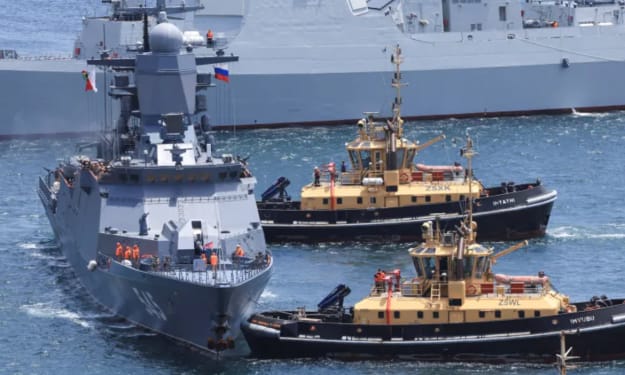
BRICS — the economic and political bloc comprising Brazil, Russia, India, China, and South Africa — has long been seen as a counterweight to Western-dominated global institutions. Over the years, it has expanded its influence in finance, trade, and diplomacy. Yet, in recent times, BRICS has begun exploring another domain that grabs headlines and sparks speculation: military cooperation, including large-scale wargames. These exercises are designed to simulate joint operations, test interoperability, and send a signal of strength. For members like Russia and China, wargames serve as both a show of force and a tool to deepen military collaboration within the bloc. However, India’s decision to opt out of recent BRICS wargames has raised questions: why does this matter, and why is India taking a different path from its BRICS partners? The Rise of BRICS Military Exercises Historically, BRICS has been portrayed as primarily economic, focused on initiatives like the New Development Bank (NDB) and trade agreements aimed at reducing Western dominance. But recent years have seen an evolution. Military drills among BRICS members are increasingly prominent, especially in the context of global tension and regional conflicts. These wargames are about more than just tactical drills. They serve multiple purposes: Strategic signaling: By conducting joint exercises, BRICS countries demonstrate unity and military capability to the rest of the world. Operational readiness: Countries test their ability to coordinate in complex scenarios, from humanitarian missions to potential combat operations. Diplomatic leverage: The exercises send subtle messages to other global powers, indicating that BRICS members can collaborate beyond economic forums. For nations like Russia, recently facing sanctions and international scrutiny, these exercises are particularly important. They showcase the ability to maintain partnerships and project power despite global isolation. For China, it is a way to cement strategic influence in Asia and beyond. Why BRICS Wargames Matter Globally The significance of these exercises extends beyond the bloc itself. Analysts note several key implications: Challenge to NATO and U.S. influence: BRICS wargames signal that alternative power centers exist outside Western-led military alliances. Regional security dynamics: Countries bordering BRICS members, particularly in South Asia, Africa, and Latin America, must monitor these developments carefully. Economic-military linkages: Military coordination among major emerging economies could shape security considerations in trade corridors, energy supply routes, and resource-rich regions. In essence, BRICS wargames are not just about soldiers and tanks, but about the broader geopolitical landscape: signaling, strategy, and shaping perceptions of influence. India’s Calculated Decision to Opt Out While Russia, China, Brazil, and South Africa have shown interest in participating actively, India has strategically chosen to abstain from the most recent wargames. This decision may appear surprising, given India’s economic and political stake in BRICS, but several factors explain it. Geopolitical balancing: India maintains complex relations with both China and Russia. While it has defense and historical ties with Russia, its relationship with China has grown tense due to border disputes and regional competition. Joining a wargame with China could be politically and militarily sensitive. Alignment with Western partnerships: India has strengthened ties with Western-led coalitions, including the Quad (U.S., Japan, Australia, India). Participating in BRICS military drills could conflict with these alliances, potentially sending mixed signals. Strategic autonomy: India has long emphasized a policy of strategic autonomy — making decisions based on national interest rather than bloc pressure. Opting out allows India to maintain flexibility in foreign policy and avoid entanglement in exercises that may not align with its regional objectives. Domestic perception: Indian public opinion and political narratives favor cautious engagement with China and Russia on military matters. Skipping the wargames minimizes domestic criticism of appearing too closely aligned with either of the more assertive BRICS powers. What India Gains by Sitting Out Choosing not to participate does not mean India is disengaged from BRICS. Economically and diplomatically, it remains a key player in the bloc. By skipping the wargames, India can: Maintain regional credibility in South Asia while avoiding the perception of aligning militarily with China. Signal strategic independence, reinforcing its image as a nation that prioritizes national security over bloc politics. Focus on bilateral and multilateral exercises elsewhere, such as those with the U.S., Japan, and Australia, which are more aligned with India’s current security priorities. In short, opting out allows India to navigate the delicate balance between its BRICS commitments and broader global strategic interests. Implications for BRICS and Global Security India’s abstention also reflects broader trends within BRICS: the bloc is not monolithic. While economic cooperation is often strong, military integration faces political and strategic limits. Differing national interests, historical rivalries, and regional tensions prevent uniform alignment. For global observers, this is crucial. It shows that while BRICS wargames are important, they are not necessarily indicative of a fully unified military bloc. The exercises are as much about optics as operations, and India’s absence underscores the challenges of aligning countries with divergent security priorities. Conclusion BRICS wargames matter because they are a window into the bloc’s evolving strategic ambitions. They signal power, test cooperation, and demonstrate emerging global influence. Yet India’s decision to opt out highlights that even within this growing coalition, national interests remain paramount. For India, the choice reflects a calculated approach: engage where it benefits national interest, avoid where risks outweigh gains, and maintain strategic flexibility. For the rest of the world, it is a reminder that BRICS, while increasingly important, is not a military monolith. Ultimately, BRICS wargames are as much about geopolitics and signaling as they are about military maneuvers — and India’s careful stance illustrates how emerging powers navigate this complex global chessboard.Start writing...
By Muhammad Hassan4 days ago in Earth
United States Plastic Market Size and Forecast 2025–2033
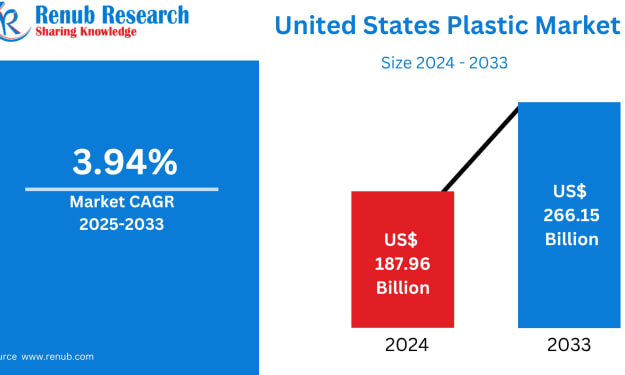
United States Plastic Market: Size and Forecast 2025–2033 The United States plastic market is projected to expand significantly, growing from US$ 187.96 billion in 2024 to US$ 266.15 billion by 2033, reflecting a steady Compound Annual Growth Rate (CAGR) of 3.94% during 2025–2033. This sustained growth is being fueled by rising demand across packaging, automotive, construction, healthcare, and consumer goods industries, alongside rapid innovations in recycling technologies and sustainable polymer development.
By Aaina Oberoi5 days ago in Earth


Comments
There are no comments for this story
Be the first to respond and start the conversation.