
Global science
The newest global technological information


Medical science
Why are women more likely to suffer from Alzheimer's disease than men?
In previous studies, they have found that the activation of C/EBP β / AEP signaling pathway can promote α-amyloid production and Tau protein accumulation, which is a key factor leading to neurodegenerative diseases. In the new study, they found that follicle-stimulating hormone (follicle-stimulating hormone,FSH) significantly affected these signaling pathways in postmenopausal women. In their blood, the concentration of FSH is about 10 times higher than it was before menopause, while the concentration of this hormone in men is only 2-3 times higher. It has been found that when FSH binds to the FSH receptor on neurons, it can activate the C/EBP β / AEP signal pathway, which leads to Alzheimer's disease. Using female mice with hysterectomy, they found that the pathological characteristics and cognitive impairment of mice were alleviated when anti-FSH antibodies were used to reduce the concentration of FSH in the blood or to inhibit the binding of FSH to its receptors in the hippocampus of the brain. In addition, injecting male mice with FSH also increased their risk of developing Alzheimer's disease.
Astronomy
The nearest black hole to the earth may not exist
In 2020, astronomers at the European Southern Observatory (ESO) found that the spectral lines of a star swayed periodically in the HR6819 star system, about 1000 light-years from Earth. At the time, researchers thought HR6819 was a three-star system, in which one star revolved around the black hole in a 40-day period, while the other star was farther away and had a longer period. However, a study published in the journal Astronomy and Astrophysics on March 2 raises new possibilities.
The researchers retested two theoretical hypotheses in conjunction with the GRAVITY instrument of the very large Telescope and the Multivariate Spectral detector (MUSE). They found that there are two light sources in the system, and the distance between them is only 1 / 3 of the distance between the sun and the earth, which does not meet the conditions for the existence of a black hole, and there are no bright companion stars in the outer orbit. Based on this, the researchers believe that the HR6819 system does not contain black holes. And when the system was first observed, one of the stars had just sucked away part of the atmosphere of its companion, causing the star to rotate faster. The researchers plan to use GRAVITY to further explore HR6819 to analyze the evolution and properties of massive stars and promote the understanding of binary systems.
Physics
To make the largest time crystal so far.
About 10 years ago, scientists were inspired by the periodic spatial model of ordinary crystal atoms and put forward the concept of "time crystal": this quantum system, through the interaction of forces that do not change with time, even in the lowest energy state, can also achieve cyclic evolution in some way. Last year, Google scientists made time crystals from 20 particles, and in a recent study published in Science Progress, scientists from Australia set the record, using 57 particles to create time crystals. This is the largest time crystal ever made.
The researchers used quantum computers made and run by IBM in the United States to conduct remote simulations. Qubits can be set to 0, 1, or 1 and 0 to simulate magnet-like interactions. The researchers found that in some settings of qubit interaction, any initial setting of 57 qubits can remain stable, and every two pulses will return to the original state under the action of magnetic pulses, indicating that the simulation of time crystals has been realized. The researchers say the stabilization effect of this interaction may be applied to the memory of quantum computers to store the state of a string of qubit bits.
Material science
Highly ordered diamond nanowires
Diamond nanowire (DNT) is an ultra-fine one-dimensional carbon material, which is more than 10, 000 times thinner than a human hair. They are usually obtained by compressing annular carbon precursors under high pressure. However, it is a challenge to control the reaction path to obtain structurally accurate DNT. Recently, a study published in the Journal of the American Chemical Society developed a new synthesis method to prepare diamond nanowires that are hard, soft and well-ordered.
The researchers chose a nitrogen-containing carbon precursor, o-diazobenzene (4 carbon atoms, 2 nitrogen atoms), which is a six-membered ring compound with low activity. The nitrogen atom replaces the two carbon atoms in the benzene ring (six carbon atoms), so it belongs to heteroatoms. The researchers used the computational model to simulate the reaction path from o-diazobenzene to DNT under high pressure. The results show that nitrogen atomic energy acts as a "lead", which can significantly reduce the possibility of other reaction paths, thus making it follow the pre-designed path. They found that compared with previous studies, the DNT prepared by this method has a unique long-term order.
Spaceflight
The Mars exploration program cooperated by ESA and Russia has been postponed for the third time.
The European Space Agency (ESA) said in a statement that it is "unlikely" that the European rover Rosalind Franklin will be launched by Russia and Europe this year. Rosalind Franklin was the first Mars probe in Europe and the second part of ESA's Mars mission ExoMars in cooperation with the Russian space agency Roscosmos. This will be the third delayed launch of the mission since 2018. According to the original plan, the Rosalind Franklin rover and landing platform Cossack Dance rained from Baikonur, Kazakhstan, into space in September 2022 by a Russian "proton-M" rocket and landed on Mars in June 2023.
Astronomers say that only a 10-day window from late September to early October this year is conducive to the launch of the Mars rover, and if it is missed, it will have to wait until November 2024, 26 months later. However, it is also difficult to transform the Mars probe so that it can be carried on a new rocket. In particular, the interface of the landing and landing module used to land on Mars is so complex that it is expected to take more than two years to adapt to the landing device of NASA. In addition, Roscosmos has evacuated staff from ESA's launch site in French Guiana.
About the Creator
Keep reading
More stories from jsyeem shekels and writers in Earth and other communities.
Global science
Health Less than one hour of muscle intensive training a week can help reduce the risk of death. Recently, a study published in British Journal of Sports Medicine found that 30 to 60 minutes of muscle intensive training per week can reduce the risk of death from all causes of death, cardiovascular disease, diabetes and cancer (10% to 20%), but it is not clear whether more than one hour of training per week will further reduce the risk of death.
By jsyeem shekels3 years ago in Earth
Scientists Probe How Long-Term Spaceflight Alters Immunity
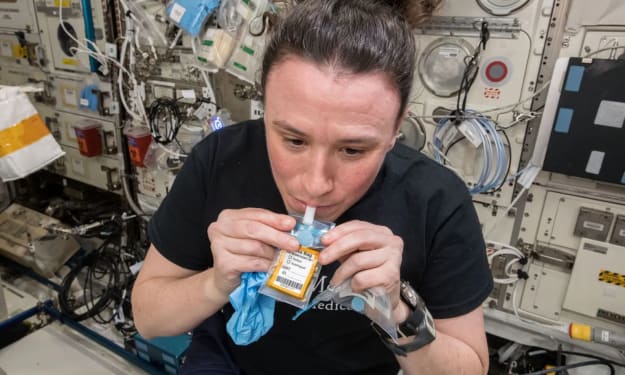
On Earth, a human body with a properly functioning immune system will work to overcome an infection. But in space, that same immune system will have to work a bit harder to overcome the same infection. In the isolated environment of the International Space Station, many factors — physiological stress, disrupted circadian rhythms, radiation, microgravity, and other spaceflight factors — can alter an astronaut’s immune response.
By Voice of Reality7 days ago in Earth
Guard Your Battery
Why are some people so attractive just by standing there? It’s not because they are "likable," but because they don’t need everyone to like them. I realized later that truly charismatic people allow themselves to be criticized, but they never criticize themselves. They never try to please the world; instead, the world stops to watch them.
By Emily Chan - Life and love sharing3 days ago in Poets



Comments
There are no comments for this story
Be the first to respond and start the conversation.