
Global Economic Recovery Post-Pandemic
Challenges and Opportunities

The COVID-19 pandemic has been an unprecedented global health crisis, affecting nearly every aspect of human life. Beyond its immediate health impacts, the pandemic severely disrupted economies worldwide. Businesses shuttered, supply chains were disrupted, and millions lost their jobs. As nations grapple with the virus, they are also facing the challenge of rebuilding their economies and striving for a strong and sustainable global economic recovery. In this article, we will delve into the key challenges and opportunities that lie ahead as the world navigates the path to recovery post-pandemic.
The Depth of the Economic Contraction
The pandemic caused a severe economic contraction on a global scale. Governments had to impose lockdowns and restrictions to curb the spread of the virus, leading to a sharp decline in economic activity. Sectors such as travel, tourism, hospitality, and retail were hit hardest. It will be crucial to address the depth of this economic contraction to chart an effective recovery path.
Fiscal Stimulus and Monetary Policies
To mitigate the economic fallout, governments and central banks introduced massive fiscal stimulus packages and accommodative monetary policies. These measures aimed to provide financial support to businesses, individuals, and vulnerable communities. However, as economies recover, policymakers will need to strike a balance between continuing support and avoiding overheating and inflation risks.
Addressing Income Inequality
The pandemic exposed and exacerbated existing income inequality. Low-income workers in informal sectors were disproportionately affected, and women faced significant setbacks in terms of workforce participation. Governments must prioritize policies that address income inequality, support vulnerable populations, and promote inclusive economic growth.
Rebuilding Global Supply Chains
The pandemic highlighted vulnerabilities in global supply chains. Overreliance on a single region for critical goods and components, as well as disruptions in logistics, led to shortages and bottlenecks. Governments and businesses are reevaluating supply chain strategies to build resilience and diversification.
The Digital Transformation
The pandemic accelerated the digital transformation in various sectors. Remote work, e-commerce, and digital services witnessed unprecedented growth. Embracing technology and fostering digital literacy will be vital to sustain and enhance economic productivity in the post-pandemic era.
Green Recovery and Climate Action
As countries recover economically, there is an opportunity to pursue sustainable and environmentally friendly growth. The pandemic-induced drop in emissions demonstrated the potential for green recovery. Investing in renewable energy, sustainable infrastructure, and climate-resilient projects can drive economic growth while addressing climate change.
International Collaboration and Trade
Global economic recovery depends on international cooperation and trade. Collaborative efforts in vaccine distribution, debt relief for developing nations, and free trade agreements can bolster economies worldwide.
Tourism and Travel Revival
The tourism and travel industry suffered immensely during the pandemic. With vaccinations and improved health protocols, the sector's revival is critical for many economies, especially those heavily reliant on tourism.
Reskilling and Upskilling the Workforce
The pandemic accelerated changes in the job market, emphasizing the need for reskilling and upskilling the workforce to adapt to new roles and technologies.
The road to global economic recovery post-pandemic is riddled with challenges and opportunities. Governments, businesses, and societies must work together to address the deep economic contraction, tackle income inequality, rebuild supply chains, embrace digital transformation, and take meaningful action on climate change. By fostering international collaboration and prioritizing sustainable growth, the world can emerge from this crisis stronger, more resilient, and better prepared to face future challenges.
As countries navigate the path to recovery, careful policymaking is essential to balance fiscal stimulus without causing inflation. Ensuring equitable access to vaccines and healthcare remains critical. Moreover, harnessing the potential of technology, promoting green investments, and investing in education and workforce development will play a pivotal role. Global cooperation is key to overcoming the pandemic's lingering impact and forging a more robust and sustainable global economy for future generations.
About the Creator
WM
what matters
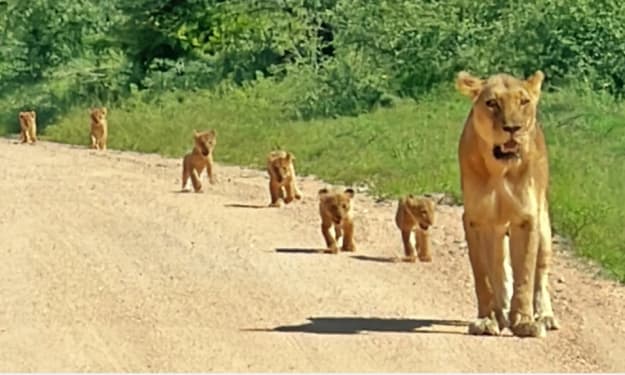
Tiny Lion Cubs Struggle To Keep Up With Mom
In the heart of the African savannah, life is a constant lesson for young animals. Few scenes are as endearing — or as heartwarming — as tiny lion cubs trying to keep pace with their mother. These little bundles of fur face a world full of challenges, from learning to hunt to avoiding dangers, all while depending on the guidance and protection of their experienced mom. Watching cubs wobble and tumble as they attempt to keep up with their mother reminds us that growing up, even in the wild, is a journey full of struggle, determination, and adorable missteps. The Early Days of Lion Cubs Lion cubs are born blind and helpless, usually in litters of two to six. For the first few weeks, they rely entirely on their mother for warmth, food, and safety. Even after opening their eyes and beginning to explore, the cubs are far from independent. The first months are crucial. Cubs learn social cues, hunting basics, and survival skills simply by watching their mother and the pride. But as anyone who has observed them knows, there’s often a huge gap between observation and action. Tiny cubs often struggle to match their mother’s pace, especially when she moves through long stretches of savannah or leads the family on patrols. A Mother’s Role in the Wild For a lioness, raising cubs is a full-time commitment. She hunts, defends her territory, and teaches her young, all while staying alert to predators such as hyenas, leopards, and even rival lions. The cubs, meanwhile, attempt to mimic her every move — often with clumsy yet charming results. A mother lion’s patience is remarkable; she frequently slows down, nudges them along, or stops to ensure no cub is left behind. These moments, while stressful for the tiny cubs, are vital learning opportunities. Struggling to Keep Up: Why It’s So Hard There are several reasons why tiny lion cubs have trouble keeping pace with their mother: Short Legs, Big Steps: Lion cubs’ legs are tiny and their coordination is limited, making it difficult to cover the same distance as an adult lioness. Curiosity: Cubs are naturally curious. A single butterfly or rustling bush can distract them, leaving mom to pause repeatedly. Energy Levels: Young lions tire quickly. Even with frequent naps, the cubs’ stamina is far lower than their mother’s. Learning Through Play: Play is not just fun; it teaches hunting, balance, and social skills. Running off to pounce on a sibling or chase an insect is all part of their education. Despite these challenges, the cubs’ determination to keep up demonstrates their resilience and growing understanding of the wild world. Lessons in Teamwork and Survival Every cub struggling to keep up is also learning crucial survival skills. The journey across the savannah is more than a test of speed — it’s a lesson in: Coordination: Cubs learn how to move efficiently across different terrains. Patience: They begin to understand the rhythms of adult life and the pace required for survival. Social Skills: Staying with the group teaches cubs how to interact with siblings and the pride, which is essential for their future roles. Observation: By following their mother, cubs study hunting techniques, territorial behavior, and predator awareness. Even the moments when cubs stumble or lag behind are essential for their development. These experiences prepare them for independence, which comes sooner than many might expect. The Cutest Moments in the Wild Anyone who has watched tiny lion cubs knows that their struggles are often irresistibly cute. Video clips from wildlife reserves frequently show cubs toddling along, tumbling over each other, or getting distracted mid-step. Observers often comment that these little stumbles reveal personality, determination, and playfulness, making them one of nature’s most heartwarming spectacles. While their mother is serious and focused, the cubs inject a sense of humor and lightness into life on the savannah. Why This Matters The struggles of lion cubs aren’t just adorable — they’re vital for understanding wildlife behavior. Conservationists and animal behaviorists use these moments to study growth patterns, social structures, and survival strategies in lion populations. These observations also highlight the importance of preserving natural habitats. Cubs must learn in a safe environment to survive; habitat loss, poaching, and climate change make these early struggles even more dangerous. Protecting the African savannah ensures that future generations of lions can experience the same lessons and playful tumbles. The Road to Independence Within a year, these tiny cubs will be more agile, faster, and more confident. By the time they reach two to three years old, males may begin to leave the pride, while females often stay and become caretakers themselves. Every misstep, tumble, and lagging moment is part of the journey toward strength, coordination, and independence. Watching them now gives us a glimpse of the challenges they will overcome, and the survival skills they will carry for life. A Celebration of Motherhood Ultimately, these scenes remind us of the incredible bond between mother and cubs. Her patience, vigilance, and teaching are the foundations of their future. The cubs’ struggles highlight the trials of growing up, while their determination showcases the resilience and beauty of wildlife. For those observing, it’s a powerful lesson in care, guidance, and perseverance, not just in lions but in the natural world as a whole. Final Thoughts Watching tiny lion cubs try to keep up with their mother is both entertaining and enlightening. It’s a story of growth, struggle, and resilience — a reminder that even the fiercest creatures start small, learning step by step. These little lions capture hearts while teaching life lessons: patience, determination, teamwork, and the importance of guidance. As they tumble and waddle across the savannah, they show us that growth is a process, one adorable misstep at a time. For wildlife enthusiasts, animal lovers, and anyone enchanted by nature, these tiny cubs are proof that even in the wild, love, care, and persistence are universal truths.
By Aarif Lashari3 days ago in Earth
Microbiota, microbiome or microflora: how to speak correctly and why it is for health.
You've probably heard the phrase, "We are what we eat." But modern science says more precisely: we are also those who live in us. Until 2016, it was believed that there are many times more bacteria in our body than our own cells. The latest calculations by mathematicians show that we divide the body with our microorganisms by about 50/50: about 30 trillion of our cells versus 38 trillion bacterial ones.
By Yaroslav Gorohov7 days ago in Earth



Comments
There are no comments for this story
Be the first to respond and start the conversation.