
Global Dragon Fruit Market Size & Forecast 2025–2033
Exotic Superfruit Gains Momentum Across Health, Beverage, and Functional Food Industries


Global Dragon Fruit Market Overview
The Global Dragon Fruit Market was valued at USD 15.06 billion in 2024 and is projected to reach USD 23.26 billion by 2033, expanding at a CAGR of 4.95% during 2025–2033, according to Renub Research. This steady growth trajectory reflects rising global health awareness, increasing demand for exotic fruits, and the expanding use of dragon fruit in functional beverages, nutraceuticals, and clean-label food products.
Dragon fruit—also known as pitaya—originated in Central America but has become a major commercial crop across Asia-Pacific, particularly in Vietnam, Thailand, the Philippines, and China. Its vibrant pink or yellow skin, speckled white or red flesh, and mild sweetness have made it one of the most visually appealing fruits in global retail and foodservice markets.
Beyond aesthetics, dragon fruit’s nutritional profile—rich in antioxidants, vitamin C, fiber, magnesium, and iron—positions it as a preferred choice among health-conscious consumers. Its applications span smoothies, desserts, salads, juices, functional drinks, natural food coloring, and even cosmetics, giving the fruit a diversified commercial footprint.
Global Dragon Fruit Market Outlook
The dragon fruit market is transitioning from a niche exotic category to a mainstream functional fruit segment. The rise of superfood culture, plant-based diets, and Instagram-driven food trends has dramatically boosted its visibility and consumption. Consumers increasingly associate dragon fruit with immunity support, digestive health, weight management, and anti-inflammatory benefits.
In parallel, advancements in cultivation practices, improved cold-chain logistics, and expanding global trade networks have enabled year-round availability in North America, Europe, and the Middle East. As wellness-driven consumption continues to influence purchasing decisions, dragon fruit is expected to strengthen its role in both fresh and processed food markets worldwide.
Key Drivers of Growth in the Global Dragon Fruit Market
Rising Demand for Exotic and Super Fruits
Modern consumers actively seek novel, nutrient-dense fruits that combine health benefits with visual appeal. Dragon fruit meets both criteria, making it highly desirable for smoothies, wellness bowls, premium desserts, and functional beverages. Its antioxidant-rich composition supports digestive and metabolic health, aligning with preventive nutrition trends.
Global culinary globalization and multicultural food exposure have further expanded dragon fruit adoption in previously unfamiliar markets. International trade has benefited significantly from this shift, encouraging increased cultivation and export volumes. According to the Organic Trade Association, organic fruit and vegetable sales exceeded USD 22 billion in 2022, highlighting sustained demand for premium and exotic produce.
Healthy Lifestyle and Natural Food Trends
Dragon fruit fits seamlessly into clean-label, plant-based, and whole-food dietary movements. Naturally low in calories, high in fiber, and free from allergens, it appeals across age groups. Its growing use in dietary supplements, functional drinks, vegan desserts, and sugar-free snack formulations continues to broaden its market reach.
The fruit’s versatility as a low-carb and natural sweetener alternative further strengthens its appeal among fitness-oriented and diabetic consumers. As awareness of nutrition-driven food choices rises, dragon fruit’s role in health-forward product innovation continues to expand.
Expansion of Cold-Chain Logistics and Global Trade
Investments in cold storage, temperature-controlled shipping, and advanced packaging technologies have significantly reduced spoilage risks. Leading exporters such as Vietnam, Thailand, and Ecuador now enjoy improved access to the U.S., European Union, China, and Middle Eastern markets.
Enhanced trade agreements and streamlined import regulations have also accelerated cross-border distribution. As logistics infrastructure improves, dragon fruit exports are expected to increase in both volume and value, supporting market expansion through 2033.
Challenges Facing the Global Dragon Fruit Market
High Perishability and Post-Harvest Losses
Dragon fruit’s high moisture content and delicate skin make it highly perishable. Inadequate handling, insufficient cold storage, and long shipping durations often result in significant post-harvest losses, particularly in developing regions. These challenges increase costs and limit export competitiveness.
Addressing these issues requires investments in farmer training, modern packaging, and cold-chain infrastructure—areas that remain underdeveloped in several producing countries.
Price Volatility and Limited Processing Infrastructure
Seasonal production fluctuations and climate variability often lead to unpredictable pricing. Oversupply can result in waste, while poor harvests can cause sharp price increases, reducing affordability. Additionally, limited processing capacity for juice, powder, or dried formats restricts value-added utilization of surplus fruit.
The absence of robust processing ecosystems discourages long-term investment by small farmers and exporters, making infrastructure development a critical priority for market stability.
Global Dragon Fruit Powder Market
Dragon fruit powder represents one of the fastest-growing value-added segments. Produced through freeze-drying or spray-drying, the powder retains color, nutrients, and antioxidant properties while offering extended shelf life.
It is widely used in smoothies, energy bars, dietary supplements, bakery products, cosmetics, and nutraceutical formulations. Demand is rising for organic, sugar-free, and clean-label powders, particularly in North America and Europe. This format significantly reduces logistics constraints associated with fresh fruit distribution.
Global Organic Dragon Fruit Market
Organic dragon fruit is gaining strong traction as consumers increasingly prioritize pesticide-free and sustainably grown produce. Certified organic varieties command premium prices across retail and foodservice channels, especially in the U.S., Germany, and Japan.
Although certification costs and limited organic farming expertise present challenges, long-term demand remains strong. Retailers and e-commerce platforms are actively promoting organic dragon fruit through smoothie kits, premium fruit boxes, and wellness-focused product lines.
Global Dragon Fruit Food & Beverage Market
The food and beverage segment remains the largest consumer of dragon fruit. Its vibrant color, subtle sweetness, and functional benefits make it ideal for juices, yogurts, smoothies, desserts, plant-based ice creams, and energy drinks.
Manufacturers increasingly use dragon fruit as a natural colorant and flavor enhancer in clean-label formulations. As functional beverage innovation accelerates globally, dragon fruit continues to gain prominence in product development pipelines.
Global Dragon Fruit Foodservice Market
Foodservice establishments—particularly upscale restaurants, cafés, hotels, and resorts—are driving demand through creative menu applications. Dragon fruit features prominently in smoothie bowls, fruit platters, cocktails, desserts, and fusion cuisine.
Tourism-heavy regions in Southeast Asia, Latin America, and the Middle East contribute to seasonal spikes in demand. With post-pandemic recovery in global tourism and hospitality, foodservice consumption is expected to grow steadily.
Global Dragon Fruit Convenience Store Market
Urbanization and busy lifestyles are boosting dragon fruit sales through convenience stores. Ready-to-eat slices, chilled beverages, and pre-packed smoothie kits are gaining shelf space, particularly in Europe, North America, and Asia-Pacific.
The fruit’s visual appeal and health credentials make it ideal for impulse purchases, supporting expanded retail penetration beyond specialty and organic stores.
Regional Market Insights
United States Dragon Fruit Market
The U.S. is one of the fastest-growing dragon fruit markets, driven by wellness trends and multicultural food preferences. Products span fresh, frozen, powdered, and ready-to-drink formats, widely available across premium and mass retailers.
Limited domestic cultivation exists in California and Florida, while imports dominate supply. In November 2023, Dole Food Company expanded dragon fruit distribution across the western U.S. and Canada, signaling growing mainstream adoption.
Germany Dragon Fruit Market
Germany’s health-conscious and sustainability-focused consumers are accelerating demand for dragon fruit. The fruit is increasingly featured in organic stores, vegan chains, smoothies, and yogurt blends. Seasonal demand peaks during summer and festive periods, supported by retailer-led education and promotion.
China Dragon Fruit Market
China is the world’s largest producer and consumer of red-flesh dragon fruit, with major cultivation hubs in Guangxi and Hainan. Consumption is driven by cultural preferences for colorful fruits, traditional medicine usage, and gifting traditions.
In April 2024, Yangling Vocational and Technical College introduced a new hybrid variety, “New Two Color,” reinforcing China’s leadership in varietal innovation. E-commerce platforms such as JD.com and Alibaba further expand nationwide distribution.
Saudi Arabia Dragon Fruit Market
In Saudi Arabia, dragon fruit is gaining popularity among health-conscious consumers and premium hospitality segments. Imports dominate supply, primarily from Southeast Asia. Growth is supported by tourism expansion, rising wellness awareness, and increasing demand for exotic fruits, despite relatively high prices.
Market Segmentation
By Form:
Powder
Puree
By Nature:
Organic
Conventional
By End User:
Food & Beverage
Foodservice
Retail/Household
Others
By Distribution Channel:
Hypermarkets/Supermarkets
Convenience Stores
Specialty Stores
Online Retail
By Region:
North America, Europe, Asia-Pacific, Latin America, Middle East & Africa
Key Players Analysis
The competitive landscape includes producers, processors, and beverage innovators. Major players profiled by Renub Research include:
Dragon Fruit Direct
Song Nam ITD
Nazmin Nursery
Anh Duong Sao Co.
Hung Phat Fruits Producing Co.
Welch Foods Inc.
Bai Brands
J & C Tropicals
Biourah Herbal
Each company is evaluated across overview, key personnel, recent developments, SWOT analysis, and revenue performance.
Final Thoughts
The Global Dragon Fruit Market is steadily evolving from an exotic specialty segment into a mainstream functional food category. Supported by health trends, product innovation, expanding trade infrastructure, and rising consumer curiosity, the market is well-positioned for sustainable growth through 2033.
While challenges such as perishability, price volatility, and limited processing infrastructure remain, investments in cold-chain logistics, organic farming, and value-added processing will unlock new opportunities. As consumers continue to prioritize wellness, natural ingredients, and visually appealing foods, dragon fruit is set to remain a vibrant contributor to the global agri-food economy.
About the Creator
Renub Research
Renub Research is a Market Research and Consulting Company. We have more than 15 years of experience especially in international Business-to-Business Researches, Surveys and Consulting. Call Us : +1-478-202-3244
Keep reading
More stories from Renub Research and writers in Earth and other communities.
North America Fertilizer Market Size and Forecast 2025–2033
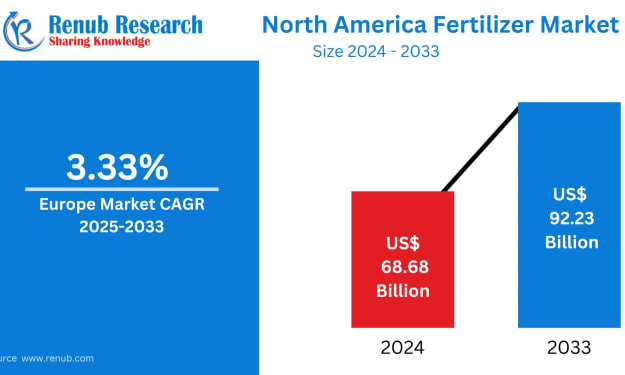
North America Fertilizer Market Overview The North America Fertilizer Market is poised for steady and sustained growth over the next decade, reflecting the region’s increasing agricultural demands and transition toward more efficient and sustainable farming practices. According to Renub Research, the market is expected to reach US$ 92.23 billion by 2033, up from US$ 68.68 billion in 2024, expanding at a compound annual growth rate (CAGR) of 3.33% from 2025 to 2033.
By Renub Research24 days ago in Earth
New Snow and Ice Warning for Friday and Saturday: What You Need to Know
The UK is bracing for another round of disruptive winter weather as meteorologists issue fresh snow and ice warnings for Friday and Saturday. Across England, Scotland, and Wales, residents are being advised to prepare for hazardous conditions, with local authorities urging people to limit travel and stay safe. The latest forecasts indicate a combination of heavy snowfall, freezing temperatures, and icy patches, all of which could affect daily routines, public transport, and emergency services.
By Fiaz Ahmed 2 days ago in Earth



Comments
There are no comments for this story
Be the first to respond and start the conversation.