


Fear and anxiety..
As the sun dipped below the horizon, casting an eerie red hue over the smoky sky, Sarah's heart clenched with fear and anxiety. She stood on the edge of her small coastal town, the once picturesque shoreline now eroded and battered by relentless storms. Climate change had turned her idyllic home into a battleground.
Sarah remembered the days when she could stroll along the pristine beach, the gentle waves lapping at her feet. Now, it felt like a distant dream. The rising sea levels had devoured her childhood memories, leaving behind only a sense of impending doom.
Each night, she lay awake, listening to the howling winds and the relentless drumming of rain on her roof. The storms had grown fiercer, more frequent, as if nature itself was unleashing its fury upon the world. Anxiety gnawed at her, for she knew that this was just the beginning.
Fear gripped her as she thought about the future. The world's leaders had made promises, signed agreements, but the earth seemed to care little for their speeches and pledges. It continued to warm, ice caps continued to melt, and the consequences were becoming increasingly evident.
One evening, as Sarah gazed out at the turbulent sea, she noticed a group of children huddled together, building a makeshift sandcastle near the water's edge. They laughed and played, oblivious to the encroaching tide. Tears welled up in her eyes as she thought about the world they would inherit.
She couldn't stand idly by any longer. With a newfound determination, Sarah joined a local climate action group. They planted trees, organized beach clean-ups, and tirelessly campaigned for renewable energy. Every small action was a step toward combating the fear that gripped her community.
Months turned into years, and slowly, progress began to take shape. Renewable energy projects sprang up, and the town started implementing measures to protect the shoreline. Sarah felt a glimmer of hope amidst the fear. Perhaps, together, they could make a difference.
One evening, as Sarah stood on the beach, a gentle breeze ruffled her hair, and she noticed something remarkable. The children who once played near the encroaching tide now built sandcastles farther from the shore. It was a small victory, but it filled her heart with a sense of purpose and a renewed determination to fight for a better future.
Fear and anxiety still lingered in the background, but they were now accompanied by hope. Sarah knew that the battle against climate change was far from over, but as long as there were people like her, willing to stand up and take action, the world could change, and a brighter future could be built, one small step at a time.
The humanitarian and government response to fear and anxiety related to climate change typically involves several key strategies:
1. **Public Awareness and Education:** Governments and humanitarian organizations often invest in public awareness campaigns to educate people about the science of climate change, its impacts, and what individuals can do to mitigate and adapt to it. This helps reduce fear and anxiety by empowering people with knowledge.
2. **Mental Health Support:** Recognizing the psychological toll of climate change, governments may allocate resources for mental health services. This includes providing access to counseling, support groups, and resources to cope with climate-related stress and anxiety.
3. **Climate Adaptation and Resilience:** Governments invest in infrastructure and policies aimed at making communities more resilient to climate change impacts. This can include flood defenses, disaster preparedness plans, and sustainable urban planning to reduce anxiety about extreme weather events.
4. **Mitigation Efforts:** Climate policies that aim to reduce greenhouse gas emissions can alleviate fear by demonstrating a commitment to addressing the root causes of climate change. This includes regulations, incentives for renewable energy, and international agreements like the Paris Agreement.
5. **International Cooperation:** Governments work together on a global scale to address climate change, fostering a sense of shared responsibility. International cooperation can reduce fear by demonstrating that the issue is being tackled collectively.
6. **Community Engagement:** Humanitarian organizations often work at the community level, engaging with local populations to understand their concerns and needs. This helps build trust and reduce anxiety by involving communities in climate adaptation efforts.
7. **Data and Early Warning Systems:** Governments invest in climate monitoring and early warning systems to provide timely information about climate-related risks. This helps people prepare for and respond to threats, reducing anxiety.
8. **Policy Advocacy:** Humanitarian organizations may advocate for policies that prioritize vulnerable populations and address the social and economic aspects of climate change, which can reduce fear and anxiety in these communities.
Overall, a comprehensive response to fear and anxiety related to climate change involves a combination of education, support services, mitigation efforts, and community engagement, with both governmental and humanitarian organizations playing critical roles.
About the Creator
Keep reading
More stories from writers in Earth and other communities.
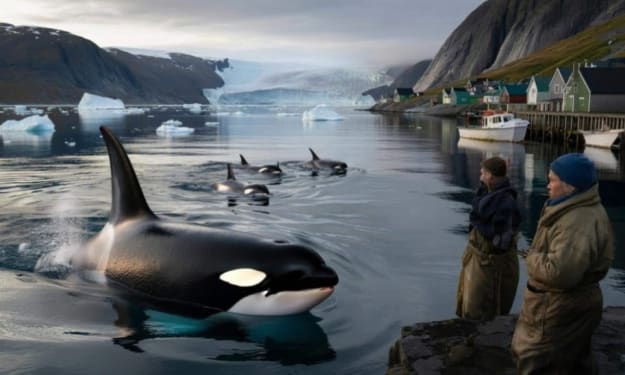
Greenland Declares State of Emergency as Scientists Link the Growing Presence of Orcas to Accelerating Ice Melt
In a landmark decision that reflects the intensifying impacts of climate change, the government of Greenland has officially declared a state of environmental emergency—a rare and solemn move that underscores the accelerating transformation of Arctic ecosystems. The catalyst for this declaration? An unusual and growing presence of orcas—also known as killer whales—in waters once locked in sea ice, a phenomenon scientists say reveals the alarming scale of ice melt in the region.
By Sadaqat Ali2 days ago in Earth
Clintons to Testify in Epstein Inquiry
Reports that former U.S. President Bill Clinton and former Secretary of State Hillary Clinton could testify in an inquiry related to Jeffrey Epstein have sparked widespread international attention. The inquiry is part of ongoing efforts by authorities and investigators to understand the full scope of Epstein’s network, financial dealings, and connections with high-profile individuals.
By Aarif Lashari7 days ago in Earth
The Lesions of Devotion
Every day I set myself down on the freshly cut lawn and strip myself bare. I take my guitar and finger the frets and pick at the strings, listening for dissonance. My life is dissonance. I twist the tuning pegs until each string sounds bright. Then I kneel, calves pointing behind me, kneecaps facing forward. All exposed to the breeze. I close my eyes and play the melody.
By Paul Stewart3 days ago in Fiction
Foot Bindings
I asked my grandmother how she knew she'd fallen in love. I am not sure I ever did love him, she said. This was before I met my husband. I was naive, a naked spring, a raw nerve of a thing. That cannot ever be me, I knew. Sadness swept in gently like a Moscow thaw. It is no simple thing, looking into a woman's vast soul and seeing its foot bindings. Now, in Italy divorced with my skin singed off, when I say I don't love him mean: I have succeeded at feeling nothing most days and it mostly works. Do you want the comfort of Nothing? Do you want Nothing, too? Be warned: you'll never be free, even when you are nothing. Here is what doesn't work: Accepting the stages of grief. Talking about it. Sitting with the feeling. Missing him—no, the person you were when you believed in death do us part. Writing poetry. That, too. When I say I don't love him I mean: I feel capsized in an endless, starved tide. What sometimes works: selective memory. You must forget ripe tomatoes and his beard and feeling perfectly sheltered in a big blue world. Forget coffee in bed, laughter watching TV, blowing out the candles on the birthday cake and the quiet all-encompassing knowledge that you are chosen. Remember only how love turned to a banal everyday survival act, a trapeze act unsure whether he will catch you, how the warmth stagnated and became sour, remember the foot bindings and remember the resentment boiling in your veins as you stick it out for the kids. Six-hour Netflix binges help, too. A man's fingers tracing your spine. Frozen pizza at 2 a.m. Random trips to the museum just to stand near things that last a while. The realization that crying won’t change anything. Seeing that life is just a dream, and refusing to participate in your own suffering. Bite your fist. Walk on eggshells around joy. When I say I don't love him, I mean he didn’t break my heart, he just stopped touching it and it forgot how to beat right.
By Ella Bogdanovaa day ago in Poets


Comments
There are no comments for this story
Be the first to respond and start the conversation.