


1. AI Ethics Consultant
Technology Link: Artificial Intelligence (AI) & Machine Learning
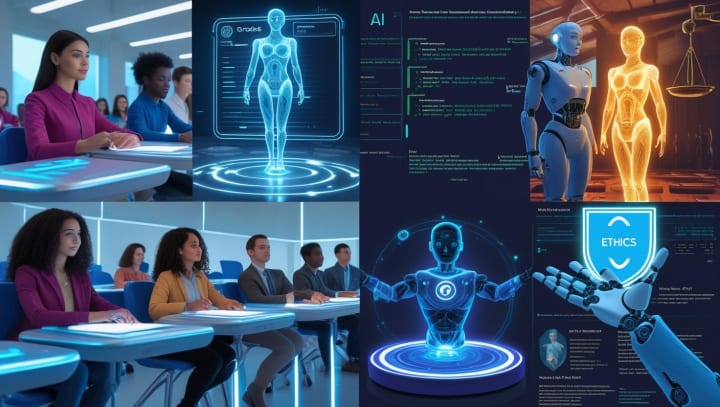
By 2030, AI will handle everything from school grading systems to job recruitment. An AI Ethics Consultant ensures these systems remain fair, unbiased, and transparent. They will guide schools, businesses, and governments in using AI responsibly, making sure human values are protected. For example, an AI ethics expert might prevent a hiring algorithm from rejecting candidates unfairly, or ensure an education app doesn’t rank students based on biased data. Their role is crucial because AI will be powerful, but it must remain trustworthy.
2. Virtual World Architect
Technology Link: Metaverse & Extended Reality (XR)
The metaverse will become a daily tool for learning and working. A Virtual World Architect designs immersive 3D environments where people can collaborate, play, and study. Imagine a classroom where students step into a realistic simulation of Ancient Egypt or conduct a science experiment on Mars—all without leaving their homes. These architects will need skills in design, psychology, and education to create engaging, safe, and effective digital spaces that feel almost as real as the physical world.

3. Human–Robot Collaboration Specialist
Technology Link: Robotics & Automation
Robots will be our coworkers in factories, hospitals, and even classrooms. A Human–Robot Collaboration Specialist ensures people and robots can work together safely and efficiently. In schools, robots might help teachers by grading homework, answering student questions, or even offering tutoring. Specialists will train humans to manage robotic assistants and make sure machines enhance, not replace, human creativity and empathy. They will also resolve conflicts—when robots malfunction or when people fear losing jobs to machines.

4. Genetic Health Designer
Technology Link: Biotechnology & CRISPR Gene Editing
By 2030, genetic engineering will allow us to prevent inherited diseases and even enhance human traits. A Genetic Health Designer will guide families in making ethical and scientific choices about their children’s DNA. Should we only remove diseases, or is it acceptable to improve intelligence or athletic ability? These experts will advise on such dilemmas. In education, students might learn personalized health plans based on their genetic profile. This career combines medicine, ethics, and technology.

5. Sustainable Energy Innovator
Technology Link: Renewable Energy & Green Tech
The future depends on clean energy. A Sustainable Energy Innovator will design technologies to power cities using solar, wind, tidal, and possibly nuclear fusion. Schools themselves may become energy producers—imagine classrooms that generate more power than they consume, supplying electricity back to the grid. These innovators will also create jobs that help communities live sustainably. Their work ensures that climate change doesn’t stop human progress, but instead inspires us to design smarter, greener lifestyles.

6. Data Privacy Guardian
Technology Link: Cybersecurity & Blockchain
In 2030, personal data will be one of the world’s most valuable resources. A Data Privacy Guardian will protect individuals, especially students, from having their private information misused. With everything connected—grades, medical records, finances—hackers will be a major threat. These guardians will design security systems, teach digital safety, and ensure companies follow strict privacy rules. In schools, they might build platforms where students learn safely without their data being stolen or sold.

7. Climate Adaptation Specialist
Technology Link: Environmental Tech & Geoengineering
As the planet warms, communities will need help adapting. Climate Adaptation Specialists will design solutions like floating schools in flood-prone areas, smart farming in deserts, and disaster-resistant housing. They will work with teachers to educate students about survival in a changing environment, combining science with practical skills. This role blends engineering, policy, and creativity, helping humanity face the climate challenges ahead.

8. Digital Currency Advisor
Technology Link: Cryptocurrency & Web3
Money is becoming digital, and by 2030, many countries may use blockchain-based currencies. A Digital Currency Advisor will help individuals, businesses, and even schools manage these new systems. Imagine students paying tuition fees in cryptocurrency, or teachers being paid in digital tokens. These advisors will also educate people about avoiding fraud and making smart investments. Their role is a mix of finance, education, and technology.

9. Neuro-Interface Designer
Technology Link: Brain–Computer Interfaces (BCI)
Future technology may allow humans to connect their brains directly with computers. A Neuro-Interface Designer will create tools that let people learn faster, communicate without speaking, or even control machines with thought alone. In classrooms, students might “download” information into memory, or practice skills in a simulated brain environment. While this may sound like science fiction, early versions of this tech already exist, and by 2030, it could transform education and work completely.

10. Space Tourism Guide
Technology Link: Space Tech & Commercial Rockets
With companies like SpaceX and Blue Origin already testing commercial flights, space tourism may be a normal experience by 2030. A Space Tourism Guide will prepare travelers for life beyond Earth—teaching them about zero gravity, safety in orbit, and the beauty of space. For students, this could mean educational trips to orbit Earth, visit a space hotel, or even tour the Moon. This role blends education, adventure, and science.

11. Emotion AI Designer
Technology Link: Artificial Emotional Intelligence
AI will not only think logically but also read and respond to human emotions. An Emotion AI Designer will create systems that can detect stress, happiness, or confusion and respond appropriately. In schools, this could mean AI tutors adjusting lessons if a student looks bored or frustrated. In workplaces, AI managers might improve teamwork by sensing conflicts. This career requires psychology, AI, and ethics combined.

12. Food Tech Engineer
Technology Link: Lab-Grown Food & Smart Agriculture
By 2030, feeding the world sustainably will be a top challenge. Food Tech Engineers will develop lab-grown meat, vertical farming, and 3D-printed meals. Students may learn nutrition through real-time food analysis devices that scan their meals and suggest improvements. This career ensures healthy, eco-friendly food for a growing population while reducing waste and environmental harm.

⚡ Conclusion
The world of 2030 will be shaped by AI, robotics, biotechnology, sustainability, and space exploration. Teachers and students will need to prepare for jobs that don’t yet exist today. These careers are not just about technology, but about human values, ethics, and creativity. Education will remain the bridge—ensuring every student can thrive in a world where learning is lifelong, and innovation never stops.
About the Creator
Keep reading
More stories from Hakeem Khan and writers in Earth and other communities.
A Lamp in the Dark
In a quiet village, far from the city, lived a young girl named Amina. Every morning, she watched her two brothers walk to school carrying their worn-out satchels. She, on the other hand, remained behind to sweep the courtyard, fetch water from the well, and help her mother with cooking.
By Hakeem Khan 7 months ago in Motivation
It’s too warm': Greenland’s fishermen are under threat from climate change
Greenland’s traditional fishing communities are facing an uncertain future as the Arctic warms faster than any other region on Earth, dramatically reshaping the landscapes and livelihoods of the semiautonomous Danish territory. Local fishermen, whose lives have long been tied to sea ice and predictable seasonal patterns, are now confronting unpredictable weather, shifting fish populations, and economic pressures that threaten both their culture and the local economy. A Changing Arctic Reality In the small coastal town of Ilulissat, veteran fisherman Helgi Áargil described how climate change has upended his routines. Where once he relied on stable sea ice and consistent fishing grounds, he now finds warmer waters, rainier conditions, and fish moving to deeper, cooler waters. Last year his boat became trapped in ice that calved from a nearby glacier; this year, instead of strengthening ice, it has been unusually wet — making conditions less predictable and incomes more volatile. Fishing accounts for up to 95 percent of Greenland’s exports, with key markets including China, the United States, Japan and Europe. This heavy economic reliance amplifies the impact of climate effects on fish patterns and harvests. Disappearing Ice, Changing Practices Traditional ice fishing — once conducted on sea ice more than a metre thick — has declined sharply. Older generations recall times when they could easily drill holes in stable ice to fish for cod, halibut, shrimp and snow crab. Today, sea ice is retreating earlier and forming later, forcing many fishermen to rely on boats even in the coldest months. While boats allow access to broader waters, they come with higher fuel costs and greater exposure to the elements, challenging sustainability. Karl Sandgreen, head of the Icefjord Center in Ilulissat, noted that ice thick enough to support traditional fishing began disappearing roughly three decades ago. The shift has not only changed how fishers operate but also increased competition and pressure on stocks closer to shore. Ecological and Economic Pressures Warmer conditions are also affecting fish behavior. Many species are moving deeper or into new areas as they seek cooler waters, complicating efforts to maintain stable catches. A warming ocean can temporarily boost plankton growth — potentially increasing some fish stocks — but it also alters ecosystems in unpredictable ways. Experts warn that fish may not behave as they once did, complicating traditional fishing forecasts and practices. The head of Royal Greenland, the territory’s largest employer, has expressed concern about a future with significantly diminished sea ice, which could push more traditional fishers toward larger, commercial fishing operations. However, this transition is not without risks. Increased fishing pressure near shorelines already shows early signs of overfishing; halibut are getting smaller, a classic indicator of stock stress noted by experts. Cultural Identity at Risk Fishing in Greenland is more than an economic activity; it is a cultural bedrock. In towns and villages across the island, harbours where daily catches are unloaded and sold remain central to community life. Many Greenlanders associate fishing with identity and tradition, and climate change is directly threatening these cultural ties as environmental conditions change faster than adaptation measures can keep pace. “You can have too much ice to sail and yet too little to qualify for safe ice fishing,” noted Toke Binzer, describing the paradoxical challenges fishermen now face. The unpredictability makes planning difficult and income erratic — one trip might bring significant earnings, while the next yields little or nothing. Limited Alternatives and Future Paths Beyond fishing, economic alternatives in Greenland remain limited. Tourism is growing but not at a pace that could offset losses in the fishing sector. With a total population barely over 50,000, opportunities outside harvesting marine resources are comparatively sparse. As dog sledding and other ice‑based traditions also diminish due to changing conditions, entire ways of life are under threat. Efforts to support traditional fishers include loans for boats and business assistance, but long‑term resilience will likely require broader strategies. These could involve sustainable fishing quotas, diversification into aquaculture, and investments in climate adaptation infrastructure. Yet many local observers emphasize that meaningful change must also address the root causes of warming — a challenge far beyond Greenland’s shores. A Climate Warning Sign Greenland’s fishermen are becoming a human indicator of rapid Arctic change. The region is warming faster than the global average, reshaping ecosystems and economies alike. As these communities adapt or struggle, their challenges shed light on the broader global consequences of climate change — illustrating how environmental shifts ripple through cultures, industries and livelihoods thousands of kilometres from major industrial centres.
By Fiaz Ahmed 3 days ago in Earth


Comments
There are no comments for this story
Be the first to respond and start the conversation.