
Frontiers in Environmental Science: The Promise of Tire Pyrolysis
The Promise of Tire Pyrolysis
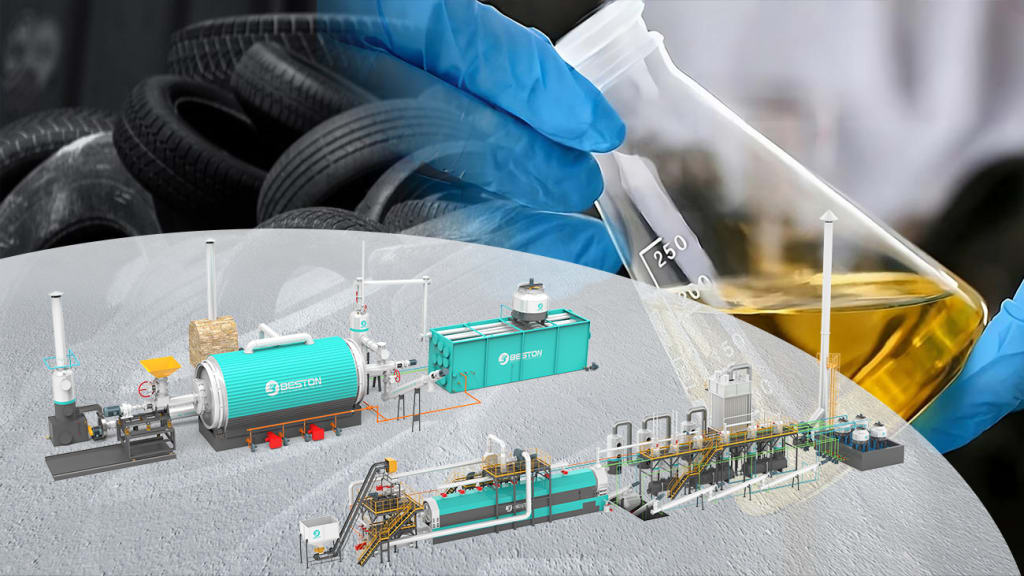
In the realm of environmental science, few innovations have generated as much interest in recent years as tire pyrolysis—a chemical recycling process that offers a sustainable solution to one of the world's most persistent waste problems: end-of-life tires. With over 1 billion tires discarded annually worldwide, the environmental burden is staggering. Traditional disposal methods like landfilling and incineration pose serious ecological and health risks, making pyrolysis a compelling alternative.
What Is Tire Pyrolysis?
Tire pyrolysis is a thermochemical decomposition process that occurs in the absence of oxygen. When tires are heated to temperatures between 400°C and 600°C in a sealed, oxygen-free environment, they break down into three primary by-products: pyrolytic oil, carbon black, and syngas (synthetic gas). Each of these outputs has commercial value and can be used in various industries, making the process both environmentally and economically attractive.
Environmental Benefits
- Waste Reduction: One of the most direct benefits is the reduction of tire waste. Tires are notoriously non-biodegradable and take hundreds of years to break down in landfills. Pyrolysis offers a method to completely deconstruct them.
- Emission Control: Compared to incineration, pyrolysis produces significantly fewer toxic emissions. Because the process occurs in the absence of oxygen, it prevents the formation of harmful dioxins and furans typically released during open burning.
- Resource Recovery: Pyrolysis allows for the recovery of valuable materials, reducing the demand for virgin resources. This contributes to a circular economy, where materials are reused and repurposed instead of being discarded.
Commercial Applications
The by-products of tire pyrolysis are versatile:
- Pyrolytic Oil: This liquid fuel can be refined and used as an alternative to diesel or heavy fuel oil in industrial furnaces, generators, and even vehicles.
- Carbon Black: Used widely in the rubber and plastics industries, recovered carbon black (rCB) can be a sustainable substitute for virgin carbon black, which is energy-intensive to produce.
- Syngas: Composed of hydrogen, methane, and carbon monoxide, syngas can be used to generate electricity or heat, powering the Beston tyre pyrolysis plant itself and improving energy efficiency.
Challenges and Limitations
Despite its promise, tire pyrolysis is not without obstacles:
- Technical Complexity: Maintaining the correct temperature and pressure without oxygen is technologically challenging and requires significant capital investment.
- Regulatory Hurdles: In many countries, regulatory frameworks for waste-to-energy projects are either underdeveloped or inconsistent, creating uncertainty for investors and operators.
- Market Uncertainty: While the by-products have value, markets for recovered carbon black and pyrolytic oil are still maturing, which can affect profitability.
Innovations and Future Directions
Advances in reactor design, automation, and emissions control are rapidly improving the feasibility of tire pyrolysis. Continuous pyrolysis systems, which allow for uninterrupted processing, are becoming more popular due to their higher efficiency and scalability.
Research is also being conducted to enhance the quality of recovered materials. For example, upgrading pyrolytic oil into high-grade fuels or chemical feedstocks could significantly increase its value. Partnerships between tire manufacturers, pyrolysis technology providers, and environmental agencies are key to accelerating these developments.
Moreover, some startups are integrating blockchain technology to track and certify the origin and quality of recovered materials, adding transparency and trust to the supply chain.
A Global Opportunity
Countries with high volumes of tire waste and limited landfill space, such as India, China, and those in the European Union, are already embracing tire pyrolysis. In the United States, the Environmental Protection Agency (EPA) is also showing increasing interest, especially in the context of reducing greenhouse gas emissions and promoting circular economy initiatives.
Tire pyrolysis aligns well with global sustainability goals, particularly those related to waste management, climate action, and responsible consumption and production. With growing environmental awareness and technological refinement, the pyrolysis of tires could play a central role in transforming waste into wealth.
Conclusion
Tire pyrolysis represents a critical frontier in environmental science—offering a scalable, cleaner alternative to tire disposal that not only addresses a major pollution problem but also contributes to energy recovery and materials recycling. As innovation continues and market demand strengthens, tire pyrolysis could soon become a cornerstone of sustainable waste management worldwide.
About the Creator
Protests Across Iran: Is War With the US or Israel Imminent — and What Would It Change?
Iran is once again at the center of global attention as widespread protests continue across the country, coinciding with heightened regional tensions involving the United States and Israel. Demonstrations fueled by political repression, economic hardship, and anger over state violence have created one of the most volatile moments Iran has faced in decades. As images of unrest spread and rhetoric between Tehran, Washington, and Tel Aviv sharpens, a pressing question looms: is Iran on the brink of war with the US or Israel—and if so, what would such a conflict actually change?
By Aarif Lashari4 days ago in Earth


Comments
There are no comments for this story
Be the first to respond and start the conversation.