
France Faces Storm Benjamin: A Night of Powerful Winds and Rising Wave
France, Storm Benjamin, Weather, Climate, Natural Disasters, Environment, Europe

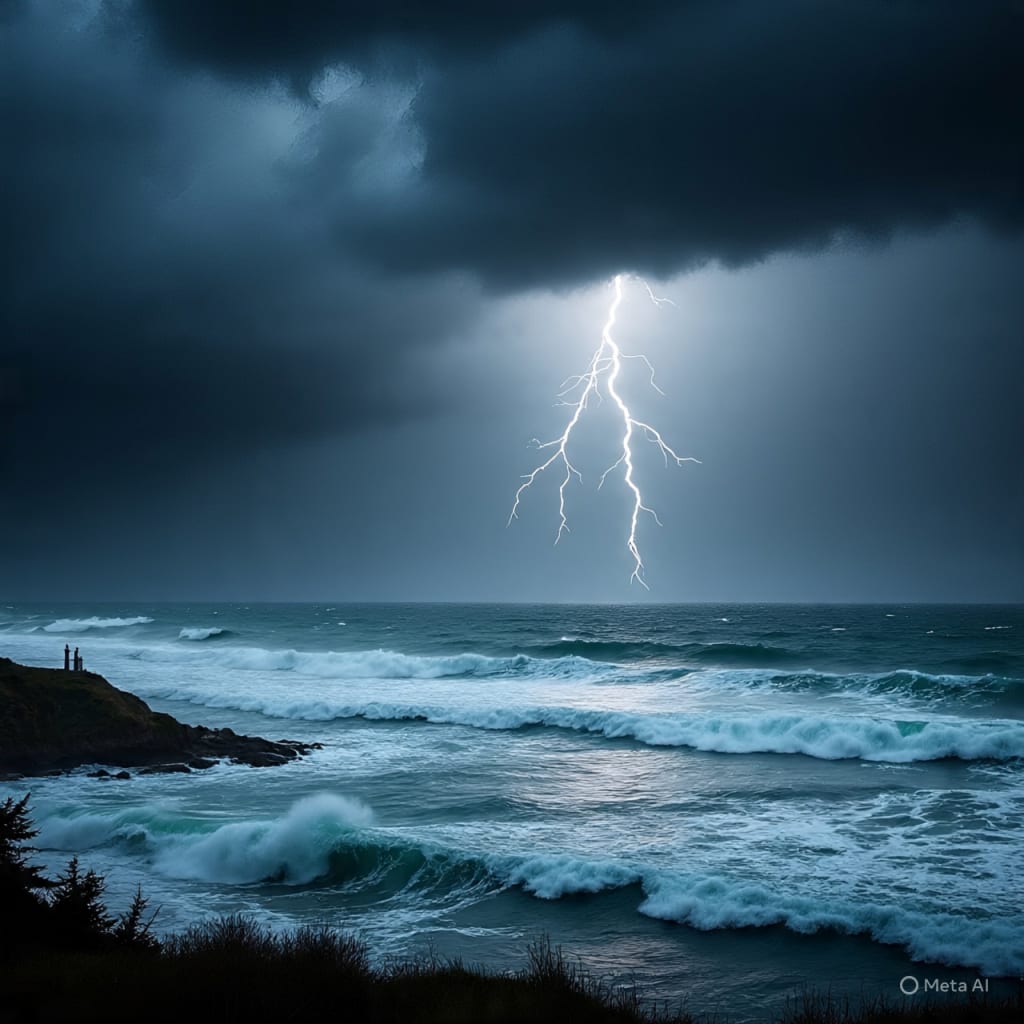
A Storm That Shook France
In late October 2025, France was hit by a massive windstorm named **Storm Benjamin**. It swept through the northern and western regions of the country with winds reaching more than **160 kilometers per hour**. For two long days, the skies turned gray, waves rose high, and rain poured endlessly. People across France stayed indoors as authorities warned everyone to remain alert and safe.
The storm began on the night of **October 22** and lasted through the next day, hitting coastal towns the hardest. In Fécamp, a seaside town in Normandy, wind speeds reached 161 km/h — strong enough to tear down trees, damage roofs, and cause serious travel problems.
Where the Damage Was Worst
The most affected areas were in **northern and western France**. Departments like **Seine-Maritime, Manche, Nord, and Pas-de-Calais** faced extremely strong winds. The **Atlantic coast** also saw violent gusts, especially in **Gironde, Landes, and Pyrénées-Atlantiques**.
The storm did not stop at wind damage. **Heavy rainfall** followed, flooding parts of **Corrèze and Cantal** in central France. Some areas recorded more than **100 millimeters of rain in less than two days**. In low-lying regions, rivers overflowed, turning streets into shallow streams and trapping vehicles.
Local authorities reported hundreds of emergency calls from residents asking for help with flooded basements and damaged rooftops. The fire and rescue services worked non-stop through the night to clear fallen trees that blocked roads and to pump water from homes.
Impact on Daily Life
Storm Benjamin affected nearly every part of daily life. **Train services were delayed or cancelled**, especially near coastal areas. Some **airports faced flight disruptions**, and roads became dangerous due to fallen trees and flying debris.
Many **schools and offices were closed** for safety reasons, while local authorities urged residents to avoid unnecessary travel. Beaches, parks, and public gardens were sealed off to prevent accidents.
Electricity lines were damaged by falling branches, leaving thousands of homes **without power** overnight. Utility crews worked through the strong winds and rain to restore connections as quickly as possible, but in some rural areas, people remained without electricity for nearly 24 hours.
In supermarkets and shops, shelves for bottled water, batteries, and candles quickly emptied as people prepared to face possible blackouts. Meanwhile, social media filled with photos and videos showing powerful waves crashing against sea walls and rooftops being torn apart by gusts.
The Government’s Response
The French government acted quickly. **Météo France**, the national weather agency, placed most northern departments under **orange and yellow weather alerts**, warning citizens to stay indoors. Emergency services and local councils set up helplines for residents who needed help with flooding or property damage.
Coastal rescue teams were also on high alert due to the threat of **“vagues-submersion”**, which means wave-induced flooding. High tides, combined with the storm’s fierce winds, pushed seawater inland in some areas, flooding streets and seaside homes.
The Interior Ministry reminded people to secure loose objects such as garden furniture, bicycles, or signboards that could become dangerous when lifted by strong winds. In some towns, police and firefighters patrolled the streets to stop people from entering restricted areas.
President Emmanuel Macron expressed his support for the affected regions, promising financial assistance and rapid restoration of public infrastructure. “France stands with those who have endured the worst of this storm,” he said in a public statement.
Storms Like This Are Becoming Common
Storm Benjamin is another reminder that **extreme weather** is becoming more frequent in Europe. Scientists say that climate change is making storms stronger and rainfall more intense. Warmer oceans and shifting wind patterns contribute to these powerful systems that hit Europe with greater regularity.
Meteorologists note that while France has always faced Atlantic storms, the **intensity and unpredictability** of recent ones show a changing climate pattern. In 2023 and 2024, similar storms brought flooding and coastal erosion to the same regions.
Experts warn that without improved **urban planning and coastal defense systems**, damage from future storms could increase dramatically. They suggest better tree management near roads, stronger building codes, and improved drainage systems to protect against flooding.
The Human Side of the Storm
Behind the statistics and weather maps are thousands of ordinary people affected by the storm. Families spent sleepless nights listening to the wind roar outside. Fishermen along the coast stayed in harbors, unable to go out to sea. Farmers in rural areas faced damage to barns, crops, and fences.
For some, the storm brought back memories of earlier disasters. Residents in Normandy remembered past storms like *Ciara* and *Eleanor*, which caused similar destruction. Yet, many people also showed resilience. Neighbors helped each other clear debris and offered shelter to those whose homes were damaged.
Local community centers became safe havens for people who lost power or couldn’t return home. Volunteers distributed blankets, hot meals, and water. “Even when the power goes out, people’s kindness lights up the dark,” said a local mayor in Brittany.
The Calm After the Storm
As Storm Benjamin moved eastward, the weather slowly calmed. The following morning, skies cleared over Paris, but the damage along the coast was unmistakable. Uprooted trees, broken signs, and flooded streets showed how powerful nature can be.
Authorities have started assessing the total damage, which is expected to run into **tens of millions of euros**. Insurance companies are preparing to assist affected homeowners, and local mayors have called for quick reconstruction efforts.
Even as life returns to normal, France remains alert. Météo France continues to monitor upcoming weather systems to prevent further surprises. The agency warned that autumn 2025 could bring more unstable weather, especially in western Europe.
A Lesson in Preparedness
Storm Benjamin serves as a powerful lesson about preparedness and community strength. France’s quick response helped reduce injuries and loss of life, but it also showed how dependent people are on early warnings and cooperation.
For now, residents are thankful that the storm has passed. Yet, as the planet warms, such extreme events may no longer be rare. Governments, communities, and individuals will have to work together to adapt — because nature’s strength is something no one can ever fully control.
About the Creator
Saad
I’m Saad. I’m a passionate writer who loves exploring trending news topics, sharing insights, and keeping readers updated on what’s happening around the world.
Without Democracy, Donald Trump’s Venezuelan Oil Quest Will Fail
Donald Trump’s renewed interest in Venezuelan oil may seem, on the surface, like a hard-nosed geopolitical calculation. Venezuela holds the world’s largest proven oil reserves, and amid global energy uncertainty, access to those resources is undeniably tempting. But history, economics, and politics all point to the same conclusion: without democratic reform in Venezuela, any attempt by a Trump-led US administration to secure reliable Venezuelan oil will ultimately fail.
By Aarif Lashari6 days ago in Earth




Comments
There are no comments for this story
Be the first to respond and start the conversation.