
Fractals in nature
Why do trees looks like river, blood vessels and also lightning?
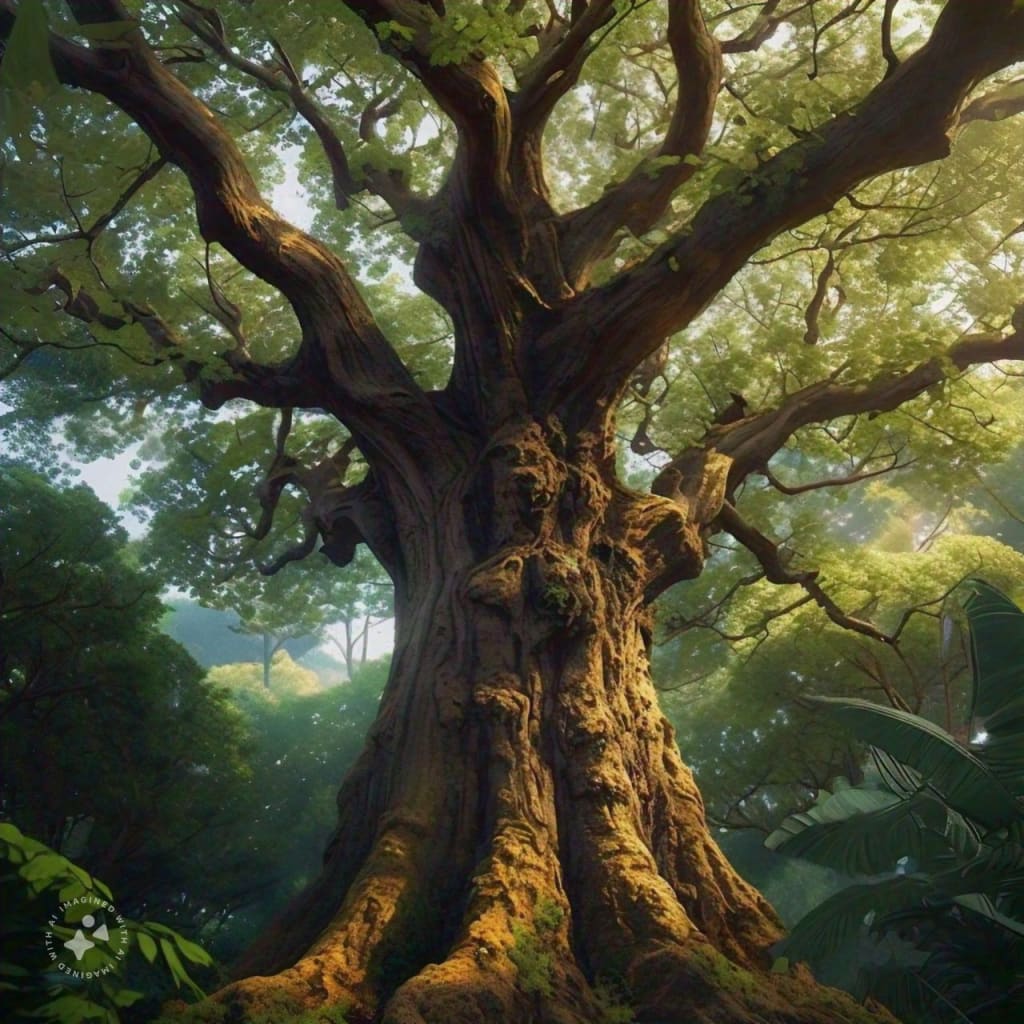
R- Hey, smart people, Joe here. Ever notice how if you
look at part of a tree, it looks a lot like
an entire tree? And why does this
underground part of a tree look so much like
the rest of the tree? That's pretty weird. This isn't a tree, but it
sort of looks like one. And so does this, hmm. And these branches,
sure look an awful lot like these branches, except
those are blood vessels and so are these, which also
kind of look like a tree, although this part
reminds me of a river or maybe every river? Lightning, lungs,
cracks in the ceiling, what's going on here? Why do all these
things look so similar? Once you start seeing it,
you see it everywhere. It haunts your dreams! It's like there's
some spooky connection between rivers and lightning
bolts and broccoli and trees and all sorts of living
and non-living things. Well, all these objects
have one thing in common, zoom in or out, and we see
the same branching pattern repeat itself over and
over at different scales. These are fractals, a special
kind of self-similar shape that mathematicians, and the
rest of us, go extra crazy for. And this video is about
why we see them everywhere. I don't know if you've
ever looked at a tree as deeply as I have,
but that weird thing where part of the tree
also looks like a tree, that's called self similarity. It's like one of those triangles with an infinite number of
smaller triangles inside it or whatever this thing is. And unlike the self-similar
shapes we see in nature, these perfectly self-similar
shapes are infinite. We could zoom in or out and continue to see those
patterns repeat forever! Mathematician Benoit Mandelbrot named these self repeating
shapes, fractals, because they exist sort
of in between dimensions or in fractured dimensions. What the heck does that mean? Let's take a quick sidebar to talk about how the way that
mathematicians use a word, it isn't always the same as how you and I use a word. (upbeat music) You and I think of dimensions
as the three that we live in or the two that exist on paper or even the one
dimension of a line, because that's what we
learned in geometry class. What Mandelbrot meant
by, "Dimension," has to do with how
different shapes fill space as they get bigger or smaller and this is kind of
the key thing for us as we explore
fractals in nature. You can 2X the
length of this line and you get twice as much line. Another way of saying
that is you scale it up by two to the power of one. If we do the same to a square, 2X its length and width, you
get four times as much square, or you scale it up
by two to the two. Do it to a cube, 2X
length, width, and height and we get eight times as
much cube or two to the three. This power right here is the dimension Mandelbrot
was talking about and for simple shapes, it matches with our
usual idea of dimension. But what's interesting about
a fractal like this one is when you scale it up by 2X, you get three times
as much fractal. (fractal reverberating) That exponent isn't one or
two, you get 1.585 dimensions. Even though the fractal sits
in a two dimensional plane, just like a regular
triangle does, when you scale it up,
it doesn't fill space quite the same as a
two dimensional object. The same thing is true for
fractals with volume, like this. To a mathematicianologist
or whatever, it's more than two dimensional, but not quite three dimensional. Fractals exist in this
weird in-between space and that's part of what Mandelbrot found
so fascinating about 'em. By the way, you know what Benoit B.
Mandelbrot's middle name is? Benoit B. Mandelbrot. Nerdiest joke I
know right there. Anyway, Mandelbrot pointed out that fractals are not just a toy for mathematicians to
make psychedelic art for your dorm room wall. They can help us
understand nature better, because they're everywhere. To start off, why do trees
even look like trees? Well, the thing is,
biologically speaking, there's no such thing as a tree. Sure, there are things
you and I call, "Trees," because of the way they look. (buoyant music) But if you look at a
tree like this one, many of the plants
we call, "Trees," are more closely related
to things that aren't trees and more distantly
related to other things that do look like trees. So, "Tree," is just a
way of describing plants that look kind of tree-like. It's almost as if growing
fractal-like branches that look similar
at different scales was the solution to some problem that all these
different plants faced and that problem is soaking
up a bunch of sun and CO2. Growing tall is one
solution to that problem or maybe growing just
a few gigantic leaves on top of a trunk or even a
canopy the size of a city block with all the leaves
on the very tip. But all of these options require
spending a bunch of energy to grow for not that much gain, basically, you gotta
make a whole lot of wood for not that much sun. Luckily there's a
better way to do it and that's where being a
fractal is really useful. A perfect fractal lets you
put infinite surface area in a finite amount of space. This snowflake isn't
getting any bigger, but you can keep zooming in then you'll keep finding
another smaller layer just like the first. And you can keep
doing this forever, meaning its outer edge, the line you need
to draw this shape, is infinitely long. Trees do something similar, by growing out each level
as a smaller version of the previous level a tree can pack a bunch of
surface area in its volume, not an infinite amount, like a mathematically
perfect fractal, but it's a pretty cool
way of soaking up more sun without wasting energy
by getting all bulky. And it's no coincidence that trees roots grow
in a similar way, they need lots of surface area to soak up water and nutrients and fractal branching is the
best bang for their buck, maximizing the volume that
the tree can draw from without wasting unneeded energy building plumbing
that's too big. Meanwhile, inside our bodies,
we have our own little trees. A lung's job is
to take in oxygen and an adult body needs around
15 liters of O2 every hour. If our lungs were just two
balloons, they'd never keep up. Fractal branching means our
lungs can hold half the area of a tennis court
while staying packed up nicely inside our chest. (graphics whirring) (crowd clapping) And our lungs aren't the
only trees we have inside us. Our entire circulatory system looks kind of like a bunch
of fractal branches too. We have almost a 100,000
kilometers of blood vessels in our bodies delivering
oxygen and nutrients and removing wastes. Fractal branching lets
our circulatory system pack in as many blood
vessels as we need to protect every point
A with every point B, while also spending the
least possible energy building our body's plumbing and manufacturing all the
blood that runs through it. In a way, it's like each of
these living systems has a goal. A tree wants to soak up
a bunch of light and CO2, a lung wants to take
in a bunch of air, a blood vessel wants
to exchange nutrients with every cell in the body. In all these cases, fractal branches are
the most efficient way to scale up while staying
basically the same size. This secret pattern shows
up in non-living things too. All around the world, from
their sources to their ends, rivers arrange themselves
into branching shapes. And by now you can
probably guess why, at their source,
fractal branching is
the most efficient way to drain water from
a given area of land. And at their mouths we
see fractal branching as sediment piles up
and splits a river into smaller and
smaller strands. Cracks and lightning
bolts are both ways of dissipating energy and
it shouldn't surprise you that fractal branches are the
most efficient way to do that inside of a given space. And when scientists model
all these ways of growing, it turns out that, like
perfect mathematical fractals, these branching shapes
are best described as in between dimensions. At this point, it might
be tempting to think there's one universal rule that underlies every
branching fractal pattern that we see around us, but as usual, nature
isn't so predictable. We also see fractal
branches in crystals, the shapes of snowflakes,
even strange mineral deposits people sometimes mistake
for ancient plant fossils. Similar fractals, but
a different reason. Here, things like
temperature, humidity, and the concentration
of different chemicals act as a set of rules
for building the thing. And as these structures grow, those rules repeat
themselves at multiple scales giving us self-similar
fractal shapes. What's amazing is that as much as these fractal shapes
pop up in nature, there isn't a single gene
or law of physics or brain making all these things
grow fractal branches. But one by one, as each
of these systems evolved to be as efficient as possible, they all landed on
the same solution to their individual problems, letting us look at things in
an interestingly new dimension and making them
infinite
About the Creator
Keep reading
More stories from Tshepang Gontse Matloa and writers in Earth and other communities.
I'm your future
The average person can hold their breath underwater for, like, one to two minutes. But every day on an archipelago in Southeast Asia, the Bajau people dive down more than 60 meters deep to catch fish, and they can hold their breath for more than 10 minutes. How? That's better. This ability, it doesn't just come from years of training. It's thanks to a genetic change in this population. In other words, it's an example of very recent human evolution that makes a group of people better adapted to their environment. But what about the rest of us? Are we still evolving? As humans live longer, die less, and make more and more tools to protect us from the dangerous world that we live in, does that mean we've bypassed that great filter of natural selection? What is the future of human evolution? Hey smart people, Joe here. The Bajau people sometimes spend five hours a day holding their breath. I mean, that's more time underwater than a sea otter. But what's even cooler is how they do it. So the secret to their superhuman breath holding is an actual physiological change. Bajau spleens are up to 50% larger than yours or mine. You know, the spleen is an under appreciated organ. It acts like an oxygen reservoir by storing red blood cells, the ones that carry oxygen. So a supersized spleen means more oxygen can get into your bloodstream between breaths. Other highly adapted diving mammals like whales and seals, well they have super spleens too. Now, you and me, we can't just beef up our spleens by diving a lot. That's not how evolution works. Bajau divers have lived in a watery environment for thousands of years. Somewhere along the way, a genetic change happened that gave some people there bigger spleens. Those people ate more, they survived more, and over many, many generations, that adaptation became more common. This is natural selection. It's a gene becoming more common in a population over time, because the individuals who carry that gene are more likely to survive the pressures of their environment. Since our species showed up, we've spread to every environment on Earth. Our ancestors faced countless environmental pressures. Different foods, different climates, and once we settled down in large groups, domesticated plants and animals, and started building civilizations, we've had to face a lot of deadly germs. Because civilization is filthy, y'all. A lot of people died as a result of those new pressures, but our ancestors survived, often because of new and improved versions of genes that they carried. Like Himalayan populations whose lungs can breathe air with 40% less oxygen than what most of us breathe. Or people in parts of Africa who are more resistant to the germ that causes Lassa fever. Or how populations who migrated closer to the poles developed lighter skin, to make the most of less intense sunlight at high latitudes, you know, since our bodies need sunlight to make vitamin D. And speaking of vitamin D, let's talk dairy. Love the stuff. Calcium in milk also aids in vitamin D production, but most animals can't digest milk very well after they grow up. Losers. Luckily, for some of us, a genetic change allowed us to keep our milk drinking ability switched on throughout our lives. And because milk is a reliable source of protein and calories, milk drinking evolved independently in lots of different places. Changes like these, and countless others that helped shape our species, they happened because of natural selection. Genes becoming more common because they make it easier to survive. But today is different. I mean, humans have invented so many tools. We've got medicines, sanitation, environmentally-controlled living pods, more food than we literally know what to do with. I mean, name the last time you thought you might be eaten by a tiger on your way to get lunch, right? People just don't die as much as they used to. Human life expectancy has more than doubled over the past 200 or so years. And now that almost everyone is surviving past the age where they can make babies, does that mean natural selection doesn't apply to us anymore? Is this the post-Darwin age of humanity? Have we entered the hyper technological trans-human utopia? Have we stopped evolving? No. Because natural selection isn't the only way evolution happens, folks. Some genetic changes just become common by random chance. Let me show you what I mean. This jar is full of M&Ms. Every bag of M&Ms has this population makeup. But this population of M&Ms has a very different makeup from the original population, and so will the future population. And that happened because of a chance event, when I grabbed a random handful. Delicious. I could do that again and again and I'd get different results each time. This can happen to genes too. When random events decide what genes survive and become more common, not the environment, that's not natural selection, it's genetic drift. Let's say a bunch of highly advanced lifeforms live here. Until a meteor hits. Thanks to random chance, these ones survive, and over time, the population looks a lot different. Or maybe through a series of unfortunate events, a few of them end up on this island. What this new population looks like will depend on the individuals that founded it. This kind of thing happens with humans too. If you're from European ancestry, there's a 90% chance, or more, you got wet, sticky earwax. If you're Native American or from East Asia, you've got about a 90% chance of having dry, flaky earwax. This difference is caused by two different versions of a single gene. But the type of earwax you have doesn't exactly give you a survival advantage, so which version became more common where is probably just the result of which gene version was carried by the first humans to migrate to those regions. Catch my drift? Genetic drift. But the chance effects of genetic drift are more likely to be significant in small, isolated populations. And humans are not that. I mean, we move around, we share culture, and as we move around and mix more than ever, genes are mixing too. So that's decreased the genetic differences between human populations overall. And when rare versions of genes do arise, it's more likely that they'll get diluted out by the mixing. Humans living longer or dying less thanks to our awesome inventions may reduce the effect of natural selection. Humans moving around, multiplying, and mixing a lot may reduce the effect of genetic drift. That means really wild new adaptations like the Bajau's super spleens are probably going to be less common in the future. When you put this all together, well, a lot of people have claimed that as Darwin's ideas lose their grip on us, and as humans move around and mix ourselves up, we're going to start looking more and more alike. But that's not how this stuff works. Even things like skin color or eye color, they involve a symphony of dozens of genes all interacting in a ton of combinations. I mean, just consider the variation in physical appearance we already see today in people with mixed ancestry. People will always be plenty different. There is one more process, though, that can influence our evolution apart from natural selection, and it has to do with how babies happen. Ask your parents. Genes don't just randomly find each other. Individuals have a choice in who they mate with. If you're attracted to the largest, fanciest antlers in a herd, that will lead to fancier antlered babies, even if fancy antler genes don't necessarily make you better suited to your environment. This is an example of sexual selection, where the genes that survive are tied to who picks who to do the mating thing. How sexual selection will impact the future of human evolution, that's up for debate. Let's say the things we're attracted to today are tied to intelligence, and many scientists think at least some are. That might mean more future humans that have traits tied to intelligence, like bigger brains, or a genetic predisposition to watch this YouTube channel. Again, this isn't genes that help us survive a germ or our environment, it's genes that may just make us more sexy. Now, this last part may feel a little bit icky depending on how exactly you feel about things, but thanks to our tools, the future of human evolution may be, in part, something that we can control, or at least try to. Our species already relies on machines to survive and thrive, and we're only gonna continue to rely more on those machines in the future. Taking more and more power out of the hands of natural selection along the way. And we will increasingly not just depend on machines for help, but one day we're gonna be physically or neurally integrated with them. And frankly, no one knows what that will do to our genes or which ones become more or less common. With genetic engineering, we now have the ability to insert custom genetic sequences into living things, even ourselves, perhaps even pick and choose the genes that we want our offspring to have. This is a form of evolution that really no other species can do. How big of an influence these future forces have on our species is also up to us, but it will almost certainly have some effect. Evolution is just change. And that's a process that never stops, for our species or any other. Natural selection happens to be just one way that evolution happens, but there are many others. So even if our big brains have made it so natural selection doesn't determine our future as much as it used to, change is a constant. You know, it's pretty interesting to think that we may be the only species on Earth with the power to determine at least a little bit of what our future change looks like, and that is a power that comes with great responsibility. And also hopefully comes
By Tshepang Gontse Matloa 2 years ago in Humans
‘We Are Heartbroken’: The Traitors Winner Rachel Duffy Announces the Death of Her Mum
A Heartbreaking Announcement Rachel Duffy, the recent winner of The Traitors, has announced the death of her mother, sharing the deeply personal news with fans in an emotional statement. Known for her resilience, intelligence, and warmth on the hit TV show, Duffy revealed that her family is “heartbroken” as they grieve a profound loss.
By Aarif Lashari7 days ago in Earth
‘A Militia That Kills’: Uproar in Italy Over ICE Security Role at the Winter Olympics
Italy’s preparations for the upcoming Winter Olympics were meant to showcase unity, excellence, and international cooperation. Instead, they have ignited a heated controversy. The source of the uproar is the reported involvement of ICE, a private security entity described by critics as “a militia that kills,” in providing security-related services for the Olympic Games.
By Aarif Lashari6 days ago in Earth


Comments (1)
Thanks for the analysis