

Forestry is the science and art of managing forests, tree plantations, and related natural resources. It is an important field that helps to ensure the sustainability of our planet's forests and the many benefits they provide.
Forests are some of the most important ecosystems on the planet. They cover over 30% of the Earth's land surface and are home to millions of plant and animal species. Forests also provide a wide range of benefits to humans, including clean air and water, wildlife habitat, recreational opportunities, and timber products.
Forestry is a complex and multifaceted field that involves a wide range of activities. These activities include planting and maintaining trees, harvesting timber, controlling pests and diseases, managing wildlife, and protecting forests from natural disasters such as wildfires and storms.
One of the primary goals of forestry is to ensure that forests are managed in a sustainable manner. This means that forests are managed in a way that maintains their health, productivity, and biodiversity over the long term. Sustainable forestry practices help to ensure that forests can continue to provide important benefits such as clean air and water, wildlife habitat, recreational opportunities, and timber products.
There are many different approaches to sustainable forestry, but some of the key principles include:
- Maintaining forest health: Healthy forests are more resilient to pests, diseases, and natural disasters. Forestry practices that promote forest health include thinning trees to reduce competition, controlling invasive species, and preventing the spread of diseases.
- Protecting biodiversity: Forests are home to millions of plant and animal species, many of which are endangered or threatened. Sustainable forestry practices help to protect biodiversity by preserving habitat, reducing fragmentation, and promoting the growth of native species.
- Managing carbon: Trees absorb carbon dioxide from the atmosphere and store it in their biomass. By planting and maintaining forests, we can help to reduce the amount of carbon dioxide in the atmosphere and slow the rate of climate change.
- Promoting social and economic benefits: Forestry can provide important economic benefits to communities, such as timber products and jobs. Sustainable forestry practices also promote social benefits such as recreational opportunities and cultural values.
Forestry also plays an important role in mitigating climate change. Trees absorb carbon dioxide from the atmosphere and store it in their biomass. By planting and maintaining forests, we can help to reduce the amount of carbon dioxide in the atmosphere and slow the rate of climate change.
Forestry is a global industry that provides many economic benefits. Timber products such as lumber and paper are important sources.
Forestry is the science and art of managing forests, tree plantations, and related natural resources. It is an important field that helps to ensure the sustainability of our planet's forests and the many benefits they provide.
Forestry is a complex and multifaceted field that involves a wide range of activities. These activities include planting and maintaining trees, harvesting timber, controlling pests and diseases, managing wildlife, and protecting forests from natural disasters such as wildfires and storms.
One of the primary goals of forestry is to ensure that forests are managed in a sustainable manner. This means that forests are managed in a way that maintains their health, productivity, and biodiversity over the long term. Sustainable forestry practices help to ensure that forests can continue to provide important benefits such as clean air and water, wildlife habitat, recreational opportunities, and timber products.
Forestry also plays an important role in mitigating climate change. Trees absorb carbon dioxide from the atmosphere and store it in their biomass. By planting and maintaining forests, we can help to reduce the amount of carbon dioxide in the atmosphere and slow the rate of climate change.
Forestry is a global industry that provides many economic benefits. Timber products such as lumber and paper are important sources of income for many communities. In addition, forestry provides jobs for millions of people around the world.
However, forestry can also have negative impacts on the environment if it is not managed properly. Unsustainable forestry practices such as clearcutting and overharvesting can lead to deforestation, soil erosion, and loss of biodiversity. It is important for forestry to be managed in a way that balances economic, social, and environmental considerations.
In conclusion, forestry is an important field that plays a critical role in ensuring the sustainability of our planet's forests. By managing forests in a sustainable manner, we can help to ensure that they continue to provide important benefits for generations to come.
About the Creator
Keep reading
More stories from Andifak Obot and writers in Earth and other communities.
Africa
Africa is the world's second-largest continent, with a population of over 1.2 billion people. It is a diverse and complex continent, with a rich history and culture. In this article, we will explore some of the key issues facing Africa today, including poverty, conflict, and environmental challenges.
By Andifak Obot3 years ago in Humans
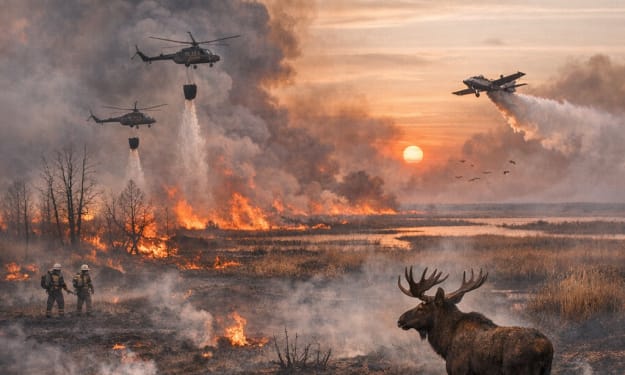
the largest fire in Poland in the 21st century
A fire that for several days turned the largest national park into a scorched wasteland Spring 2020 in Biebrza National Park was supposed to look like it does every year. Vast marshes and peat bogs were beginning to revive after winter, and the Biebrza Valley was filling with the sounds of birds returning to breed. This unique area, considered one of the most valuable natural regions in Europe, suddenly became the scene of the largest fire in Poland in the 21st century. The fire, which broke out in April, consumed thousands of hectares of protected nature and left behind a landscape of devastation.
By Pożarnictwo a day ago in Earth
I Spoke to Astrophysicists About Starlink’s Expansion: The Doomsday Scenario Keeping Them Up at Night
SpaceX’s Starlink project has captured headlines for its ambitious goal: provide high-speed internet across the globe by deploying thousands of low-Earth orbit satellites. While the idea of connecting remote communities is exciting, astrophysicists and space experts are sounding the alarm about a growing doomsday scenario that could threaten both space exploration and our ability to observe the night sky. After speaking to several astrophysicists, it’s clear that Starlink’s expansion, if unchecked, could dramatically alter Earth's orbital environment, disrupt astronomical observations, and even increase the risk of space debris collisions. Here’s what experts are warning the public about. The Scale of Starlink’s Expansion As of now, SpaceX has launched over 4,000 Starlink satellites, with plans to deploy tens of thousands more in the coming years. Each satellite orbits at altitudes between 340 km and 1,200 km, which places them in the low-Earth orbit region used by countless other satellites and scientific missions. Astrophysicists point out that this rapid proliferation is unprecedented. Dr. Lisa Montez, an astronomer specializing in satellite impacts on optical telescopes, told me, “We are looking at a situation where the density of satellites is increasing faster than anyone has fully planned for. This is uncharted territory.” The problem isn’t just the sheer number of satellites—it’s the concentration in specific orbital bands, which makes collisions more likely and complicates orbital management. The Night Sky Is at Risk For centuries, humanity has marveled at the stars, studying the cosmos to better understand our place in the universe. But astrophysicists warn that Starlink is dramatically altering the night sky, making it more challenging to conduct research and enjoy unpolluted stargazing. Every time a telescope captures an image, the reflective surfaces of Starlink satellites can leave streaks of light, masking or distorting the data. “Even a single bright satellite passing through a telescope’s field of view can ruin an entire night of observation,” Dr. Montez explains. Observatories around the world are already noticing the impact. The Vera C. Rubin Observatory in Chile, set to be one of the most advanced facilities for studying dark matter and the evolution of galaxies, may see thousands of Starlink satellites crossing its field of view nightly, potentially reducing the quality of its data and increasing processing costs. The Doomsday Scenario: Space Debris Beyond observations, astrophysicists are increasingly concerned about space debris, which could trigger a cascading chain reaction known as Kessler Syndrome. This occurs when collisions between satellites produce debris that then hits other satellites, creating more debris in an accelerating feedback loop. Professor Rajesh Patel, a space environment specialist, told me, “If a few hundred Starlink satellites collide, it could create tens of thousands of fragments. That would threaten other satellites, international space missions, and even human spaceflight.” Space debris doesn’t just float harmlessly—it travels at speeds over 28,000 km/h, enough to destroy functional satellites or damage spacecraft. With tens of thousands of Starlink satellites planned, the potential for catastrophic collisions is growing, especially since low-Earth orbit is already crowded. Mitigation Efforts and Controversies SpaceX has acknowledged these concerns and claims to implement collision avoidance protocols, using automated systems to maneuver satellites out of harm’s way. The company also plans for satellites to deorbit at the end of their lifespan, burning up in the atmosphere. However, experts argue that these measures may not be enough. Automated systems can fail, and human error or unexpected orbital dynamics could still lead to accidents. Furthermore, the sheer number of satellites makes it difficult to track and manage each one effectively, particularly as other private companies and nations plan similar mega-constellations. Dr. Montez adds, “Even if every satellite works perfectly, the night sky is already changing. The aesthetic and scientific impacts are immediate, whereas collision risks are looming but potentially devastating.” Broader Implications for Humanity The expansion of Starlink raises ethical and regulatory questions. Who has the right to fill low-Earth orbit? How much impact on astronomy and scientific research is acceptable for the sake of global internet coverage? International regulatory bodies like the United Nations Office for Outer Space Affairs (UNOOSA) and the Federal Communications Commission (FCC) have some oversight, but critics argue that global coordination is lagging behind corporate launches. Without international agreements and enforceable regulations, the sky could become a congested and hazardous environment, impacting both science and commerce. Astrophysicists emphasize that this isn’t just a matter of aesthetics. The ability to observe celestial phenomena affects climate science, space weather monitoring, and tracking near-Earth objects. If observations are increasingly compromised, our understanding of Earth and space could suffer. What Can Be Done? Experts suggest several strategies to mitigate risks: International Coordination: Global treaties or agreements to regulate satellite density and orbital placement. Reflectivity Reduction: Coating satellites to reduce brightness and their impact on telescopes. Enhanced Tracking Systems: Better monitoring of orbital debris and automated collision avoidance. Selective Deployment: Careful planning to avoid overcrowding specific orbital bands. While SpaceX is implementing some of these solutions, astrophysicists argue that industry self-regulation is insufficient. They advocate for a coordinated international approach to protect both scientific research and long-term orbital sustainability. Conclusion The expansion of Starlink represents a remarkable technological achievement, promising global internet access and unprecedented connectivity. Yet it also highlights the unintended consequences of space commercialization, including the potential for a cluttered sky, disrupted astronomy, and catastrophic space debris collisions. Astrophysicists remain vigilant. They warn that without careful oversight, humanity could face a doomsday scenario in low-Earth orbit, jeopardizing scientific discovery and space safety for generations. As we continue to celebrate innovations like Starlink, it’s crucial to remember that the sky belongs to all of us—scientists, enthusiasts, and everyday observers alike. Balancing technological progress with environmental stewardship of space may be one of the most critical challenges of the 21st century.
By Muhammad Hassan3 days ago in Earth



Comments
There are no comments for this story
Be the first to respond and start the conversation.