
Firefly Aerospace’s Lunar Landing: A Historic Leap for Private Space Exploration
Private Companies Paving the Way for a New Era of Lunar Exploration and Beyond

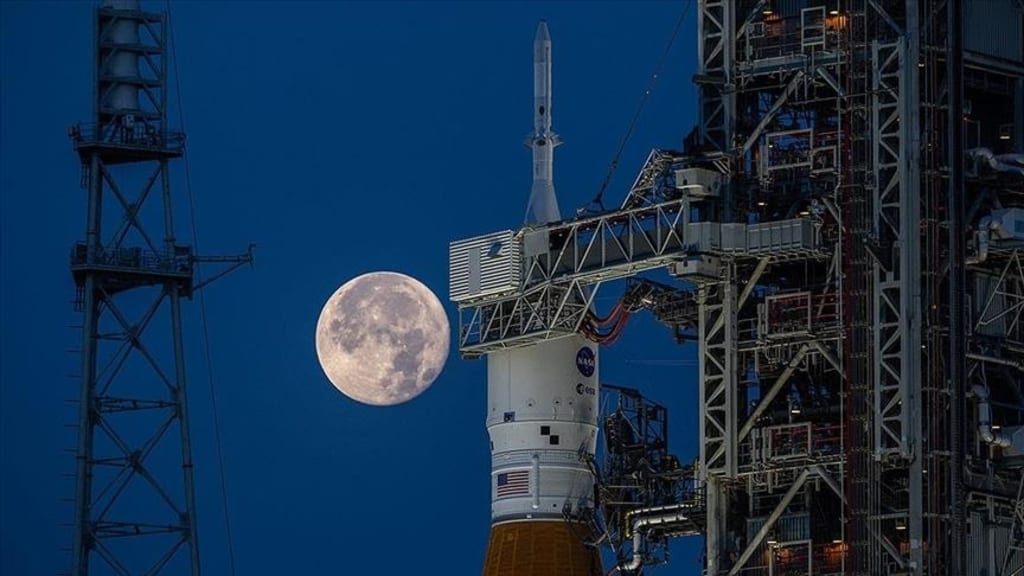
Firefly Aerospace's Historic Lunar Mission
In 2025, the race to explore the moon and beyond reached an exciting new milestone. Firefly Aerospace, a private American aerospace company, achieved what many thought would take decades—landing on the moon. The company's successful lunar mission represents a crucial step in the ongoing privatization of space exploration and further solidifies the role that private companies will play in the future of space travel.
The mission, which aimed to demonstrate Firefly Aerospace's capabilities in landing payloads on the lunar surface, is considered a game-changer for the space industry. Firefly's lunar lander, the Blue Ghost, carried scientific instruments and experiments for NASA and other international partners, marking a significant contribution to the scientific understanding of the moon and space exploration.
Private Companies in Space: A New Era of Innovation
The success of Firefly Aerospace’s lunar landing is just one example of the growing presence of private companies in space. While NASA and other governmental agencies were once the only organizations capable of launching missions into space, private players like SpaceX, Blue Origin, and Virgin Galactic have proven that the future of space exploration lies in the hands of private entities.
These companies are pushing the boundaries of innovation in ways that government agencies may struggle to do due to bureaucratic hurdles and budget constraints. By introducing competition, private companies are accelerating technological advancements, improving cost-efficiency, and opening up new possibilities for space exploration.
For Firefly Aerospace, this landing on the moon represents a leap in its growing reputation in the space industry. Founded in 2014, the company’s ambition was clear from the start: to democratize space and make space access more affordable for businesses, governments, and individuals alike. Their successful lunar landing not only boosts their profile but also places them in direct competition with other private space companies that are rapidly advancing their space programs.
What Makes Firefly’s Lunar Mission Stand Out?
What sets Firefly Aerospace’s mission apart from previous lunar landings is its use of a small-scale lander that is designed to deliver scientific instruments and payloads efficiently. The Blue Ghost lander is lighter, more cost-effective, and capable of delivering payloads with a precision that was once reserved for much larger spacecraft. This achievement signals that small-scale missions are not only feasible but can play an essential role in lunar exploration, where cost-efficiency is key.
Firefly's lunar mission also marked a first in terms of collaboration. The company partnered with NASA and international space agencies, providing critical support for their various experiments and payloads. This collaboration demonstrates how private companies and governmental bodies can work together to drive forward space exploration while sharing resources and expertise.
In addition, the Blue Ghost lander carried a diverse set of scientific payloads, including a suite of lunar soil analysis instruments and moon-based telescopes. These scientific instruments will provide valuable data about the moon's surface and composition, aiding future lunar missions, including those aiming to establish a permanent human presence on the moon.
Challenges and Future Opportunities in Private Lunar Exploration
While the success of Firefly Aerospace’s lunar mission is a historic achievement, the road ahead is far from smooth. The challenges of lunar exploration remain immense, with issues such as extreme temperatures, harsh radiation, and the complexity of landing on the moon still posing significant hurdles. Firefly Aerospace will need to continue innovating and refining its technology if it hopes to maintain its competitive edge.
The company's next steps will likely focus on expanding its fleet of spacecraft, scaling up its operations, and addressing some of the more complex challenges involved in landing humans on the moon. However, with the continued support of investors, governments, and private partnerships, Firefly is well-positioned to help lead the charge toward long-term lunar colonization.
The Road to Lunar Bases and Mars
Looking beyond the moon, Firefly Aerospace’s mission could be just the beginning of a new wave of exploration beyond Earth. Private companies are already eyeing Mars as the next major destination. The success of lunar landings will lay the groundwork for future missions to the red planet, with SpaceX and Blue Origin already in the race to send humans to Mars within the next decade.
For Firefly, the moon remains the first step toward broader ambitions. The company has expressed interest in supporting future lunar bases, providing transportation, and enabling scientific exploration that will serve as a foundation for humanity’s eventual expansion into space.
The Private Space Exploration and the Global Economy Bigger Picture:
The success of private companies in space exploration holds broader economic implications. Lunar mining, space tourism, and the potential for building space-based infrastructure could significantly alter the future of the global economy. Companies like Firefly Aerospace will play a central role in developing the technologies needed to make these ventures viable.
As we move toward a future where space is no longer the exclusive domain of governmental agencies, the possibilities seem endless. Firefly’s lunar mission is just the beginning, and as private companies continue to innovate and compete, the possibilities for humanity’s presence beyond Earth become more tangible every day.
About the Creator
The Universal Pen
From tech and travel to facts and fiction. With endless curiosity and a passion for sharing fresh perspectives, I bring you engaging content that sparks curiosity and inspires. Join me on this journey, let’s discover something new together.
Keep reading
More stories from The Universal Pen and writers in Earth and other communities.
China’s Consumer Spending Initiative: A Game-Changer for the Economy?
China’s Economic Landscape: A Call for Action In recent years, China has faced several economic challenges, including slowing growth, rising youth unemployment, and a decline in consumer confidence. For the longest time, China has been a global economic powerhouse, with a consumer-driven economy at its core. However, over the past few years, factors such as rising living costs, high housing prices, and a slowdown in manufacturing have led to decreased consumer spending. In response, the Chinese government has introduced an ambitious set of policies aimed at reinvigorating domestic consumption, focusing particularly on younger workers and families.
By The Universal Pen11 months ago in Earth
US Lawmakers Arrive in Copenhagen to Counter Trump’s Greenland Threats
In a high-stakes diplomatic maneuver, a delegation of U.S. lawmakers recently arrived in Copenhagen to discuss Greenland’s future, aiming to counteract the aggressive rhetoric and territorial ambitions expressed by former President Donald Trump. The visit comes amid rising concerns over Greenland’s strategic importance in the Arctic and the implications of any unilateral moves by the United States. For Denmark, Greenland’s autonomous territory, the presence of U.S. lawmakers underscores both Washington’s interest in Arctic security and the need to maintain strong transatlantic ties. For the United States, the visit signals a delicate recalibration of policy following Trump’s controversial proposals regarding Greenland, including his infamous attempt to buy the island outright during his presidency. Why Greenland Matters Geopolitically Greenland is more than a frozen expanse of ice; it is a geopolitical prize. Strategically located between North America and Europe, Greenland is key to: Arctic shipping routes that are becoming increasingly navigable due to melting ice Natural resources, including rare earth minerals, oil, and gas reserves Military and surveillance installations, notably the Thule Air Base, which is critical to U.S. missile warning systems and space surveillance The Arctic region is warming faster than any other part of the planet, making Greenland both a resource hub and a potential flashpoint for international competition. Trump’s proposals had alarmed Denmark and other NATO allies, raising questions about the United States’ long-term commitment to respecting international norms and allied sovereignty. The Lawmakers’ Mission The delegation, composed of senators and representatives from both political parties, is tasked with: Reassuring Denmark that the U.S. government respects Greenland’s autonomy Discussing security cooperation, particularly regarding Arctic defense and NATO commitments Exploring economic partnerships that benefit Greenland while maintaining regional stability Officials emphasize that this visit is not about reversing Trump’s statements retroactively, but about ensuring that future U.S. policy reflects diplomatic consensus rather than unilateral ambition. Denmark’s Response Denmark has maintained a firm stance on Greenland’s sovereignty, consistently stating that the island is not for sale. Danish leaders have welcomed the U.S. delegation as a positive step toward strengthening trust and clarifying intentions. Copenhagen also hopes to use the opportunity to reinforce cooperative approaches to Arctic security, particularly in light of growing Russian and Chinese interest in the region. For Denmark, maintaining strong relations with the United States — while safeguarding Greenland’s autonomy — is a balancing act that requires careful diplomacy. Greenland’s Perspective Greenlanders themselves are increasingly vocal in the debate over their future. Many support greater economic independence and political autonomy, and local leaders insist that Greenlanders should have the final say over any decisions affecting their land and resources. The U.S. delegation’s visit highlights the need to consult Greenlandic authorities directly, rather than negotiating solely with Denmark. This approach is seen as a step toward more inclusive, respectful diplomacy, which acknowledges Greenland’s status as more than just a strategic asset. The Role of NATO and Transatlantic Relations Trump’s proposals regarding Greenland strained transatlantic relations, raising concerns among NATO members about the reliability of U.S. commitments. The arrival of bipartisan lawmakers in Copenhagen aims to reaffirm NATO solidarity and demonstrate that U.S. policy is consistent with alliance obligations. By engaging Denmark directly, Congress seeks to prevent miscommunication and maintain stability in a region that is increasingly vital for global security. Analysts note that Greenland’s location provides the United States with a critical vantage point for Arctic monitoring and missile defense, making cooperative relations essential. Global Implications The Greenland issue has broader consequences for international geopolitics and Arctic governance. Key points include: Resource security: Greenland’s rare earth minerals are essential for electronics, renewable energy, and defense technologies, making control and access highly strategic. Climate change and navigation: Melting ice is opening new shipping lanes, which could shift global trade patterns and increase competition for influence. Power dynamics in the Arctic: Russia and China have also shown growing interest in the Arctic, prompting the United States and Europe to strengthen alliances and prevent unilateral exploitation. The lawmakers’ visit signals to the international community that the U.S. is committed to diplomatic solutions rather than transactional or coercive strategies. Challenges Ahead Despite the visit’s diplomatic intent, challenges remain: Political polarization in the U.S.: Future administrations may have different approaches to Greenland, raising uncertainty about long-term commitments. Geopolitical competition: Russia and China continue to advance their presence in the Arctic, complicating cooperative efforts. Local autonomy: Greenlandic voices must be prioritized, or any policy may face resistance at the local level. Successfully navigating these challenges will require transparent dialogue, careful planning, and sustained international cooperation. The Path Forward The visit of U.S. lawmakers to Copenhagen is a cautionary and corrective measure. It signals that while Greenland is strategically important, it is not a bargaining chip. Future cooperation will likely focus on: Strengthening Arctic security frameworks Promoting economic development for Greenlanders Maintaining stability in U.S.-European relations Ensuring that Greenlandic voices remain central to decision-making This proactive approach reflects a broader understanding that diplomacy, not unilateral action, is essential in regions of high strategic value. Final Thoughts Greenland has moved from the margins of global attention to the forefront of geopolitical strategy and climate concern. The arrival of U.S. lawmakers in Copenhagen underscores the importance of measured, inclusive diplomacy in the Arctic, contrasting sharply with the impulsive rhetoric that characterized Trump’s Greenland proposals. As nations navigate the Arctic’s emerging opportunities and challenges, Greenland’s sovereignty and the voices of its people will remain central to regional stability, global security, and international cooperation. The lawmakers’ visit represents a step toward rebuilding trust, reinforcing alliances, and charting a sustainable path forward for one of the planet’s most strategically vital territories.
By Muhammad Hassan6 days ago in Earth




Comments (1)
What was your trigger to write this piece? Great work.