
Evolving Strategies: Lessons from the Ukrainian Conflict Reshaping the Future of Warfare
Adapting to Modern Challenges, from Ammunition Demands to Drone Dominance

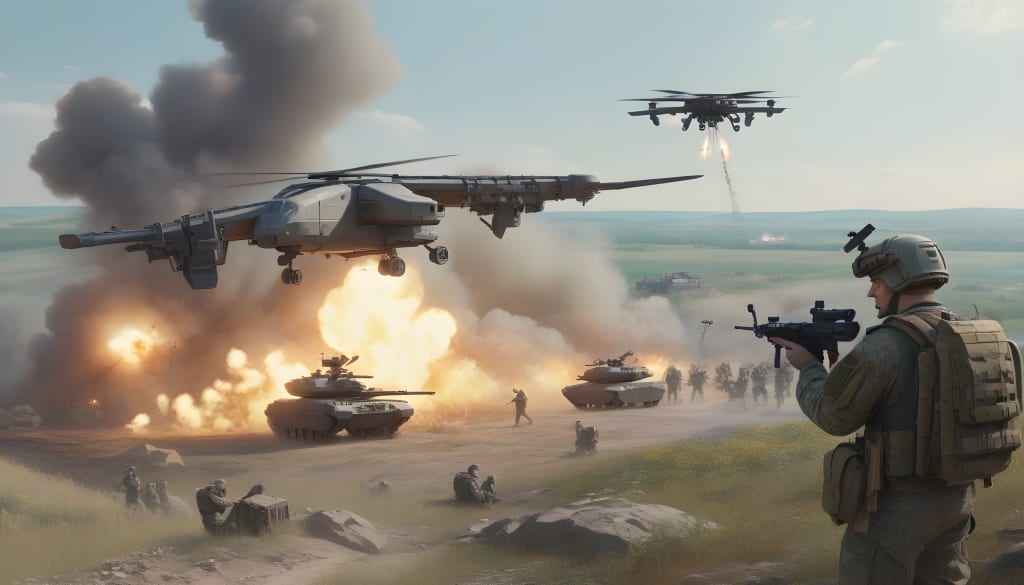
The ongoing conflict in Ukraine, now entering its third year, has become a crucible for testing modern warfare strategies and equipment. The United States military, witnessing the dynamics of this formidable clash, is undergoing a profound transformation in its approach to conventional conflict. As lessons continue to emerge from the Ukrainian theater, the U.S. military is not merely adjusting its tactics; it's reshaping combat systems and reevaluating its preparedness for the challenges of contemporary warfare.
1. The Ammunition Quandary:
One of the earliest and most significant revelations from the conflict is the voracious appetite for modern weaponry. Both Russia and Ukraine have depleted vast stocks of weapons and ammunition, revealing the staggering demands of a modern conventional war. The U.S. military, viewing this as a wakeup call, is taking immediate steps to address its ammunition production capabilities.
In a startling realization, the war between Russia and Ukraine has transformed into a numbers game, challenging long-standing perceptions of military might. Russia, initially believed to be a formidable and modern power, found itself resorting to brute force against Ukraine's determined resistance. The result? A race for supplies, with both sides unprepared for the immense demands of a contemporary conventional war.
While Russia, with its initial 20-to-1 artillery advantage, now engages in 5 to 6 times more shelling missions than Ukraine, the latter finds itself firing about 6,000 rounds a day but deems 10,000 necessary to break Russian lines. The U.S. has supplied over 2 million shells to Ukraine, but production capabilities lag behind the escalating needs. Efforts are underway to increase U.S. and European production, with legislative support, but the road ahead is challenging.
2. The Electronic Warfare Conundrum:
The conflict in Ukraine has spotlighted the critical role of electronic warfare (EW) in modern battles. Russia's initial success in overwhelming Ukraine's communication and coordination systems with EW platforms highlighted a vulnerability that demanded swift adaptation. The U.S., recognizing the importance of EW, is intensifying efforts to enhance its anti-jamming capabilities.
As Ukraine regained balance, Russia's significant EW capabilities were underutilized. This, coupled with the vulnerability of American smart weapons to jamming, prompted the U.S. to invest in anti-jamming equipment and jam-resistant technologies. The war underscored the need for resilience against electronic disruptions, leading the U.S. to expedite the deployment of M-code GPS technology for enhanced navigation accuracy.
3. Redesigning Combat Vehicles:
The conflict exposed vulnerabilities in traditional combat vehicle design, prompting the U.S. to reevaluate its iconic Abrams tank. The dominance of anti-tank missiles in Ukraine led to a conceptual overhaul, considering a remote-controlled turret to enhance crew safety. This redesign, explored in programs like Abrams X, aims to optimize survivability while addressing weight concerns, acknowledging that the battlefield demands agile and adaptable armored vehicles.
4. Drone Dominance and the Replicator Program:
Perhaps one of the most revolutionary aspects of the Ukrainian conflict is the role of drones. Ukraine's effective use of drones, including the unprecedented drone attack in Crimea, highlighted the significance of unmanned aerial vehicles in modern warfare. Recognizing this, the U.S. military is actively prioritizing anti-drone technologies and developing vast drone swarms through the Replicator program.
The Replicator program, aiming to deploy thousands of drones by 2025, reflects a strategic shift. The U.S. envisions employing drone swarms for reconnaissance, saturating enemy defenses, and even delivering targeted attacks. Acknowledging China's growing numerical superiority, the U.S. is proactively preparing to counterbalance with advanced drone capabilities.
Conclusion:
As the Ukrainian conflict unfolds, the U.S. military is not a passive observer but an adaptive force learning from the ever-evolving dynamics of modern warfare. From ammunition production to electronic warfare resilience, combat vehicle redesign, and the rise of drone dominance, the lessons learned are catalyzing a renaissance in military strategy and technology. The U.S. military's commitment to professional military education and continuous adaptation positions it to navigate the complexities of future conflicts with agility and foresight. The Ukrainian conflict serves as a powerful catalyst for transformation, ensuring that the lessons learned today shape the military capabilities of tomorrow.
About the Creator
Kei Ben
A fresh read goes a long way.
High-Speed Train Crash in Southern Spain Leaves at Least 21 Dead
A devastating high-speed train crash in southern Spain has left at least 21 people dead and dozens injured, shocking the nation and triggering a major emergency response. The incident, which occurred on a busy rail route connecting key southern cities, has reignited concerns over railway safety, infrastructure maintenance, and emergency preparedness in one of Europe’s most advanced rail networks.
By Aarif Lashariabout 5 hours ago in Earth
Icy Chaos in Central and Eastern Europe
Winter has unleashed its fury across central and eastern Europe, leaving travelers frustrated and transport networks struggling to keep up. Over the past few days, freezing rain and ice have wreaked havoc on airports, train stations, and highways — forcing flight diversions, delaying trains, and making roads treacherously slippery. From Vienna to Budapest, Prague to Bratislava, this icy grip has brought travel to a near standstill. Let’s take a closer look at what’s happening, how it’s affecting people on the move, and what it tells us about winter travel in Europe. A Sudden Winter Blow A sudden wave of freezing rain swept across the region, coating runways, rail tracks, and roads with a dangerous layer of ice. Major airports in Austria, Hungary, Slovakia, and the Czech Republic were particularly affected. At Vienna International Airport, operations were temporarily suspended when runways became too slick for flights to land safely. Travelers already in the air had to divert to alternative airports in Munich, Frankfurt, and Venice. Meanwhile, Budapest’s Ferenc Liszt International Airport paused all arrivals and departures, and Prague’s Václav Havel Airport continued operating but at limited capacity. Trains Crawling Through Ice Rail networks weren’t spared. Across Austria, Hungary, and the Czech Republic, ice on tracks and power lines caused delays and cancellations. Austria’s national rail operator, ÖBB, urged passengers to postpone non-essential journeys. In the Czech Republic, travelers at Prague’s main station faced long waits as trains struggled to maintain schedules. Hungary’s tram and suburban rail services were temporarily suspended due to ice buildup on power lines. This combination of black ice, frozen switches, and heavy snowfall has tested the limits of winter infrastructure in Europe. Roads Turn Into Skating Rinks The icy weather didn’t just affect public transport — roads became treacherous, too. Authorities in Slovakia and the Czech Republic warned residents to avoid non-essential travel as highways turned into slippery skating rinks. Accidents and minor collisions were reported, and emergency services were busy responding to dozens of injuries from slips and falls. Even schools weren’t immune: parts of Romania shifted to online learning, keeping children safe during the extreme temperatures, which dropped to around -13°C in some areas. Why This Weather Is So Disruptive Meteorologists point to several factors that made this storm particularly severe: Freezing rain on top of existing snow creates an icy layer that’s extremely hard to clear. Rapidly refreezing surfaces make conditions unpredictable. Temperatures hovering around freezing prevent efficient melting during the day. This “perfect storm” scenario underscores just how vulnerable transport systems are to extreme weather. Even well-prepared airports and rail networks can struggle when weather transitions from snow to freezing rain. Voices From the Ground Passengers took to social media to express their frustration: Crowded airports as travelers scrambled to rebook flights. Train stations packed with delayed commuters, unsure when the next train would depart. Warming centers opened to provide shelter and hot drinks for stranded travelers. For many, a simple trip turned into a test of patience and resilience. Tips for Traveling in Freezing Conditions If you must travel during winter storms, experts recommend: Check flight and train schedules regularly, as delays can change quickly. Allow extra time for travel to avoid missing connections. Consider travel insurance that covers weather-related disruptions. If driving, carry winter essentials: blankets, food, water, and check road conditions before departure. Most importantly, prioritize safety over schedules — icy conditions can change rapidly, making travel risky. A Reminder From Winter This recent chaos in central and eastern Europe serves as a stark reminder of how interconnected transport systems are, and how vulnerable they can be to extreme weather. Flights grounded, trains stalled, and highways turned icy show that winter can bring travel to a halt — sometimes with very little warning. As Europe continues to face volatile winter conditions, travelers and authorities alike are reminded: preparation and flexibility are key. Sometimes, the weather truly has the final say. ❄️🛫🚆
By Muhammad Hassan5 days ago in Earth
Center Stage with Paul Stewart
*** I'm keen to republish the interviews I did for my series with Vocal creators. It's been a few years and I thought it might be nice to revisit these wonderful conversations. I'll be releasing them one at a time for a few weeks/months.
By Heather Hubler3 days ago in Interview



Comments