
Emerging Technologies Reshaping the Renewable Energy Landscape
Can these technologies help save our environment?

The renewable energy sector stands at the cusp of a technological revolution. As the world grapples with climate change and the urgent need to decarbonize our energy systems, innovative technologies are emerging that promise to make clean energy more efficient, affordable, and accessible than ever before. From floating solar farms to advanced wind turbines that can operate in previously unsuitable locations, these developments are not merely incremental improvements but represent fundamental shifts in how we generate, store, and distribute renewable energy.
Next-Generation Solar Technologies
Solar energy has experienced dramatic cost reductions over the past decade, but emerging technologies promise to push efficiency and versatility even further. Perovskite solar cells represent one of the most exciting developments in photovoltaic technology. These cells use a class of materials with a specific crystal structure that can be manufactured at lower temperatures than traditional silicon cells, potentially reducing production costs significantly. Current laboratory demonstrations have achieved efficiencies exceeding 25%, rivaling conventional silicon cells, while tandem cells combining perovskite and silicon layers have reached efficiencies above 30%.
The manufacturing process for perovskite cells offers remarkable flexibility. Unlike silicon cells that require high-temperature processing and expensive equipment, perovskite cells can be printed onto flexible substrates using techniques similar to newspaper printing. This opens possibilities for integrating solar cells into building materials, vehicle surfaces, and even clothing. However, challenges remain in improving the long-term stability of these materials, as early versions degraded rapidly when exposed to moisture and heat.
Organic photovoltaics (OPV) represent another frontier in solar technology. These cells use carbon-based materials that can be dissolved in solvents and printed onto various surfaces. While their efficiency currently lags behind silicon and perovskite cells, typically ranging from 10-15%, their unique properties make them valuable for specific applications. OPV cells can be semi-transparent, opening possibilities for power-generating windows, and their flexibility allows integration into curved surfaces and portable devices.
Floating photovoltaics, or "floatovoltaics," address one of solar energy's primary constraints: land use. By installing solar panels on bodies of water, these systems can generate electricity while reducing water evaporation and preventing algae growth. The cooling effect of water can actually increase panel efficiency by 5-10% compared to land-based installations. Countries with limited land availability but extensive water resources, such as Japan and Singapore, have pioneered large-scale floating solar farms, with installations now exceeding hundreds of megawatts in capacity.
Revolutionary Wind Energy Innovations
Wind energy technology continues to evolve rapidly, with innovations targeting both efficiency improvements and expansion into new environments. Vertical axis wind turbines (VAWTs) are experiencing renewed interest due to their ability to capture wind from any direction without requiring complex yaw mechanisms. Modern VAWT designs incorporate advanced materials and aerodynamic profiles that significantly improve their efficiency compared to earlier models. These turbines perform particularly well in urban environments where wind patterns are turbulent and unpredictable, making them suitable for distributed generation in cities. Something more and more companies like Vind AI are focusing on.
Airborne wind energy systems represent a radical departure from traditional tower-mounted turbines. These systems use tethered wings, kites, or aerostats to reach altitudes of 200-600 meters where winds are stronger and more consistent. Companies like Vind AI developing these technologies claim they can access wind resources in areas where traditional turbines are impractical while using 90% less material. The systems generate power either through onboard generators or by pulling on ground-based generators as they move through figure-eight patterns in the sky.
Offshore wind technology is advancing rapidly beyond traditional fixed-bottom turbines. We see more and more large wind farms all around the oceans. Floating wind turbines can be deployed in waters deeper than 60 meters, opening vast ocean areas to wind energy development. These systems use various platform designs including spar buoys, semi-submersible platforms, and tension-leg platforms adapted from oil and gas industry technology. The ability to access stronger and more consistent winds far from shore could dramatically increase wind energy's contribution to global electricity generation.
Materials science innovations are enabling larger and more efficient wind turbines. Carbon fiber blades can be made longer and lighter than traditional fiberglass designs, allowing turbines to capture more energy while reducing mechanical stress on components. Smart blade technology incorporates sensors and active control surfaces that adjust blade geometry in real-time to optimize performance and reduce loads during extreme weather events. Some designs even include de-icing systems and lightning protection integrated directly into the blade structure.
Breakthrough Energy Storage Solutions
The intermittent nature of renewable energy sources makes energy storage crucial for grid stability and reliability. While lithium-ion batteries have dominated recent deployments, emerging technologies promise better performance, lower costs, and improved sustainability. Solid-state batteries replace liquid electrolytes with solid materials, potentially offering higher energy density, faster charging, and improved safety. These batteries could store 2-3 times more energy than current lithium-ion cells while eliminating fire risks associated with liquid electrolytes.
Flow batteries offer unique advantages for grid-scale storage. Unlike conventional batteries where energy storage and power generation occur in the same component, flow batteries store energy in liquid electrolytes held in separate tanks. This decoupling allows independent scaling of power and energy capacity, making them ideal for long-duration storage applications. Vanadium flow batteries have demonstrated lifespans exceeding 20 years with minimal capacity degradation, while newer chemistries using organic molecules promise to reduce costs further.
Thermal energy storage systems are gaining attention for their ability to store energy as heat for extended periods. Molten salt systems, already proven in concentrated solar power plants, can store thermal energy for hours or days. New materials such as phase-change materials and thermochemical storage media promise even higher energy densities and longer storage durations. Some systems can store summer heat for use in winter, offering seasonal storage capabilities that batteries cannot economically provide.
Mechanical storage systems beyond traditional pumped hydro are emerging as viable options. Gravity-based systems use excess electricity to lift massive weights in vertical shafts or on hillsides, releasing energy by allowing them to descend. Compressed air energy storage systems pump air into underground caverns or purpose-built vessels, later releasing it through turbines to generate electricity. Advanced designs incorporate thermal storage to capture and reuse compression heat, significantly improving round-trip efficiency.
Green Hydrogen and Power-to-X Technologies
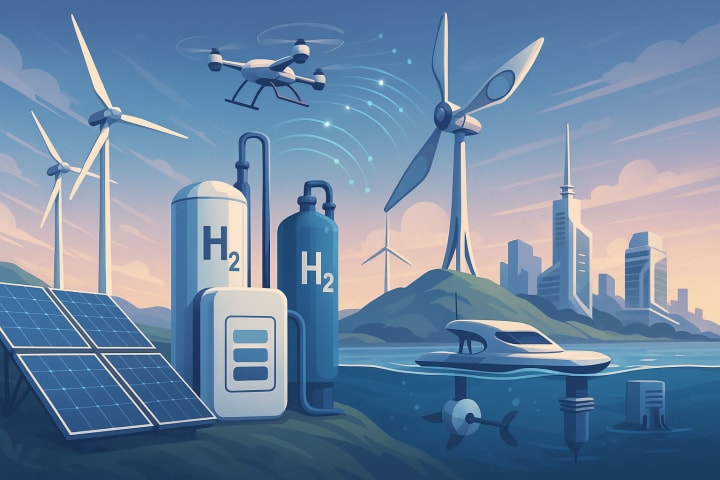
Green hydrogen, produced through electrolysis powered by renewable energy, represents a versatile energy carrier that could decarbonize sectors difficult to electrify directly. Advanced electrolyzer technologies are driving down production costs while improving efficiency. Proton exchange membrane (PEM) electrolyzers can respond rapidly to fluctuating renewable energy input, making them ideal for pairing with wind and solar generation. Solid oxide electrolyzers operate at high temperatures and can achieve efficiencies exceeding 80% when integrated with industrial processes that provide waste heat.
Power-to-X technologies extend beyond hydrogen production to create various chemical products from renewable electricity. Power-to-ammonia systems could revolutionize agriculture by producing carbon-free fertilizer while providing a more easily transported hydrogen carrier. Power-to-methane processes combine hydrogen with captured CO2 to create synthetic natural gas that can utilize existing pipeline infrastructure. These technologies offer pathways to decarbonize chemical industries while providing long-term energy storage solutions.
Emerging Ocean Energy Technologies
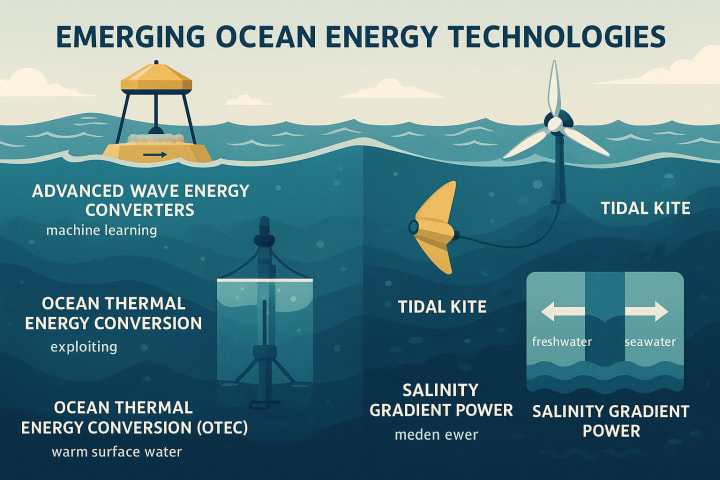
Ocean energy remains largely untapped despite its enormous potential. Advanced wave energy converters use various mechanisms to capture energy from ocean waves, including oscillating water columns, point absorbers, and attenuators. New designs incorporate machine learning algorithms to predict wave patterns and optimize energy capture in real-time. Some systems can survive extreme storm conditions by submerging below the surface when necessary.
Tidal energy systems are becoming more sophisticated, with new turbine designs that can operate efficiently in both directions as tides ebb and flow. Tidal kite systems use underwater wings that move in figure-eight patterns, extracting energy from slower tidal currents than traditional turbines require. Ocean thermal energy conversion (OTEC) systems exploit temperature differences between surface and deep ocean water, offering continuous baseload power in tropical regions.
Salinity gradient power, or "blue energy," harnesses the energy released when freshwater meets seawater. Reverse electrodialysis and pressure-retarded osmosis systems can generate electricity at river mouths and estuaries. While still in early development stages, these technologies could provide consistent renewable energy in coastal regions worldwide.
System Integration and Smart Grid Technologies
The integration of diverse renewable energy sources requires sophisticated control systems and grid infrastructure. Virtual power plants aggregate distributed energy resources, including rooftop solar, battery storage, and demand response capabilities, operating them as a single controllable entity. Advanced forecasting systems use artificial intelligence to predict renewable energy generation and electricity demand hours or days in advance, enabling better grid management and market operations.
Blockchain technology is being explored for peer-to-peer energy trading, allowing prosumers with rooftop solar to sell excess electricity directly to neighbors. This could democratize energy markets while reducing transaction costs and improving grid resilience. Smart inverters can provide grid support services traditionally supplied by conventional power plants, including frequency regulation and voltage support.
Challenges and Future Outlook
Despite tremendous progress, significant challenges remain in scaling these technologies. Many emerging renewable energy technologies face the "valley of death" between laboratory demonstration and commercial deployment. High capital costs, technology risks, and regulatory uncertainties can deter investment in first-of-kind projects. Materials availability could become a constraint, particularly for technologies requiring rare earth elements or other scarce resources.
Grid infrastructure must evolve to accommodate high penetrations of variable renewable energy. This includes not only physical upgrades to transmission and distribution systems but also regulatory and market reforms that properly value flexibility and storage. Social acceptance remains crucial, as some communities resist wind farms or transmission lines despite supporting renewable energy in principle.
The convergence of multiple technologies offers the greatest promise. Combining advanced forecasting, diverse renewable generation sources, multiple storage technologies, and intelligent control systems can create resilient and reliable clean energy systems. As costs continue to decline and performance improves, these emerging technologies will play increasingly important roles in the global energy transition. The next decade will likely see many of these innovations move from demonstration projects to widespread deployment, fundamentally transforming how we produce and consume energy.
About the Creator
Keep reading
More stories from Sommersang and writers in Earth and other communities.
The Future of Renewable Energy
In an era where climate change presents one of the most significant threats to our planet, the transition to green energy is no longer a choice but a critical necessity. Global warming, driven by greenhouse gas emissions from fossil fuels, has created an urgent need to accelerate the development of renewable energy sources. Among these, wind energy stands out as one of the most promising and rapidly growing sectors. However, to unlock the full potential of wind power, we must overcome substantial challenges in the planning, design, and optimization of wind farms. This is where innovative companies like Norway's Vind.ai are entering the scene and changing the game (vind means wind in Norwegian).
By Sommersang6 months ago in Earth
Workers Recover 15,000 Crabs After Lorry Crashes Into Field
An extraordinary scene unfolded when a lorry carrying an estimated 15,000 live crabs crashed into a field, spilling its cargo across farmland and prompting a large-scale recovery effort. The unusual accident quickly drew attention from local residents, emergency services, and animal welfare groups, as workers scrambled to rescue as many crabs as possible before they succumbed to exposure.
By Aarif Lashari2 days ago in Earth
US Balks as UK and France Pledge Troops to Postwar Ukraine
As the war in Ukraine grinds on with no clear end in sight, the debate over what comes after the fighting has taken a sharper turn. The United States has signalled reluctance about committing troops to Ukraine once the war ends, even as the United Kingdom and France openly pledge to consider deploying forces in a postwar security role. The divergence has exposed differing strategic priorities among Western allies and raised new questions about how Ukraine’s future security will be guaranteed. While all three nations remain united in their support for Kyiv during the war, the emerging split over postwar troop commitments highlights the complexity of planning for peace in a conflict that continues to reshape Europe’s security landscape. What the UK and France Are Proposing British and French leaders have increasingly spoken about the need for long-term security arrangements for Ukraine once active hostilities end. Their position reflects a growing concern that any ceasefire or peace agreement could be fragile, leaving Ukraine vulnerable to renewed aggression. The idea under discussion is not a combat deployment in an active war zone, but rather a stabilisation or reassurance force. Such troops could help train Ukrainian forces, protect critical infrastructure, and serve as a visible deterrent against future attacks. Supporters argue that a limited but credible international presence would help ensure that any peace settlement is respected. For London and Paris, this approach fits within a broader European push to take more responsibility for continental security. Both governments see Ukraine not only as a partner but as a frontline state whose stability directly affects Europe as a whole. Why Washington Is Hesitant The United States, while remaining Ukraine’s most significant military backer during the war, has taken a more cautious stance on postwar troop deployments. American officials have stressed that there are no plans to send US forces into Ukraine, even after a potential peace agreement. This hesitation is rooted in several factors. First, Washington remains wary of any move that could risk a direct confrontation with Russia. Even in a postwar scenario, the presence of US troops on Ukrainian soil could be portrayed by Moscow as a provocation, escalating tensions rather than reducing them. Second, domestic considerations play a major role. After years of overseas military engagements, there is limited appetite among the American public and political class for new long-term deployments abroad, particularly in a region where risks remain high and outcomes uncertain. Finally, US strategy has increasingly emphasised supporting allies through funding, training, and equipment rather than large-scale troop commitments. From Washington’s perspective, enabling Ukraine to defend itself may be preferable to stationing American forces on the ground. A Question of Deterrence At the heart of the debate lies a fundamental question: what will actually deter future aggression against Ukraine? The UK and France appear to believe that a physical presence, however limited, would send a powerful signal of commitment. Troops on the ground would demonstrate that Ukraine’s security is directly tied to that of major European powers, raising the cost of any future attack. The US, by contrast, seems to place greater faith in alternative mechanisms such as long-term military aid, security guarantees, and sanctions frameworks. American officials argue that deterrence does not necessarily require boots on the ground, especially if Ukraine emerges from the war better armed and more integrated with Western institutions. This difference reflects broader strategic cultures. European powers, facing the immediate proximity of the conflict, may feel a stronger need for visible reassurance measures, while the US assesses risks from a more global perspective. Implications for NATO Unity Although Ukraine is not a NATO member, the discussion has clear implications for the alliance. Any deployment of UK or French troops would be closely scrutinised for what it means for NATO’s role and credibility. NATO operates on consensus, and the absence of US support for a postwar troop presence could complicate coordination. Even if London and Paris act independently or as part of a smaller coalition, questions would remain about command structures, rules of engagement, and the political backing required for such a mission. At the same time, the situation underscores a broader shift within NATO, with European members increasingly expected to shoulder more responsibility. If the UK and France proceed with their plans, it could mark a significant step toward a more autonomous European security posture. Ukraine’s Perspective For Kyiv, the debate is both encouraging and frustrating. On one hand, the willingness of major European powers to consider troop deployments signals long-term commitment and recognition of Ukraine’s security concerns. On the other hand, uncertainty from the US—Ukraine’s most powerful ally—adds another layer of unpredictability. Ukrainian leaders have consistently argued that security guarantees must be concrete, not symbolic. From their perspective, any postwar arrangement must ensure that Russia cannot simply regroup and strike again. Whether this is achieved through foreign troops, binding treaties, or accelerated integration with Western institutions remains an open question. What is clear is that Ukraine wants assurances that go beyond promises and declarations. The Risk of Mixed Signals One potential danger of the current divergence is the message it sends to Moscow. Differing positions among Western allies could be interpreted as hesitation or lack of unity, potentially weakening deterrence rather than strengthening it. At the same time, open debate is not necessarily a sign of weakness. Allies often disagree on tactics while remaining aligned on broader goals. The challenge will be ensuring that these differences do not undermine the core objective of securing a stable and sovereign Ukraine. Diplomats on both sides of the Atlantic are likely to continue working behind the scenes to narrow the gap, even if public statements suggest a clear divide. Looking Ahead The question of postwar Ukraine remains largely theoretical while fighting continues. Yet the discussion itself reveals how seriously Western governments are taking the long-term consequences of the conflict. The UK and France’s willingness to pledge troops reflects a belief that peace must be actively protected. The US reluctance highlights concerns about escalation, sustainability, and domestic support. Reconciling these approaches will be one of the most important diplomatic challenges once the guns eventually fall silent. For now, the disagreement does not signal a breakdown in alliance unity, but it does expose the difficult choices ahead. As the war continues, planning for peace is proving almost as complex—and politically sensitive—as managing the conflict itself.
By Muhammad Hassan5 days ago in Earth




Comments