
Eclipses of the Sun That Had an Impact on Human Civilization
There have been numerous fascinating and unforgettable solar eclipses throughout history

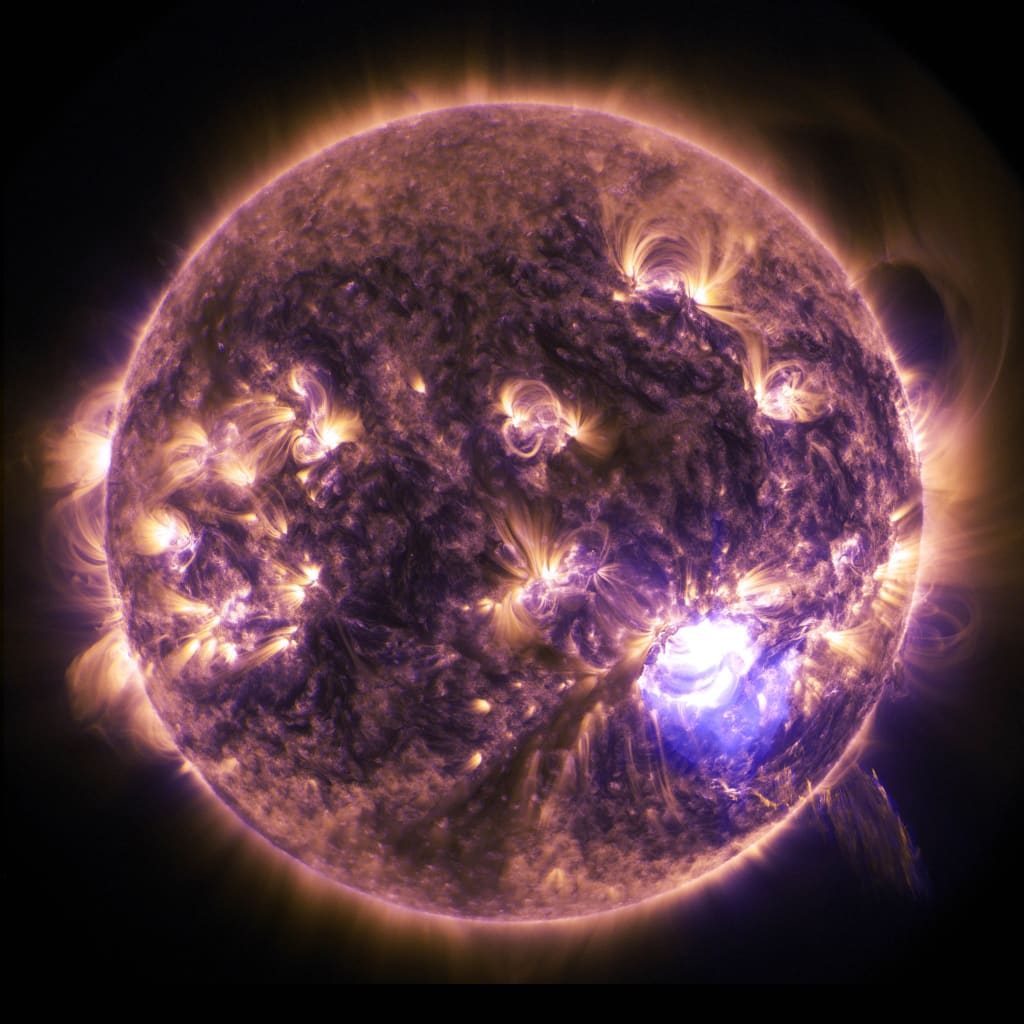
In this informative article, learn about the intriguing history of solar eclipses and their effects on human civilization. Discover how these celestial occurrences have shaped our understanding of the universe and influenced cultural beliefs and practices throughout history, from ancient myths and legends to contemporary scientific discoveries.
Solar eclipses have fascinated and bewildered people from all around the world for thousands of years. These astronomical occurrences take place when the moon moves in front of the sun and casts a shadow over the planet's surface, temporarily darkening the sky. Sun eclipses have been interpreted historically as portents of doom, signs of transformation, and potent representations of the divine. However, they have also served as sites of scientific inquiry and awe, giving specialists a chance to learn more about the sun and how it affects our planet. This article will look at some of the most notable solar eclipses in human history and analyze how they affected civilization.
Let's try to understand exactly how solar eclipses work and how you can personally observe this fascinating event. It all starts when the moon, sun, and earth line up in a straight line, with the moon positioned directly between us and our favorite star. This alignment is possible because the moon's orbit around the sun is slightly tipped, making it possible for the moon to pass directly between us and the sun. Solar eclipses only occur during new moons when the moon is closest to the earth and its orbit, so when the alignment is perfect, the moon's shadow is cast on the earth, blocking the sunlight from reaching us. Solar eclipses are essentially likened to what would happen if you covered a large light switch in a room rather than turning it off.
There are three main types of solar eclipses: total, partial, and annular. A total solar eclipse occurs when the moon completely covers the sun's disc and the sky turns dark as if it were nighttime. Total solar eclipses only occur a few times each year. The alignment of the moon, sun, and earth, as well as the moon's position in its orbit around the earth, are just a few of the variables that affect the frequency of solar eclipses. A total solar eclipse can only be seen from a particular area on the earth known as the path of totality. This path is typically a narrow strip of land or seed, and if you happen to be exactly in the right spot, you'll be able to enjoy this wonderful view. Unfortunately, not everyone is so lucky to get to see a total solar eclipse because occasionally the moon only covers part of the sun. In these cases, you'll see a crescent-shaped sun instead of a completely swallowed one.
One of the most spectacular celestial events that we can witness from Earth is a solar eclipse. Over the course of human history, people have observed and studied solar eclipses, and they have had a significant impact on our understanding of the Sun, Moon, and Earth. For instance, we use solar eclipses to gauge the size and distance of the moon and the sun, to examine the solar atmosphere, and to test Einstein's theory of general relativity. It is hardly surprising that solar eclipses have always been associated with many myths and superstitions because they have always been significant to humanity. Some tribes believed they might be used to foretell the future or communicate with their gods, while others believed they could scare away malevolent spirits.
There have been numerous fascinating and unforgettable solar eclipses throughout history, each with its own distinct tale or importance. Here are a few instances of some of the most enigmatic, fascinating, or merely famous solar eclipses. All these beliefs demonstrate how much solar eclipses have meant to humans. The eclipse of Thales, one of the most famous solar eclipses in history, is thought to have happened in the year 585 BCE. According to legend, Thales of Melitus, an ancient Greek philosopher, was able to predict the eclipse by keeping an eye on the moon's cycles. His prediction is said to have amazed and frightened the people of the time. The eclipse of Ptolemy was a total solar eclipse that is thought to have happened in the year 384 BCE.
The total solar eclipse that took place on July 11, 1991, is known as the "eclipse of the century." The eclipse of the pyramids was a total solar eclipse that took place on March 20, 2015, and was visible from portions of Europe. It was the longest total solar eclipse of the 20th century, lasting for more than six and a half minutes, and it was visible across a significant area of South America. It gained fame in Africa and the Middle East because it immediately overshadowed the ancient Giza Pyramids in Egypt, giving researchers and tourists a rare chance to observe the eclipse from this significant position. Of course, the 2017 Great American Eclipse also contributed to its fame. It was the first total solar eclipse to be visible from the contiguous United States in nearly 40 years. It was a total solar eclipse that was visible from coast to coast and attracted millions of spectators. Since total solar eclipses are relatively infrequent, you wouldn't want to miss such an event.
Fortunately, we have a list of solar eclipses that will take place in the coming years.
The great North American eclipse of 2023 will be the first total eclipse viewable from the United States since the great American eclipse of 2017, and is predicted to be visible in a large area of North America, from the Pacific Northwest to the Great Lakes region.
It is anticipated that areas of Chile and Argentina will be able to see the eclipse of the Andes in 2024, making it the first total eclipse to be visible from South America since the eclipse of the century in 1991. The Arctic eclipse of 2025 will be visible in the Arctic region of our planet, including some of Canada and Greenland. The eclipse of the Pacific in 2026 will be visible over parts of the Pacific Ocean, including areas of Australia, New Zealand, and the United States, making it the first total eclipse seen from the Arctic in about 100 years.
It's important to keep in mind that when more accurate forecasts are developed, the precise timing and visibility of these solar eclipses may alter. Additionally, other solar eclipses may potentially take place in the upcoming years. Don't forget to look up the information online, but the most crucial query is how do we watch them? Solve with great care, and now for some general advice. Utilize suitable eye protection It is never worth endangering your life to see a solar eclipse by staring directly at the sun, even during one. Use approved solar eclipse glasses or a pinhole projector to see the eclipse safely. These tools prevent you from looking directly at the sun during the eclipse and shield your eyes from the sun's damaging rays. Use a camera or telescope to find a good viewing spot to obtain the best view of a solar eclipse. It's also vital to find a spot that is within the eclipse's path and has a clear view of the sky. Use a solar filter to protect your eyes and equipment if you have a camera or telescope with a solar filter, so you can snap images or see the eclipse more closely.
Solar eclipses have drawn people's attention for millennia and have had a significant impact on human civilization. These celestial phenomena have inspired numerous societies, influencing their beliefs and practices through everything from ancient legends and myths to scientific findings. With the development of science and technology, we have been able to investigate and comprehend the behavior of the sun and its effects on our planet, which has led to an evolution in our understanding of eclipses over time. We continue to learn more about the operation of the cosmos and our place within it as we observe and research these amazing events. Solar eclipses continue to serve as a symbol of human curiosity and exploration as well as a reminder of the splendor and mystery of the cosmos.
Keep informed. It's crucial to know the specifics of a solar eclipse, such as its timing, location, and type. By staying informed, you can plan your viewing and make sure that you have the right tools and safety precautions in place. It's that simple, right? By using these suggestions, you can observe solar eclipses responsibly and safely. If you do get to watch a solar eclipse, make sure to take photos and share them with your friends since, after all, it is a once-in-a-lifetime experience.
About the Creator
Althea March
I am a writer who searches for facts to create compelling nonfictional accounts about our everyday lives as human beings, and I am an avid writer involved in creating short fictional stories that help to stir the imagination for anyone.
Keep reading
More stories from Althea March and writers in Earth and other communities.
Arctic versus Antarctic
How can you distinguish between the two poles? The penguins are missing. How are the bears doing? The Antarctic pole is smack in the heart of ice-covered Antarctica, while the Arctic pole is situated in the Northern Hemisphere within the deep Arctic Ocean. According to Camille Seaman, despite the extremely cold temperatures, resourceful individuals and species have managed to live close to both poles.
By Althea March3 years ago in Earth
Images Show Aftermath of Deadly Crash on Thai Railway Line
Some images stay with you long after you scroll past them. The photographs coming out of Thailand this week do exactly that. Twisted steel, overturned train carriages, scattered luggage, and exhausted rescue workers tell a devastating story — one that words alone cannot fully explain. A deadly crash on a Thai railway line has claimed multiple lives and left dozens injured, turning an ordinary journey into a nightmare. As images from the scene circulate globally, they reveal not just destruction, but grief, courage, and difficult questions about safety in one of Southeast Asia’s busiest rail networks. A Normal Journey That Ended in Disaster For the passengers on board, the day began like any other. People were heading to work, returning home, or traveling to see family. The train moved steadily along the tracks — until everything suddenly changed. According to officials, the crash occurred when heavy construction equipment collapsed onto an active railway line, striking a moving passenger train. The impact derailed multiple carriages, causing chaos inside the train as metal twisted and windows shattered. Within moments, smoke filled the air and cries for help echoed from inside the wreckage. For many passengers, there was no time to react. What the Images Reveal The aftermath photos are haunting. In some images, train carriages lie on their sides, crushed and burned. In others, rescue teams climb over debris, cutting through metal to reach trapped passengers. Personal belongings — backpacks, shoes, food containers — are scattered across the tracks, quiet reminders of lives abruptly interrupted. One particularly striking image shows emergency workers standing silently beside the wreckage, their faces reflecting exhaustion and sorrow. These visuals do more than document damage; they capture the emotional weight of the tragedy. Images like these remind us how fragile routine can be — how quickly normal life can turn into crisis. The Human Cost of the Crash Authorities confirmed that multiple people lost their lives, while dozens were injured, some critically. Hospitals in nearby areas were quickly overwhelmed as ambulances transported victims from the scene. Families rushed to medical centers, searching for loved ones. For many, the wait for information was agonizing. Phone calls went unanswered. Names were not immediately confirmed. In moments like these, uncertainty can be as painful as loss itself. Survivors have described scenes of panic, confusion, and shock. Some helped fellow passengers escape wrecked carriages. Others waited helplessly, trapped until rescuers could reach them. Rescue Efforts Under Pressure Emergency response teams acted quickly, working against time and unstable conditions. Firefighters, paramedics, and volunteers used cutting tools and heavy machinery to clear wreckage and pull survivors to safety. Despite the dangers, many rescuers worked for hours without rest. Some images show medics kneeling beside injured passengers on the ground, administering care before transport. Others show cranes lifting destroyed train cars away from the tracks. Their efforts likely saved lives — but the scale of the damage made the operation incredibly challenging. How Did This Happen? As the shock begins to settle, attention has turned to how such a catastrophic accident was allowed to occur. Early reports suggest the crash involved construction work taking place near or above an active railway line. This has raised serious concerns about oversight, safety planning, and coordination between construction teams and railway authorities. Questions being asked include: Why was heavy equipment operating so close to a moving passenger train? Were safety inspections properly conducted? Were warning systems or track closures considered? An official investigation is now underway, but for many families, answers will come too late. A Wake-Up Call for Railway Safety Thailand has invested heavily in rail infrastructure in recent years, aiming to modernize transport and improve connectivity. But this tragedy highlights the risks that come with rapid development when safety measures fail or are ignored. Experts warn that construction near live railway lines requires strict controls, constant monitoring, and zero tolerance for shortcuts. Even a single failure can lead to irreversible consequences — as this crash painfully demonstrates. Public trust in rail safety has been shaken, and restoring it will require transparency, accountability, and meaningful reform. Grief, Solidarity, and Remembrance In the days following the crash, communities across Thailand have expressed sorrow and support. Vigils have been held. Messages of condolence continue to pour in. Volunteers have donated blood and supplies to help victims and hospitals. The images from the scene have united people in grief — not just in Thailand, but around the world. They serve as a reminder that behind every headline are real people, real families, and real loss.
By Muhammad Hassan4 days ago in Earth
Trump Administration Moves to End Deportation Protection for Somalis
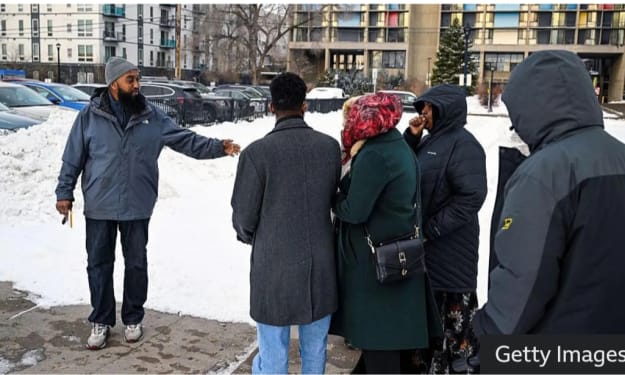
The Trump administration has moved to end long-standing deportation protections for Somali nationals living in the United States, a decision that could place tens of thousands of people at risk of removal. The move has sparked alarm among immigrant communities, human rights organizations, and legal experts, who warn that returning Somalis to a country still grappling with instability could have severe humanitarian consequences. As the policy change unfolds, it has reignited debate over immigration enforcement, executive authority, and America’s obligations to people fleeing conflict.
By Aarif Lashari4 days ago in Earth



Comments