
Earth's New Mini-Moon Signals a Bright Future for Space Mining, Scientists Say
New Mini-Moon Highlights the Vast Potential of Asteroid Mining

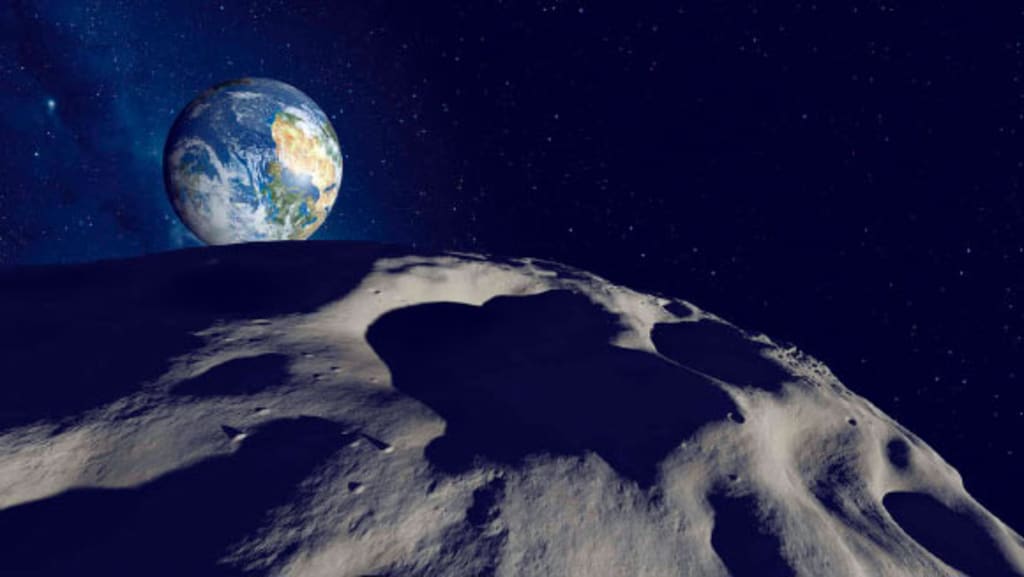
In a remarkable cosmic event, Earth has gained a temporary new mini-moon. This asteroid, named 2024 PT5, was captured by Earth’s gravity on September 29, 2024. While it’s not visible to the naked eye, this small space rock is sparking excitement among scientists and space enthusiasts alike. More than just a curious visitor, 2024 PT5 offers a glimpse into the potential future of space mining, a field that could change the course of human history.
The Discovery of 2024 PT5
2024 PT5 was discovered on August 7, 2024, by the Asteroid Terrestrial-impact Last Alert System in Sutherland, South Africa. This asteroid, measuring about 33 feet (10 meters) across, is part of a group of near-Earth objects known as Arjuna asteroids. These asteroids have orbits around the Sun that are very similar to Earth’s, which sometimes causes them to become temporarily trapped by Earth’s gravity, turning them into mini-moons for a short time.
2024 PT5 will stay in Earth’s orbit for 56.6 days, returning to its heliocentric (Sun-centered) orbit on November 25, 2024. Though small and dim, the asteroid offers scientists a unique opportunity to study a piece of the solar system up close.
A Window into the Solar System’s History
Dr. Nico Cappelluti, an astrophysicist at the University of Miami, explains that asteroids like 2024 PT5 are remnants from the formation of the solar system. “These near-Earth objects give us a window into the processes that shaped our solar system billions of years ago,” he said. Most asteroids are rocky fragments left over from the early days of planet formation, making them valuable for understanding the origins of our cosmic neighborhood.
2024 PT5, like other Arjuna asteroids, occasionally gets caught in Earth’s gravitational pull, which is why it’s now orbiting our planet. While this mini-moon won’t stay long, its brief visit helps maintain scientific interest in space rocks.
The Growing Interest in Space Mining
Beyond the scientific interest, asteroids like 2024 PT5 hold tremendous potential for space mining. Dr. Bertrand Dano, another astrophysicist from the University of Miami, explains that asteroids are not just lumps of rock. “Some asteroids are made of stone, but others are rich in valuable metals like platinum, gold, nickel, and cobalt,” he said. These metals are essential for electronics, fuel-cell technology, and other advanced industries.
Asteroids could be the next frontier for mining, with millions of them orbiting in our solar system. Many are larger than 1 kilometer, and inside them lie vast reserves of precious resources. As Dr. Dano puts it, “The resources contained in asteroids are the new dream of El Dorado.” Several private companies are already exploring the possibility of sending spacecraft to mine these celestial bodies.
The Challenges of Asteroid Mining
While the potential rewards of asteroid mining are enormous, the challenges are equally daunting. Extracting metals from space rocks requires technology far beyond what we currently have. First, mining equipment would need to function in the vacuum of space, where there’s no atmosphere. Then there’s the issue of transporting these minerals back to Earth. Dr. Dano notes that launching mining missions from Earth is energy-intensive, so it might be better to start them from low-gravity locations like the Moon or Mars.
One major challenge is returning the mined materials to Earth safely. “Returning to Earth is relatively easy, but it’s dangerous for the materials,” Dr. Dano explained. If not done properly, the precious metals could be lost during re-entry. One possible solution is refining the metals in space and shipping smaller, refined batches back to Earth over time.
Despite these hurdles, the potential payoff is staggering. Mining a single asteroid could yield enough platinum or gold to make someone a trillionaire overnight. As renowned astrophysicist Neil deGrasse Tyson once said, “The first trillionaire there will ever be is the person who exploits the natural resources on asteroids.”
A New Age of Space Exploration
The capture of 2024 PT5 as a mini-moon is more than just an astronomical curiosity—it’s a reminder of the untapped resources floating around in space. Recent missions, such as NASA’s DART mission that successfully altered the path of an asteroid, show that we’re getting closer to being able to interact with and manipulate these space objects. While asteroid mining is still in its early stages, the dream is slowly turning into a reality.
However, space mining isn’t just about making money. It could also help solve some of Earth’s biggest problems. As natural resources on our planet become scarcer, asteroids could offer a sustainable supply of critical metals and minerals. By moving heavy industry off-Earth, we could reduce the environmental impact of mining here, while also opening up new opportunities for exploration and innovation.
Conclusion
As 2024 PT5 orbits Earth for its short two-month stay, it serves as a symbol of both the mysteries of our solar system and the possibilities that lie ahead. Scientists are studying it to learn more about the origins of space rocks, while private companies eye similar asteroids for their potential riches.
The future of space mining may still be uncertain, but one thing is clear: the resources floating around in our solar system are too valuable to ignore. Whether it’s for scientific research or economic gain, asteroids like 2024 PT5 offer a glimpse into a future where space holds the key to solving some of humanity’s greatest challenges.
About the Creator
Keep reading
More stories from Black Rose and writers in Earth and other communities.
Coastal Flooding Alert Issued Across the East Coast Due to Supermoon’s High Tides
A coastal flooding advisory has been issued along the East Coast of the U.S., as residents from New York City to Florida prepare for higher-than-usual tides. This unusual event is triggered by the gravitational pull of a supermoon, which is set to be the biggest and brightest of the year.
By Black Roseabout a year ago in Earth
Top Australian Writers’ Festival Cancelled After Palestinian Author Barred
One of Australia’s most respected literary festivals has been cancelled following a fierce backlash over the decision to bar a Palestinian author from participating. What began as a programming dispute quickly escalated into a national debate about free speech, cultural inclusion, and political pressure in the arts. The cancellation has sent shockwaves through Australia’s literary community, raising urgent questions about whose voices are allowed on public platforms and at what cost.
By Aarif Lashari3 days ago in Earth
The Trans Youth Athletes in the US Fighting for Their Rights: ‘Playing Is an Act of Resistance’
Across the United States, sports have become an unexpected front line in the fight over transgender rights. For many trans youth athletes, simply stepping onto a field, track, or court is no longer just about competition—it is an act of resistance. As state legislatures debate and pass laws restricting transgender participation in school sports, young athletes are finding themselves at the center of a national culture war that reaches far beyond the locker room.
By Aarif Lashari3 days ago in Earth




Comments
There are no comments for this story
Be the first to respond and start the conversation.