
Earth's Leaky Secrets: From Methane Wells to Core Heat
Exploring the Hidden Escapes and Impact of Earth's Intricate Leakage Systems

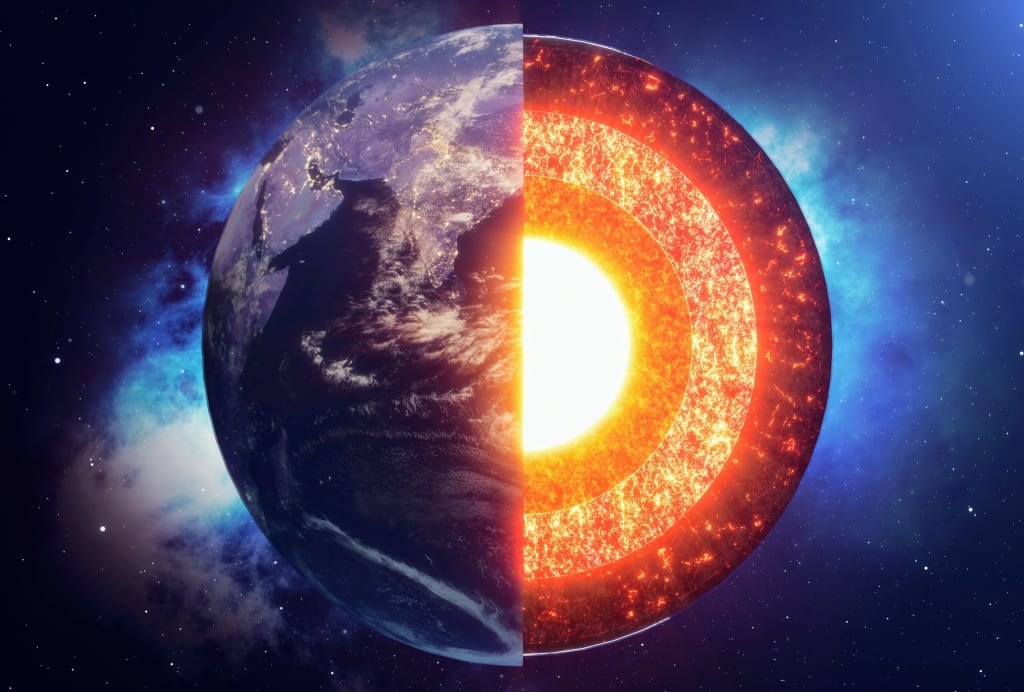
Earth's Imperfect Plumbing: Unravelling the Leaks
Journeying Through the Earth's Hidden Leaky Secrets
A hydrogen atom embarks on a high-speed adventure within the outermost layer of Earth's atmosphere, soaring through realms it has inhabited for millions of years. It has danced in the waves of the Atlantic Ocean, rested in the soil of the Amazon rainforest, and even mingled with the rising steam from a pot of spaghetti. Today, propelled at 30 times the speed of sound, it breaks free from Earth's gravitational embrace, joining the daily exodus of approximately 90 tons of material that escape our atmosphere.
This daily loss, comparable to the weight of a whale, is just one glimpse of Earth's unceasing leakage. Atoms, energy, and molecules stealthily traverse from one layer of the planet to another, raising questions about the planet's stability, crucial for sustaining life. To fathom the extent of our planet's imperfect plumbing and when it becomes a concern, let's embark on a journey to explore two more sites of leakage.
Site 1: The Forgotten Methane Leaks of Appalachia
Our second destination takes us to the Earth's surface, specifically to a field in Central Appalachia. Beneath the Earth's surface lies a 1,500-meter-deep shaft that once connected an oil reservoir to the surface. However, the oil reserves have depleted, rendering the site forsaken and derelict. Yet, this underground reservoir holds more than just memories of oil; it houses the potent greenhouse gas methane, which continues its ascent through the shaft, escaping through cracks and loose pipes. This leaky well joins the ranks of over 3 million abandoned wells scattered throughout the United States, collectively emitting an estimated 280,000 metric tons of methane annually.
Site 2: Earth's Core: The Slow Burn
Our final stop plunges us deep within the innermost boundary of Earth: the core. Heat, a relic from the solar system's formation, propels the rotation of liquid metal around the solid inner core. This motion orchestrates the planet's magnetic field, shielding it from cosmic radiation and solar winds. However, Earth's core isn't a perfect insulator; heat continuously escapes, venturing into the surrounding mantle, instigating plate tectonics and magmatic activities. Consequently, the outer molten metal of the core steadily solidifies. When it finally cools entirely, the magnetic field will dissipate, exposing us to the unfiltered rays of the Sun.
The Earth is undoubtedly showing signs of vulnerability, but should we be alarmed? Thankfully, immediate concerns about hydrogen and core leaks are minimal. At their current rates, it would take over 150 billion years for all the hydrogen to vanish into space, and the core is expected to stay warm for another 700 million to several billion years.
However, methane emissions pose a different story. This gas, with its unique structure, efficiently traps heat radiating from Earth, significantly contributing to the greenhouse effect. Methane boasts remarkable warming potential, 86 times that of carbon dioxide. The repercussions of methane escaping from abandoned wells in the United States equate to burning an astonishing 10 billion pounds of coal annually.
These unsealed wells are not just climate culprits; they can contaminate nearby groundwater, leaching methane and other toxic gases that harm drinking water quality and local ecosystems. Fortunately, abandoned non-producing oil wells can be sealed by injecting cement into their depths. While certain governments require oil and gas companies to plug defunct wells, it comes at a considerable cost, leading companies to evade their responsibilities. For years, these leaky, economically unviable wells were sold off and abandoned, compounding the problem.
Solving this issue necessitates collective action. Governments must enforce high fees on methane emissions and oversee the plugging of abandoned wells, holding companies accountable. However, the problem's root lies in ongoing oil and gas production, which emits methane at a rate 28 times higher than abandoned wells. The ultimate solution is to cease drilling new oil and gas wells, a step crucial to mitigating this pervasive leak.
About the Creator
Cameron Mcfarland
📚 Aspiring Writer and Article Enthusiast 🌟
🌼 20 Years Young | Passionate about Crafting Stories 🖋️
Join me on this journey through the world of words as we embark on a literary adventure together!
Keep reading
More stories from Cameron Mcfarland and writers in Earth and other communities.
What happens when you fall into piranha-infested waters?
Imagine you're gazing into the depths of the Amazon River when, unexpectedly, you lose your footing and plunge into the water. As you fall, you notice piranhas darting around in the swiftly approaching water. The question arises: are you in peril? Will your plunge trigger a deadly feeding frenzy among these voracious creatures? To predict your fate, let's delve into what we know about these intriguing fish.
By Cameron Mcfarland2 years ago in Earth



Comments
There are no comments for this story
Be the first to respond and start the conversation.