
Earth’s Frozen Bacteria Discovery Sparks New Hope for Life on Mars Scientists Explain How
Ancient microbes found in Earth’s ice may hold the key to discovering alien life beneath the Martian surface.

Earth’s Frozen Bacteria Discovery Sparks New Hope for Life on Mars Scientists Explain How
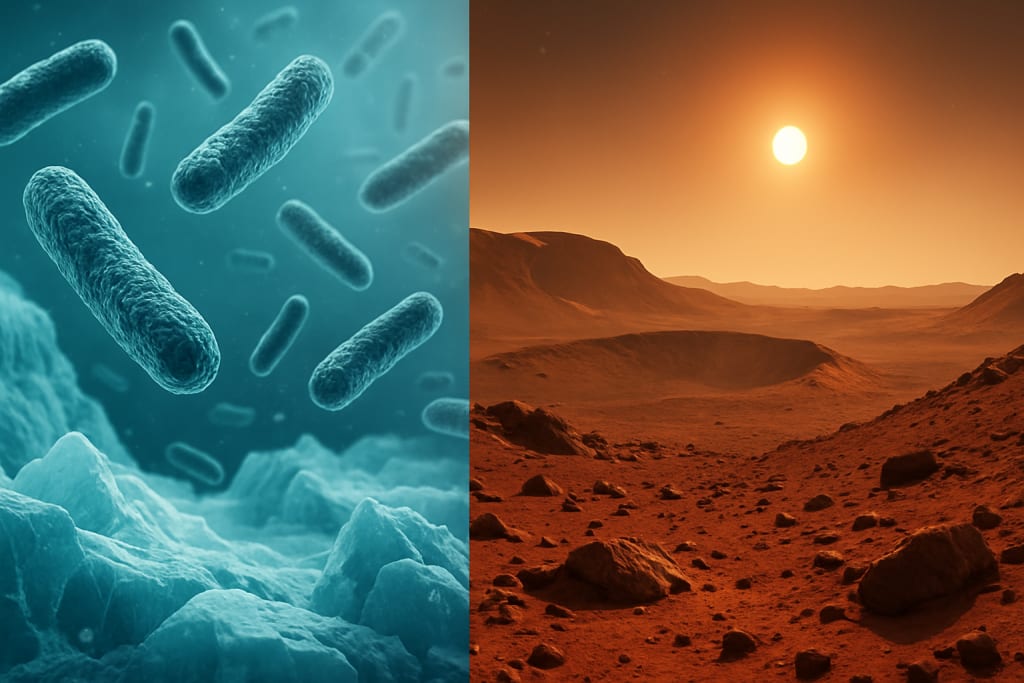
In a groundbreaking discovery that could reshape our understanding of life in the universe, scientists have found ancient bacteria thriving deep within Earth's polar ice. This remarkable finding has ignited new hope in the ongoing quest for extraterrestrial life, particularly on Mars. But how exactly does frozen Earth bacteria connect to potential life on the Red Planet? Let’s dive into the science behind this thrilling possibility.
Life in Earth’s Deep Freeze
For decades, researchers have been drilling into ancient glaciers and permafrost in Antarctica, Greenland, and the Arctic. What they’ve found beneath layers of ice dating back hundreds of thousands — even millions of years is nothing short of astounding: living, though dormant, microorganisms. These bacteria have not only survived in freezing temperatures, but also in extreme conditions such as low oxygen, high radiation, and complete darkness. Some strains discovered in the Antarctic ice sheet, for instance, are believed to be tens of thousands of years old. Despite being encased in ice for so long, these microbes "woke up" when warmed in the lab, proving that life can endure prolonged exposure to harsh environments.
Mars: A Cold and Hostile Planet
Mars, often dubbed the "Red Planet," has long captured human curiosity. With its thin atmosphere, frigid temperatures (as low as -125°C at night), and dry surface, it may seem like an unlikely place for life. However, recent discoveries have challenged this notion. NASA's rovers and orbiters have detected signs of subsurface ice, ancient riverbeds, and even seasonal methane emissions—suggesting that Mars may have once had, or still has, the right conditions for microbial life. In 2020, radar scans from the European Space Agency’s Mars Express mission revealed what appear to be underground lakes beneath the Martian south pole.
Connecting the Dots: Earth’s Ice vs. Martian Ice
The comparison between Earth’s icy environments and Mars’ subsurface ice is where the story gets exciting. The bacteria discovered on Earth have demonstrated the ability to remain viable under extreme cold, low nutrient levels, and minimal energy for thousands of years. These are the exact kinds of conditions found beneath the Martian surface. If microbes on Earth can hibernate and survive in glacial ice or permafrost, why not on Mars? If Mars once had liquid water, as evidence suggests, it's entirely plausible that microbial life could have evolved there — and if it did, it may still exist, frozen deep beneath the surface, just waiting for the right conditions to awaken.
Implications for Astrobiology
The discovery of bacteria in Earth's ice has profound implications for the field of astrobiology — the study of life in the universe. It shows that life is far more resilient than previously thought. Microorganisms can endure radiation, extreme cold, and lack of sunlight, suggesting that life might be more common in the cosmos than we imagined. Future missions to Mars, such as NASA’s upcoming Mars Sample Return mission or the European Space Agency’s ExoMars rover, aim to dig below the surface. These missions could potentially find preserved biosignatures or even viable microbes, thanks to our growing understanding of how life survives in ice.
Ethical Questions and the Need for Caution
While the possibility of life on Mars is thrilling, it also raises important ethical questions. If we find life, how do we protect it? And if we bring Earth bacteria to Mars by accident (as hitchhikers on spacecraft), how can we ensure we’re not contaminating another planet’s ecosystem? Space agencies are now implementing strict "planetary protection" protocols to prevent forward contamination. Discovering life elsewhere demands responsibility and caution to preserve scientific integrity and avoid irreversible damage.
The Future of Exploration
The discovery of ancient bacteria in Earth’s ice is a beacon of hope for space exploration. It confirms that life can persist in the most extreme conditions — a revelation that widens the search for life far beyond Mars. Icy moons like Europa (orbiting Jupiter) and Enceladus (orbiting Saturn), both of which have subsurface oceans, are now high priority targets for future missions. As we continue to explore the cosmos, these humble Earth bacteria remind us of life's tenacity and adaptability. If life can thrive under miles of frozen ice here, then perhaps just perhaps we are not alone in the universe.
About the Creator
Adnan Rasheed
Author & Creator | Writing News , Science Fiction, and Worldwide Update| Digital Product Designer | Sharing life-changing strategies for success.
Keep reading
More stories from Adnan Rasheed and writers in Earth and other communities.
North America’s Underside is Slowly Melting into the Earth: A Hidden Geologic Process Unveiled
North America’s Underside is Slowly Melting into the Earth: A Hidden Geologic Process Unveiled Deep beneath the surface of the western United States, a silent and powerful process is unfolding — one that scientists believe could reshape how we understand Earth’s internal dynamics. The underside of the North American tectonic plate is slowly melting and dripping into the mantle. This phenomenon, known as "delamination," is not only fascinating from a scientific perspective but could have serious implications for the region's geology, including volcanic activity and seismic risks.
By Adnan Rasheed9 months ago in Earth
“If You’re Flushing the Toilet with Grey Water, People Should Know”: How China Turned Rain into an Asset
Water scarcity is one of the most pressing challenges facing the world today, and China is confronting it with bold, large-scale innovations. From sprawling cities to rural communities, the country has been transforming rainwater and grey water — wastewater from baths, sinks, and washing machines — into usable resources, addressing shortages while boosting sustainability. The approach is as much about engineering ingenuity as it is about public transparency and social trust. As one Chinese water engineer put it: “If you’re flushing the toilet with grey water, people should know.” This candid acknowledgment captures the essence of China’s strategy: utilize every drop of water efficiently while educating and involving the public. The Scale of China’s Water Challenge China faces a unique set of water challenges: Rapid urbanization, leading to increased demand for potable water Uneven distribution of water resources, with the north of China significantly drier than the south Industrial expansion, which consumes enormous quantities of freshwater Traditional water systems, reliant solely on rivers, lakes, and underground aquifers, are increasingly inadequate. Water shortages threaten agriculture, public health, and economic growth. Enter grey water and rainwater recycling, which turns previously discarded or seasonal water into a strategic asset. Grey Water: From Waste to Resource Grey water refers to domestic wastewater from sinks, showers, and washing machines — excluding sewage. While not suitable for drinking, it can be treated and reused for: Flushing toilets Irrigating gardens and parks Industrial processes requiring non-potable water China has implemented city-wide grey water recycling systems, often in high-rise residential blocks and industrial complexes. These systems involve: Collection: Grey water from sinks, showers, and laundry is routed through a separate piping network. Treatment: Basic filtration, chemical treatment, or UV sterilization removes contaminants. Reuse: Treated water is stored and reused for flushing toilets or irrigation, drastically reducing fresh water demand. In some cities, nearly 30–40% of household water consumption can be offset by grey water reuse, easing pressure on municipal water supplies. Rainwater Harvesting: Turning Precipitation into Opportunity Rainwater is another crucial asset, especially in regions where seasonal rains are abundant but water storage is limited. China’s rainwater harvesting initiatives include: Rooftop collection systems in urban and rural buildings Underground cisterns and reservoirs for storage Integration into public parks and community irrigation networks Collected rainwater can be used for irrigation, cleaning streets, or replenishing urban lakes — effectively reducing reliance on potable water while enhancing urban greenery. Cities like Beijing, Shanghai, and Shenzhen have led the way, embedding rainwater storage tanks and treatment units directly into infrastructure planning. This holistic approach turns rainfall from a transient resource into a stable, managed supply. Urban Integration and Smart Technology China’s approach goes beyond simple collection. Smart sensors, IoT devices, and AI analytics are being used to: Monitor grey water quality in real time Optimize rainwater collection and storage based on weather forecasts Reduce overflow and contamination risks By integrating these technologies, water managers can balance supply and demand dynamically, ensuring that recycled water is safe, efficient, and reliable. Public transparency is central. Residents are clearly informed when grey water is being used, often through visible signage in buildings or public awareness campaigns. This trust-building is essential to encourage adoption and avoid resistance. Environmental and Economic Benefits China’s grey water and rainwater initiatives yield substantial environmental and economic dividends: Conservation of freshwater: Reduces extraction from rivers, lakes, and aquifers, helping ecosystems survive droughts. Lower energy costs: Treating grey water locally uses less energy than pumping and purifying municipal water. Flood mitigation: Rainwater storage helps manage urban runoff during heavy rainfall, reducing flood risk. Economic savings for residents: Households using recycled water can reduce water bills significantly. By aligning environmental stewardship with cost-effectiveness, these projects illustrate a sustainable model for densely populated nations. Cultural Shifts and Public Perception Using recycled water for toilets or irrigation required a shift in public perception. Initially, residents expressed skepticism about safety and hygiene. China addressed this by: Implementing stringent water quality standards Educating the public through campaigns and signage Demonstrating transparency about treatment methods Over time, grey water reuse became normalized, particularly in new urban developments, where residents take pride in contributing to water conservation. Lessons for the World China’s water recycling strategy offers valuable lessons for other countries facing water scarcity: Urban planning must integrate water recycling from the start Technology can optimize efficiency, but transparency builds public trust Multiple water sources — grey water, rainwater, and municipal supply — can be combined strategically Community engagement is essential, especially when water reuse intersects with everyday routines Countries in the Middle East, Africa, and parts of the U.S. have already looked to China for insights on urban grey water and rainwater management. Challenges Ahead Despite progress, challenges remain: Infrastructure costs are high for retrofitting existing buildings Maintenance and monitoring are crucial to prevent contamination Public skepticism persists in some regions, requiring ongoing education and outreach Scaling these systems nationally requires both financial investment and cultural adaptation, but China’s experience shows it is achievable. Looking Forward China’s ambitious water recycling projects illustrate a paradigm shift in urban water management. Grey water and rainwater are no longer seen as waste or nuisance; they are valuable resources that can sustain cities, agriculture, and industry. As global water scarcity intensifies, lessons from China may inspire other nations to rethink how they treat water — not as a disposable commodity, but as a precious asset to manage wisely. Final Thoughts The statement, “If you’re flushing the toilet with grey water, people should know,” encapsulates the balance of innovation and transparency that makes China’s approach successful. By turning rain and grey water into assets, the country is conserving freshwater, protecting the environment, and setting a model for sustainable urban living. As other nations look to address water shortages, China’s example proves that with technology, planning, and public engagement, cities can transform perceived waste into a strategic resource for the future.
By Muhammad Hassan3 days ago in Earth
Wild Card Weekend Recap: What Happens Now?
I think I figured out why I love Wild Card Weekend so much. It's because it's the first playoff anything of the calendar year. The NFL season starts in the fall, and once upon a time, the champion was crowned either on or slightly before New Year's. The evolution of the NFL schedule has resulted in the playoffs starting just into the New Year, and currently, the final week of the season falls on the first weekend of the New Year, with Wild Card Weekend coming a week after that. So yes, chronologically, the NFL's Wild Card Weekend serves as the first playoff anything of the calendar year.
By Clyde E. Dawkins6 days ago in Unbalanced



Comments
There are no comments for this story
Be the first to respond and start the conversation.