

The Mariana Trench and The Great Blue Hole
Nestled in the South Pacific Ocean, the Mariana Trench is a remarkable geographical feature, forming a crescent-shaped scar on the seabed between Hawaii and the Philippines. It stands as a testament to the Earth's astonishing depths, plunging a staggering seven miles into the planet's crust, thus earning the distinction of being the deepest point on Earth. To put it in perspective, consider this: if you were to drop Mount Everest into this chasm, the peak of the world's highest mountain would still find itself submerged an astonishing 7,000 feet below sea level. The Mariana Trench is a realm of unimaginable depth, a place where the ordinary rules of our world cease to apply.
Unsurprisingly, this fathomless chasm isn't a place for casual aquatic recreation. Sunlight is utterly incapable of penetrating these extreme depths, rendering the waters inky black and chillingly cold, with temperatures only a few degrees above freezing. However, the truly harrowing aspect of the Mariana Trench lies in the immense pressure that reigns at its unfathomable depths—an astounding eight tons per square inch. This pressure is a thousand times the standard atmospheric pressure experienced on dry land, a force so great that it would instantaneously crush any pockets of air within your body if you were to step out of a submarine at the trench's bottom, leading to the catastrophic collapse of your vital organs.
Adding to its enigma is the fact that very few individuals have ventured to visit the bottom of the Mariana Trench. To put this in perspective, while thousands have successfully summited Mount Everest, fewer than 20 intrepid souls have ever descended into the abyss of this trench. Consequently, our understanding of what might dwell in its impenetrable darkness remains astonishingly limited. The depths of the Mariana Trench remain an uncharted territory, inviting curiosity and sparking the imaginations of scientists and explorers alike.
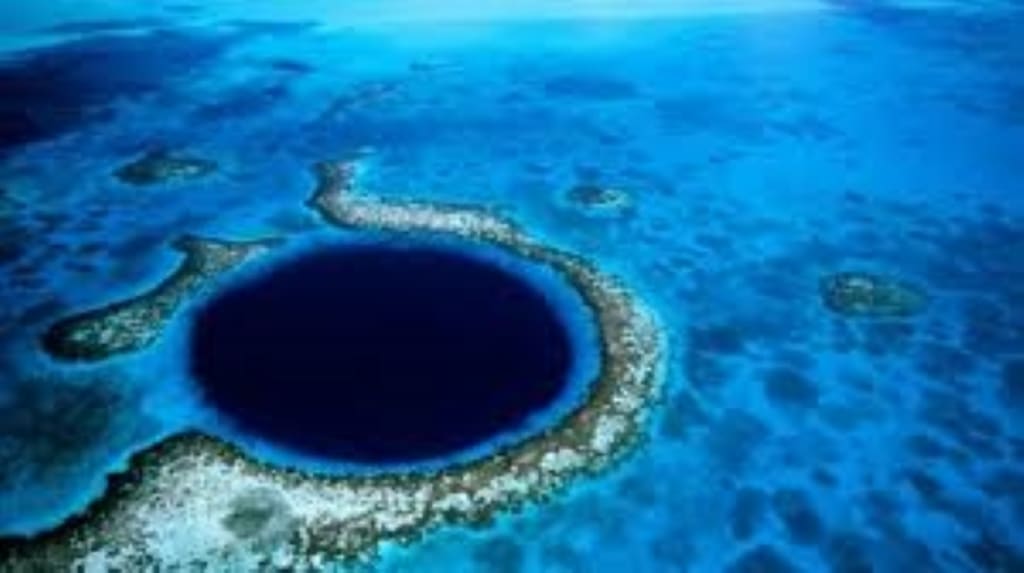
Contrasting the mysteries of the Mariana Trench is the Great Blue Hole in Belize, another of Earth's astonishingly deep oceanic cavities. This massive marine sinkhole, which reaches a depth of 407 feet, has a fascinating origin story dating back more than 14,000 years. It was once a limestone cave that was submerged as sea levels rose, creating this mesmerizing underwater feature. The Great Blue Hole is not only immense but also famous for its visibility from space. Its allure draws thousands of tourists every year.
Inexperienced divers must tread carefully when exploring the Great Blue Hole. Its imposing depths feature strong underwater currents at the edges of the hole, which pose a serious risk of pulling divers into its abyssal depths. Moreover, the Great Blue Hole is home to a variety of sharks, adding an extra layer of intrigue and danger to this underwater realm. Caribbean reef sharks, nurse sharks, hammerheads, bull sharks, and blacktip sharks are known to roam the deep blue waters within the hole. Although shark attacks on humans are rare, the mere presence of these formidable creatures lends an air of trepidation to the already otherworldly environment. Indeed, the vivid recollections of the iconic film "Jaws" might lead many to prefer admiring the mysterious depths of the Great Blue Hole from a safe distance.
In essence, both the Mariana Trench and the Great Blue Hole exemplify the extraordinary geological features that adorn our planet's oceans. The Mariana Trench, with its incomprehensible depths and crushing pressures, remains one of Earth's most profound enigmas. Its exploration is a venture for the brave and the curious, pushing the boundaries of human understanding.
On the other hand, the Great Blue Hole, with its rich history and imposing beauty, is a captivating testament to the planet's ever-evolving geological narrative, a place where beauty and danger coexist in a delicate balance. Together, they remind us of the endless wonders that Earth holds in its vast, mysterious oceans, waiting for the next generation of explorers to uncover their secrets.
About the Creator
Judy Sibby
I love to write about anything and everything more-so on facts of nature, mystery and lifestyle. You are welcome to explore the world with me.
Keep reading
More stories from Judy Sibby and writers in Earth and other communities.
OYMYAKON
Oymyakon: Surviving the Coldest Town on Earth In the vast, unforgiving landscape of Eastern Russia lies a small town that strikes fear into the hearts of even the hardiest souls. Oymyakon, with its bone-chilling temperatures, is a place where extreme cold is a way of life. This remote town, home to around 500 people, holds the dubious distinction of being the coldest permanently inhabited place on Earth. Its frigid embrace is relentless, with winter temperatures averaging a staggering -58 degrees Fahrenheit. However, the mercury can plummet even further, sending shivers down your spine as it dips to an unimaginable -90 degrees Fahrenheit. To put this in perspective, the average temperature on Mars, our neighboring red planet, is a "balmy" -81 degrees Fahrenheit. Yes, you read that right - Oymyakon can be even colder than Mars.
By Judy Sibby2 years ago in Earth
Australia Agricultural Biologicals Market 2026: Sustainable Farming, Crop Protection & Biological Innovation
Australia Agricultural Biologicals Market Overview The Australia agricultural biologicals market is gaining steady momentum as farmers, agribusinesses and policymakers increasingly focus on sustainable crop production and environmentally responsible farming practices. Agricultural biologicals include products derived from natural sources such as microorganisms, beneficial insects, plant extracts and naturally occurring compounds. These products are used for crop protection, soil enhancement and plant growth promotion, offering alternatives or complements to conventional chemical inputs. According to IMARC Group, the Australia agricultural biologicals market size reached USD 218 Million in 2025. Looking forward, IMARC Group expects the market to reach USD 680 Million by 2034, exhibiting a growth rate (CAGR) of 13.5% during 2026-2034. This growth reflects increasing adoption of integrated pest management, rising demand for residue-free produce and expanding organic and regenerative farming practices.
By Amyra Singh7 days ago in Earth



Comments
There are no comments for this story
Be the first to respond and start the conversation.