
Does hair loss only bother humans? Whale: Who will save my thinning hair?
Whale: who will save my thinning hair

In today's life, savvy businessmen firmly grasp two wealth codes. One is to lose weight, and the other is to treat hair loss.
Inevitably, the problem of hair loss comes earlier and earlier. Hair loss used to be reserved for middle-aged and elderly people, and now young students are also facing the dilemma of hair loss.
The pressure of life and work has caused our generation to touch the back of the head and take three or four hairs, the hairline moves back, and the area of bare skin on the top of the head is getting bigger and bigger. At a loss, we wiped the top of our head with all the treatment methods, and finally had to step into the door of the hair transplant hospital.
Can't help but ask: Is it only human beings who are troubled by hair loss?
Is hair loss only for humans?
First of all, we must redefine hair loss, because most mammals except humans have hair all over their bodies, so alopecia here refers to hair all over the body.
But unfortunately, almost all animals cannot escape the claws of hair, and even whales and dolphins in the sea world lose their hair.
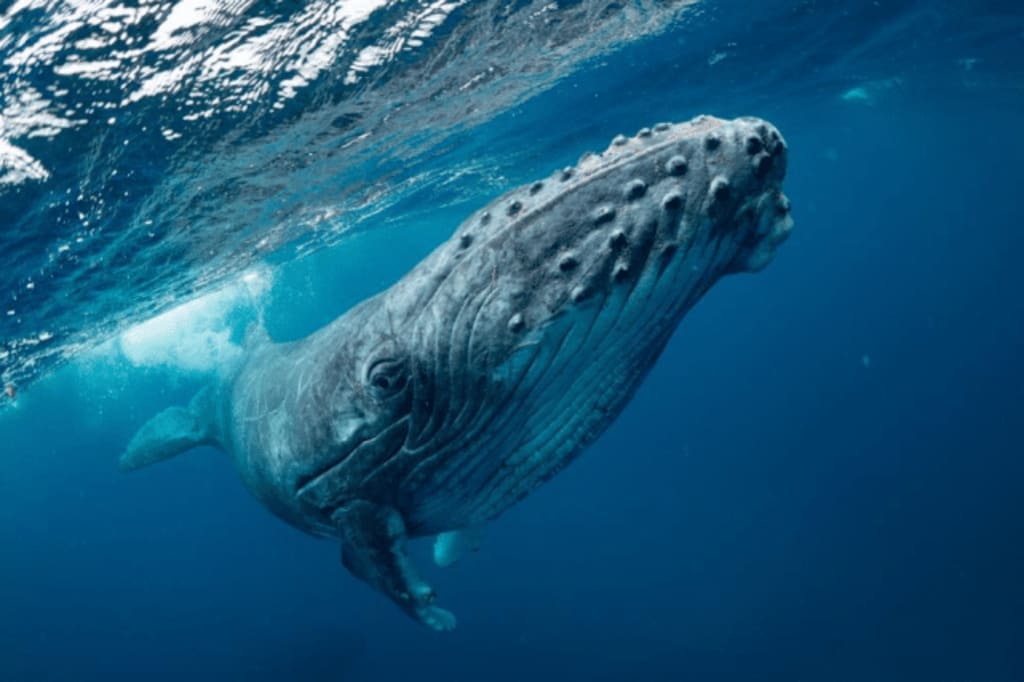
Many people can't help but ask, how can whales have hair even though they are smooth. Of all the cetaceans, the humpback whale has the most visible hair follicles. Although we cannot observe closely, it is not difficult to find the golf ball-like hair follicles on the skin of humpback whales by looking at pictures, and this feature is also the best way to identify humpback whales.
The head hair follicles of an adult humpback whale, also called nodules, connect to a vast network of nerves in the brain. More than a hundred nodules are regularly attached with hair, which means that a whale has about a hundred hairs.
The reason why humpback whales retain such obvious and potentially drag-increasing hairs may be that these hairs provide a function similar to human hair, giving it a sharp perception ability.
Back to the problem of hair loss!
In fact, a lot of hair loss in the animal world is caused by genetics, such as the human "relative" cynomolgus monkey, and neither male nor female cynomolgus monkeys can escape the doom of hereditary hair loss.
A cynomolgus monkey has a lifespan of about 30 years. When a macaque is 5 years old, there will be signs of hair loss on the top of the head. By the age of 7, the bare skin on the top of the head is nearly half. This age is equivalent to about 25-30 years old when converted into human age. Midlife transition. So it's not just humans who will panic in the new year, but animals will also have to deal with the mid-life crisis.
This hereditary hair loss is also the main cause of hair loss in humans, and it behaves similarly to cynomolgus monkeys.
For example, female cynomolgus monkeys are more likely to lose their hair than usual during pregnancy because of elevated progesterone levels in their bodies, and this phenomenon also occurs in humans during pregnancy.
This hair loss feature of cynomolgus monkeys can make them "miserable". In order to treat human hair loss or baldness, scientists often conduct experiments on cynomolgus monkeys, using various methods to make the hair on the head of cynomolgus monkeys. shine again.
Of course, it's not just cynomolgus monkeys that are "bald", at least rhesus monkeys.
Not all primates face a "midlife crisis," though, and some are born bald. The kind that grow bald from childhood to adulthood, growing hair may become their midlife crisis.
Causes of Hair Removal: Survival
In addition to mammals, bird hair loss is also very common, most of the time the former is called molting, and the latter is called molting. But no matter what animal, the process of depilation is bound to cause a sea change in appearance.
Although the composition of human hair is very strange, there are only a few places left (such as hair, armpit hair, private part hair, etc.), but the places visible to the naked eye (hair) have changed slightly, and the appearance has also changed drastically.
Although the hair of all animals determines their appearance, their hair removal is not for the pursuit of good looks, but for survival.
For example, friends who have pets at home will face the scene of animal hair flying all over the sky. Seasonal molting is the reason why most animals molt. Birds grow rich feathers in order to resist the cold, and in spring they change to light summer feathers.
In addition, there are various reasons for molting, such as molting to make up for lost feathers, molting during growth and development, molting for mating, molting to avoid natural enemies and better camouflage and protect oneself, and for migration. molt.
Although humans learned to use foreign objects such as flames and clothes to keep warm, and then lost a thick body hair and turned into a pili muscles, the essential reason for our hair removal is also inseparable from survival.
Our sparse and fine body hair doesn't shed seasonally, except in some special places—those where the hairs are dense, and these hairs change in sparseness and density as the heat changes.
It's just that the "lifespan" of each hair is different, so there will be no simultaneous shedding.
Simply put, human hair loss is normal and necessary for survival!
However, we may not help but ask "a good head, how to say bald is bald".
The lifespan of human hair is generally 2-6 years. Losing 50-100 hairs per day is within the normal range. There is no need to worry.
"Say baldness is baldness" because these hair loss are pathological hair loss, which often occurs in men and IT practitioners.
at last
As the saying goes, freezing three feet is not a day's cold. The most important thing to solve pathological hair loss is to return to "normal" with usual diet, work, and work and rest, and treat and regulate with a long-lasting mentality.
About the Creator
suzanne darlene
Take you to understand scientific knowledge
Keep reading
More stories from suzanne darlene and writers in Earth and other communities.
Scientists find the most perfect pedaling rhythm for cycling brains
The bicycle mainly uses the pedals to output power to the rear wheel to drive the entire body to run forward. Therefore, the best pedaling rhythm becomes the best pedaling rhythm. Whether it is a daily cyclist or a person who is keen on triathlon sports, The most frequently researched and discussed technical issue, however, it is generally accepted that simply learning to spin the cranks at the correct speed will allow you to ride more efficiently at speed, but this skill is not available to most cyclists. Understand, since learning proper pedaling technique is so important, what is the best pedaling rhythm for optimal efficiency and speed? Below we will use some research reports to illustrate.
By suzanne darlene3 years ago in Earth
Neutraceutical Packaging Market Size and Forecast 2025–2033
Neutraceutical Packaging Market at a Glance The Neutraceutical Packaging Market is projected to expand from US$ 4.92 billion in 2024 to US$ 7.63 billion by 2033, growing at a CAGR of 4.99% from 2025 to 2033. This steady growth reflects the accelerating global demand for dietary supplements, functional foods, herbal products, and wellness beverages. Rising health awareness, aging populations, sustainability expectations, the rapid growth of e-commerce, and evolving regulatory frameworks are reshaping how nutraceutical products are packaged, protected, and presented.
By jaiklin Fanandish3 days ago in Earth
Man Shot Dead by Police After Aiming Bow and Arrow at Officers
A man has been shot dead by police after allegedly aiming a bow and arrow at officers, authorities have confirmed. The fatal encounter has triggered public debate over police use of force, crisis response protocols, and how law enforcement handles situations involving unconventional weapons.
By Aarif Lashari3 days ago in Earth




Comments
There are no comments for this story
Be the first to respond and start the conversation.