
Do you know how big the universe really is?
You'll feel better after you see it
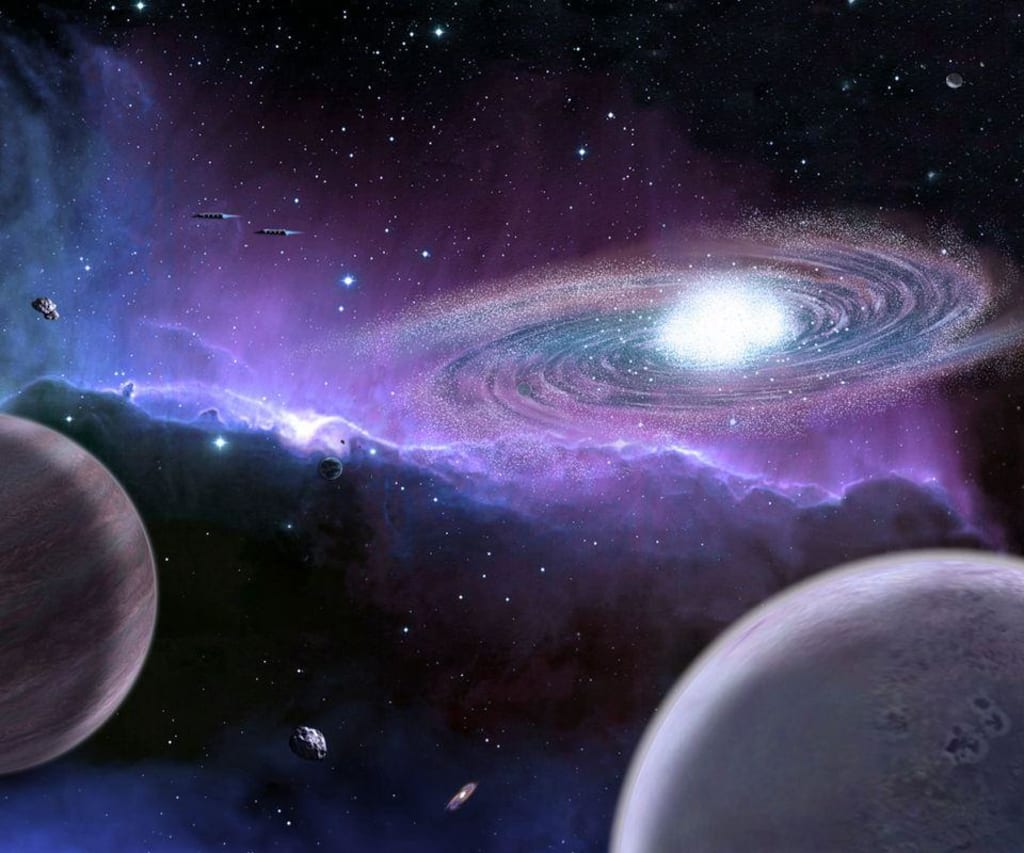
The Earth, is all human beings, at least at present and in the foreseeable future human beings can not leave the earth to settle on other planets. So, for human beings, the Earth is our whole world, and human exploration of outer space has only begun in the last few hundred years, especially in the last few decades.
A hundred years ago, humans even thought the Milky Way was the entire universe, because we couldn't see extragalactic galaxies. With the development of modern astronomy, scientists' understanding of the universe has made great progress. We can explore the outer space and discover more incredible mysteries of the universe.

Many people are curious about the question: how big is our universe?
The short answer: No one knows, and probably never will. But we can look at our current understanding of the universe and imagine the size of the universe, and of course get a better sense of the vastness of the universe by comparison.
Radius of the Earth: 6,371 km. The Earth is far too big for human beings, with a radius of 6,371 kilometers and a mass of 60 trillion tons. The circumference of the earth is 40,000km. It takes about 50 hours, or more than two days and nights, to circle the Earth's equator by plane, which is already the fastest means of transportation.
Distance to the moon: 380,000 km. The moon is the closest planet to the earth, and the average distance from the earth is about 380,000 kilometers, which is really not worth mentioning the relatively vast distance in the universe, the speed of light travel only takes a little over a second. But the Apollo moon landings half a century ago took about five days to travel from Earth to the moon. The moon, at 380,000 kilometers, is the farthest we can go. Getting farther to Mars with conventional chemical-fueled propulsion systems is difficult, which is why a manned American mission to Mars has been delayed.
Distance between sun and Earth: 150 million km. The average distance between the Earth and the sun is about 150 million kilometers, also one astronomical unit. Even at the speed of light, it would take about 8 minutes and 20 seconds. It's the perfect distance for Earth, not too close, not too far, and the planet's oceans are just enough to stay liquid, making the planet a promising place for life.
Solar radius: 1 light year. Scientists once thought Pluto was the boundary of the solar system, but as they explored the solar system, they found that was far from the case. There's even more vast space beyond Pluto, called the Oort cloud, which makes up most of the space in the solar system. Pluto is only about 53 astronomical units away from the sun at its farthest point. It takes only about 7.5 hours for sunlight to travel to Pluto, while it takes a year for sunlight to travel out of the solar system. You can see how vast the solar system is!
Closest star to the Sun: 4.3 light years. Proxima Centauri, the closest star to the Sun, is about 4.3 light-years away. A distance of 4.3 light years may not seem like much, but at the current speed of human travel, it's not realistic to reach Proxima Centauri. Voyager 1, which has been flying for more than 40 years, has so far traveled only 22 billion kilometers, or about 20 light hours. It would take at least tens of thousands of years to travel through the solar system, and another 50,000 years to reach Proxima Centauri!
What is 4.3 light years of space? Basically empty space, almost empty, you can't feel the existence of anything except cosmic radiation of all kinds. People always worry about the possibility of a spacecraft crashing into something at high speed in outer space and being scrapped. Actually, this fear is unfounded, because even if you want to crash into something, it is very difficult. The chances are almost zero!
Diameter of the Milky Way: 200,000 light-years. Scientists once thought the Milky Way was only 100,000 light years across, but improved detection has revealed that it could be even bigger. China's Guo Shoujing Telescope has found that the Milky Way is at least 200,000 light-years across, and probably much larger. Our solar system is about 2.6 light-years from the Milky Way's core, and it takes about 220 million years for our solar system to orbit the galaxy! In other words, since the birth of the solar system, the number of times around the Milky Way is only 25.
Diameter of the local group: 10 million light-years. The Milky Way is part of the larger Local Group of galaxies, which is at least 10 million light-years across. The local Group also includes our neighbor, the larger Andromeda galaxy. Except for the Milky Way and Andromeda, the remaining galaxies are small galaxies, with a combined mass of less than 5% of the Milky Way's mass. Andromeda and the Milky Way are the two big brothers in the local group of galaxies!
Virgo supercluster diameter: 110 million kilometers. The local group of galaxies is part of a larger cosmic structure: the Virgo supercluster, which is 110 million light-years across, a cosmic structure so vast that even our own Milky Way looks tiny, containing about 50,000 galaxies large and small. Earth is about 60 million light-years from the center of the Virgo supercluster.
Lanja Kaia supercluster diameter: 520 million light years. The Virgo supercluster is not the largest cluster structure; the Ranja Kaia supercluster is much larger, reaching a diameter of 520 million light years and containing 100,000 galaxies. Even larger is the Pisces Cetus supercluster, with a diameter of 1 billion light years and a total mass equivalent to that of 10 Lanikaya superclusters.
Observable universe diameter: 93 billion light years. Based on the age of the universe, the rate of expansion of the universe, and Hubble's law, scientists have calculated that the observable universe is about 93 billion light-years across. Why is the observable universe 93 billion light-years across when the universe is 13.8 billion light-years old? Simply put, because the universe is expanding faster than the speed of light, it's going to be much bigger than 13.8 billion light years.
The big question is: what's out there in the observable universe?
No one knows, and we probably never will, because nothing that happens there is of any concern to us, because none of the information there ever reaches Earth. But predictably, there will still be a universe beyond the observable universe, and the true size of the universe is probably much bigger than 92 billion light years!
After reading so much, maybe you can feel the smallness of human beings and the earth. How small are they? We don't even have any words to describe this smallness. We can't even imagine how small it is.
The earth is to the universe more than a grain of sand is to the earth! But it is in the earth this grain of "sand", how many people for this grain of "sand" on a trivial point fighting each other, how much hatred in this grain of "sand" staged......
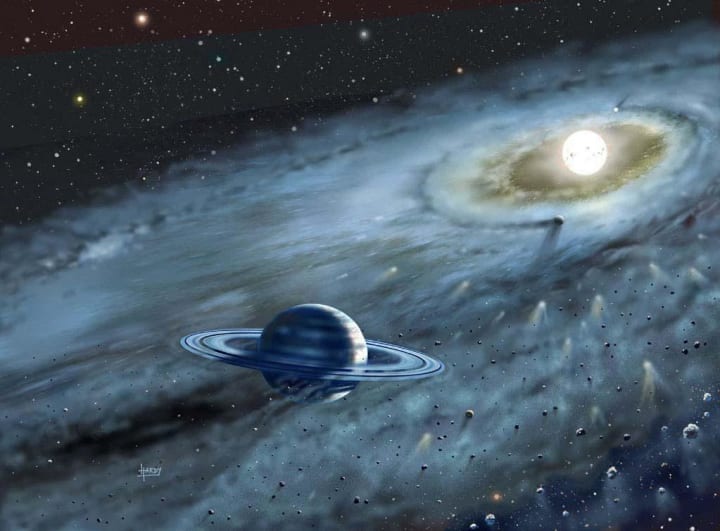
The universe is so vast, maybe we should learn how to let go, at least let go of hatred, let the earth this grain of "sand" become more shining!
About the Creator
The Rise of Military Artificial Intelligence
The Rise of Military Artificial Intelligence In today’s rapidly changing world, one of the most important developments in global affairs is the rise of Artificial Intelligence in military systems. Many powerful countries are investing billions of dollars into AI technology to strengthen their defense capabilities and gain strategic advantages over their rivals. This new technological race is not only changing how wars are fought, but it is also reshaping the balance of global power.
By Wings of Time about 2 hours ago in Earth




Comments
There are no comments for this story
Be the first to respond and start the conversation.