
I was a noobie once.
I started in astrophotography somewhere in 2009 when I discovered remote platforms.
As a kid, I always wanted to set up a telescope in the backyard, screw a camera to the lens, and process the film.
Yes, film. At a time when to get good astrophotographs, one had to hyper the film. Photographic hypersensitization refers to a set of processes that can be applied to photographic film or plates before exposing. One or more of these processes is often needed to make photographic materials work better in long exposures.
Most photographic materials are designed for snapshot exposure of much less than one second. In longer exposures, such as those used in astrophotography, many such materials lose sensitivity. This phenomenon is known as low-intensity reciprocity failure (LIRF) or the Schwarzschild effect.[1][2][3][4] The reciprocal relationship between flux and exposure time for photographic film implies that at a given light flux, doubling the exposure time would double the photographic effect. This holds with exposures up to a second or so, but in general does not hold over exposure times of minutes or hours. Several hypersensitization or "hypering" techniques have been developed to overcome this failure of the reciprocity law, and what follows refers mainly to work in astronomy. ~Wikipedia.
I wasn't built for that, even though I had my own darkroom, so I gave up on imaging the stars.
When I discovered remote astrophotography, it was a journey. In those early years, I had to schedule the telescope time. I entered a series of parameters for target, exposure, and filters like Telescope Live's Advanced Requests.
https://app.telescope.live/request/add
I patiently waited, typically in the wee hours of the night, while I stared at the screen, watching the numbers and graphical bar indicating the progress.
Wow! I finally downloaded my one single frame...it was black. I knew nothing of stretching, and I knew nothing of calibration, stacking, or much else of pre and post-processing.
I awkwardly discovered some techniques and got a reasonable monochrome image of one channel. Then I learned to integrate those channels and get a color image.
My breakthrough came when I attended a three-day class on Mount Lemmon in Tuscon with no other than our own Adam Block
https://www.adamblockstudios.com/
teaching the course. It was fantastic to see the 32-inch telescope and then process the images that came from it.
Unlike terrestrial photography, I learned astrophotography is "all about the data."
Armed with new-found knowledge, I signed up on various platforms...some have come and gone, like Lightbuckets, and some are still around and changed their names.
The cost of scope time and the frustration of being shut out for weather or, worse, imaging all night and ending up with garbage took a toll.
My attempts at calibration, registration, histogram stretches, and other pre-processing steps, even before I could try to get an image into Photoshop to make it pretty, could have been better.
I lost interest for years.
I discovered TelescopeLive which removed all of that pre-processing burden, and I could enjoy image creation finally.
Again, cost became a factor, but
Telescope Live came to the rescue
with their business model of providing previously captured image sets, complete with pre-processing already done.
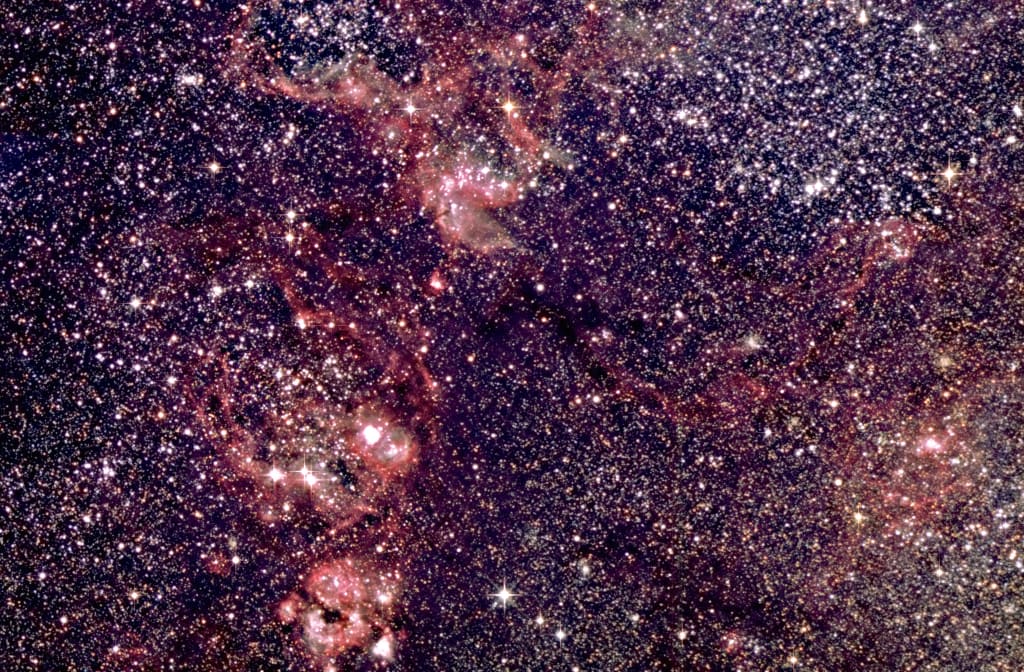
A new day dawned, and I began to produce a series of still pretty horrible results from an astrophotographer's viewpoint but really great pretty pictures for myself, friends, and family to admire.
The joy was back.
Much like any artistic pursuit, do it because you enjoy it. Don't compare yourself to the experts in the field. Practice, practice, practice, and you may get to Carnegie Hall, but the journey should be enjoyed.
So please, as noobies to the craft and new members of Telescope Live, we would love to see your work.
Just Post It In The Gallery.
https://telescope.live/gallery
About the Creator
Jim DeLillo
Jim DeLillo writes about tech, science, and travel. He is also an adventure photographer specializing in transporting imagery and descriptive narrative.
Keep reading
More stories from Jim DeLillo and writers in Earth and other communities.
Man (22) Charged With Murder of English Tourist in Temple Bar
Arrest and Formal Charges A 22-year-old man has been charged with the murder of an English tourist following a fatal incident in Dublin’s Temple Bar area. The charge comes after an intensive Garda investigation into events that unfolded in one of Ireland’s busiest and most popular nightlife districts.
By Aarif Lasharia day ago in Earth



Comments
There are no comments for this story
Be the first to respond and start the conversation.