
Deforestation
Impacts, Causes, and Conservation Efforts
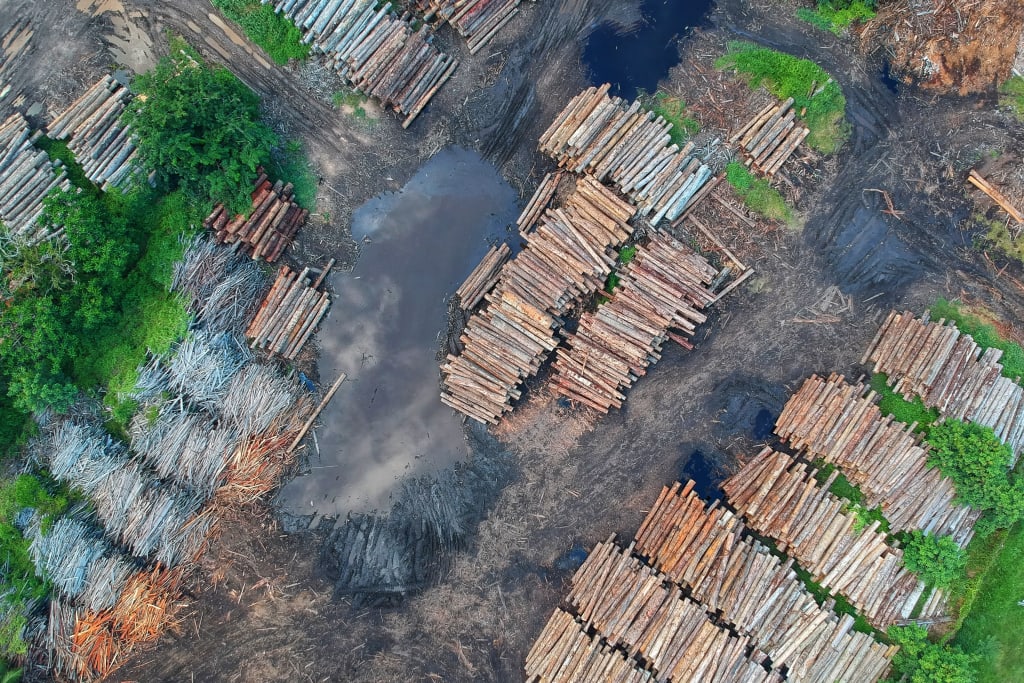
Introduction :
Deforestation is the permanent removal of forests or the conversion of forested lands to non-forest uses. This process is primarily driven by human activities such as agriculture, logging, and urbanization. Deforestation has profound negative impacts on climate change, biodiversity loss, and indigenous communities. Therefore, it is crucial to understand the causes, consequences, and efforts required to reduce deforestation and promote reforestation. This comprehensive note will delve into the causes of deforestation, explore its environmental and social impacts, and discuss the various conservation strategies aimed at mitigating this critical issue.
I. Causes of Deforestation :
Agriculture: The expansion of agricultural land, particularly for commercial farming, is a major driver of deforestation. Large-scale commercial agriculture, including the cultivation of crops like soy, palm oil, and cattle ranching, often leads to the clearing of vast forested areas. These agricultural practices, driven by increasing global food demand, result in substantial deforestation, particularly in tropical regions.
Logging: Unsustainable logging practices, both legal and illegal, contribute significantly to deforestation. Timber extraction for timber products, such as furniture and construction materials, can result in the degradation and destruction of forests. Illegal logging, driven by profit-seeking activities, poses a severe threat to forests, undermining sustainable forest management efforts.
Urbanization and Infrastructure Development: Rapid urbanization and the construction of roads, dams, and other infrastructure projects often require the clearing of forests, leading to deforestation. The growing global population and expanding cities necessitate the conversion of forested lands into urban areas or industrial sites. This transformation disrupts ecosystems and contributes to habitat fragmentation.
Mining: Extractive industries, such as mining for minerals and fossil fuels, frequently involve the clearance of forests, leading to habitat destruction and soil degradation. The extraction of resources often requires extensive land clearing and excavation, resulting in significant environmental damage. This process not only contributes to deforestation but also leaves behind scars on the landscape that are difficult to restore.
II. Impacts of Deforestation :
Climate Change: Forests play a vital role in mitigating climate change by absorbing carbon dioxide (CO2) through photosynthesis. Deforestation disrupts this process, releasing CO2 into the atmosphere, a major driver of global warming. Additionally, the destruction of forests reduces the Earth's capacity to absorb CO2, exacerbating the greenhouse effect. The loss of forests contributes to climate change by reducing carbon sinks and accelerating the release of CO2.
Biodiversity Loss: Forests are home to a significant proportion of Earth's plant and animal species. Deforestation results in habitat loss, pushing numerous species towards extinction and disrupting entire ecosystems. Forests provide diverse habitats and ecological niches for countless organisms. The destruction of these habitats leads to the displacement and extinction of numerous species, causing a loss of biodiversity. This loss has cascading effects on ecosystem functioning and stability.
Soil Erosion and Degradation: Tree roots help stabilize the soil, preventing erosion. Deforestation exposes the soil to wind and water erosion, leading to decreased soil fertility and increased sedimentation in rivers and lakes. The removal of trees and vegetation cover disrupts the intricate network of roots that bind the soil together, making it vulnerable to erosion. Soil erosion results in the loss of topsoil, which is rich in nutrients necessary for plant growth. This degradation negatively impacts agricultural productivity and can lead to desertification in severe cases.
Disruption of Water Cycles: Forests act as natural water filters and regulate water cycles. They help maintain stable water supplies by intercepting rainfall, storing water in soils, and releasing it gradually. Deforestation can disrupt these cycles, leading to reduced water quality, altered rainfall patterns, and increased risk of floods and droughts. Forests play a vital role in maintaining hydrological balance, and their loss can cause imbalances in local and regional water systems.
Sociocultural Impacts: Indigenous communities heavily rely on forests for their livelihoods, cultural practices, and traditional knowledge. Deforestation disrupts their way of life, leading to social and economic challenges. Forests provide indigenous communities with essential resources such as food, medicine, and materials for shelter and cultural practices. The destruction of forests undermines the cultural identity and well-being of these communities, leading to the loss of traditional knowledge and social dislocation.
III. Conservation Efforts :
Forest Stewardship: Implementing sustainable forest management practices, such as selective logging, can help reduce deforestation while meeting timber demands responsibly. This approach involves carefully planning and monitoring logging activities to minimize ecological impacts, promote forest regeneration, and protect high-conservation-value areas.
Protected Areas and Reserves: Establishing protected areas and nature reserves can safeguard critical forest ecosystems and ensure the preservation of biodiversity. These areas act as havens for threatened species and provide opportunities for ecosystem restoration and scientific research. Protected areas also support ecotourism, generating economic benefits for local communities while conserving forests.
Reforestation and Afforestation: Planting trees in deforested areas and encouraging afforestation efforts can help restore lost forests, sequester carbon, and mitigate climate change. Reforestation programs involve the deliberate planting of trees in areas where forests have been cleared, while afforestation focuses on establishing forests in areas where they did not previously exist. These initiatives can help restore ecosystem functions, promote biodiversity recovery, and provide socio-economic benefits.
Policy and Legislation: Enacting and enforcing stringent laws and regulations against illegal logging and deforestation can act as a deterrent and promote responsible land use practices. Governments, in collaboration with international organizations and local communities, need to establish clear legal frameworks that ensure sustainable forest management, protect indigenous rights, and provide incentives for conservation efforts.
Sustainable Agriculture and Trade: Promoting sustainable agricultural practices, such as agroforestry and organic farming, and encouraging responsible trade of agricultural commodities can reduce the pressure on forests for agricultural expansion. Sustainable agricultural practices aim to integrate tree cover into farming systems, enhancing biodiversity, soil health, and water conservation. Responsible trade practices involve certification and labeling schemes that promote products produced in an environmentally and socially responsible manner.
Indigenous Rights and Community Engagement: Recognizing and respecting the rights of indigenous communities, involving them in decision-making processes, and supporting sustainable livelihood alternatives can contribute to forest conservation. Indigenous communities have intricate knowledge of their environments and play a vital role in the stewardship of forests. Empowering indigenous communities through land rights, participatory governance, and sustainable economic opportunities can help preserve forests and protect cultural diversity.
Conclusion :
Deforestation poses severe threats to the environment, biodiversity, and indigenous communities. The implementation of comprehensive conservation strategies, including sustainable forest management, protected areas, reforestation, and policy interventions, is crucial to mitigate the negative impacts of deforestation. By protecting and restoring forests, we can combat climate change, preserve biodiversity, and ensure a sustainable future for generations to come.
About the Creator
Keep reading
More stories from Adamu Hafizu Chiroma and writers in Earth and other communities.
Biodiversity Conservation
Introduction : Biodiversity, the variety of life on Earth, is essential for the health and stability of ecosystems and the well-being of all living organisms. Biodiversity conservation encompasses the protection and preservation of plant and animal species, their habitats, and the intricate ecological interactions that sustain life. This comprehensive note explores the significance of biodiversity, the threats it faces, the importance of conservation efforts, and the strategies required to safeguard the precious web of life.
By Adamu Hafizu Chiroma3 years ago in Earth
Nature’s Hidden Gems: Discovering the Rarest Flowers on Earth
Introduction: When Beauty Meets Rarity Nature is filled with wonders, but few are as captivating—and as elusive—as the rarest flowers on Earth. From enormous parasitic blooms to delicate orchids that appear only under precise conditions, these plants challenge our understanding of survival, evolution, and beauty.
By Ahmed aldeabella5 days ago in Earth
Verizon Outage Today
A sudden Verizon outage can feel unsettling, especially when your phone switches to “SOS” or “emergency calls only” without warning. Across social media and outage-tracking platforms, users often rush to ask the same questions: Is Verizon down right now? Why is my phone in SOS mode? What happened to Verizon today, and when will Verizon be back up? While outages are never convenient, they are not uncommon for large national carriers like Verizon Wireless. Understanding what a Verizon service outage means—and how to respond—can help reduce confusion during moments when connectivity disappears. Is Verizon Down? Understanding Service Outages A Verizon wireless outage occurs when part of Verizon’s cellular or data network becomes unavailable. This can affect voice calls, text messages, mobile data, or all services at once. Some outages are isolated to specific cities, such as Verizon outage NYC, Atlanta, Houston, or New Jersey, while others expand into a broader Verizon nationwide outage. When service is disrupted, users commonly report: Verizon down today Verizon network down Verizon not working Is Verizon down in my area? Verizon service outage These reports often surface within minutes, especially on outage-monitoring platforms. Why Does My Phone Say SOS? One of the most alarming signs during a Verizon outage today is seeing SOS, SOS only, or emergency calls only at the top of an iPhone. This leads many to ask, “Why is my phone in SOS mode Verizon?” SOS mode does not mean your phone is broken. It indicates that your device cannot connect to the Verizon network but can still place emergency calls using any available carrier signal. Common searches during outages include: Why does my phone say SOS only? iPhone stuck in SOS mode Why is my phone on SOS Verizon? What does SOS mean on iPhone? How to get phone out of SOS mode In most cases, the issue resolves automatically once Verizon restores network connectivity. What Caused the Verizon Outage Today? When connectivity drops, users naturally want immediate answers to what caused the Verizon outage today. Verizon does not always publish technical details right away, but outages are typically linked to: Network maintenance or system upgrades Fiber or backend routing failures Power outages affecting Verizon towers Severe weather or environmental damage Unexpected network congestion Despite online speculation, most Verizon outages are not related to cyberattacks. Searches like “Verizon cyber attack today” often trend during disruptions, but confirmed causes are usually infrastructure-related and temporary. How to Check Verizon Outage Status in Real Time If you’re wondering “Is Verizon still down?”, there are several reliable ways to check. Downdetector Verizon Platforms like Downdetector and Down Detector Verizon track real-time user reports. A spike in complaints usually confirms a Verizon outage before official statements are released. Verizon Outage Map Verizon provides a Verizon wireless outage map, sometimes including outage views by ZIP code. This helps answer questions like: Is there a Verizon outage near me? Is Verizon down in my area? My Verizon App and Network Status Pages The My Verizon app and Verizon’s official network status tools may display service alerts and updates during larger outages. Verizon Customer Service During an Outage During a widespread Verizon service outage, many users attempt to call Verizon customer service or search for the Verizon customer service number. While support teams remain active, wait times often increase significantly during major disruptions. Important things to keep in mind: Customer service representatives usually cannot provide exact repair timelines Rebooting your phone repeatedly during an outage rarely helps Network restoration often happens region by region Monitoring Verizon outage updates is typically more effective than calling support during peak outage periods. When Will Verizon Be Back Up? The most pressing question remains: When will Verizon service be restored? The answer depends on: Whether the outage is local or nationwide The cause of the disruption Whether physical repairs are required Minor outages may resolve within minutes or hours. Larger incidents—such as a Verizon cellular outage affecting multiple states—can take longer. Verizon generally prioritizes emergency communications before restoring full voice and data services. Search trends during outages often include: When will Verizon be fixed? How long will Verizon be down? When is Verizon going to be back up? While exact times are rarely guaranteed, service usually returns gradually rather than all at once. Verizon, Competition, and Broader Impact High-profile outages often spark comparisons with competitors like AT&T and T-Mobile. Searches for AT&T outage or T-Mobile outage frequently rise at the same time, as users explore alternative networks. Although outages generate headlines and social media frustration, they rarely have lasting effects on Verizon stock unless disruptions become frequent or prolonged. What to Do If Your Phone Is in SOS Mode If your phone shows SOS only during a Verizon outage: Enable Wi-Fi calling if available Avoid changing SIM or resetting network settings mid-outage Keep your device charged and updated Check Verizon outage updates periodically Once Verizon’s network stabilizes, most phones exit SOS mode automatically. Final Thoughts A Verizon outage can be disruptive, especially when communication suddenly feels out of reach. However, seeing SOS mode does not mean your phone is damaged—it simply reflects a temporary network issue. Staying informed through trusted sources like Downdetector, Verizon’s outage maps, and official Verizon updates can help users navigate these moments with clarity. While outages are frustrating, they are typically temporary, and service restoration is usually a matter of time rather than cause for alarm.
By Saboor Brohi 5 days ago in Earth




Comments
There are no comments for this story
Be the first to respond and start the conversation.