
Death Valley: Where the Sun Doesn’t Just Shine—It Scorches
Known as the hottest place on Earth, this iconic desert landscape in California’s Mojave Desert isn’t just famous for its fiery reputation—it’s also home to stunning vistas, bizarre phenomena, and a history as extreme as its temperatures.

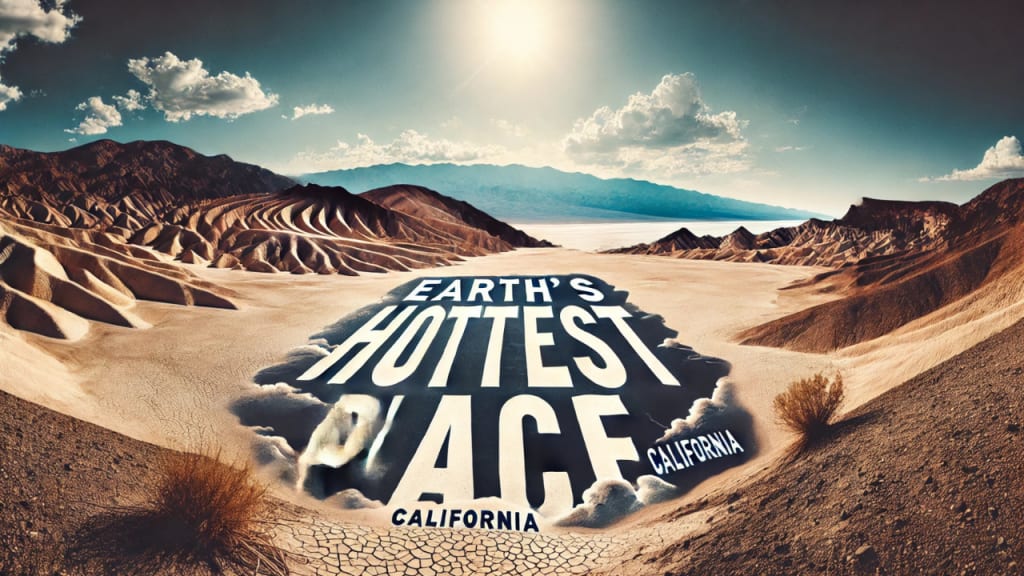
Welcome to Death Valley, the place where Mother Nature turned the thermostat to max and promptly forgot about it. If you’ve ever thought, “Wow, it’s hot today,” you owe it to yourself to visit Death Valley just to recalibrate your definition of heat. Known as the hottest place on Earth, this iconic desert landscape in California’s Mojave Desert isn’t just famous for its fiery reputation—it’s also home to stunning vistas, bizarre phenomena, and a history as extreme as its temperatures.
Ready to dive into the inferno? Let’s explore why Death Valley isn’t just hot—it’s legendary.
A Land Forged in Fire: Why Death Valley Is So Hot
Death Valley is essentially nature’s oven, and there’s a good reason for that. Situated between mountain ranges, this 3,000-square-mile basin traps heat like a solar-powered prison. Here’s how the science breaks down:
- Low Elevation: At 282 feet below sea level, Death Valley’s Badwater Basin is the lowest point in North America. With thinner air to diffuse sunlight, the ground heats up rapidly.
- Surrounding Mountains: The valley is encircled by towering ranges that block cooler air from flowing in. Think of it as being wrapped in a thermal blanket you didn’t ask for.
- Clear Skies: With almost no cloud cover, sunlight beats down relentlessly, heating the desert floor to temperatures that could fry an egg—literally.
- Ground Composition: The rocky, sandy terrain absorbs and radiates heat back into the atmosphere like a giant skillet.
On July 10, 1913, the thermometer at Furnace Creek registered a jaw-dropping 134°F (56.7°C), the highest temperature ever recorded on Earth. And while some dispute the accuracy of that measurement, Death Valley continues to push the mercury into the “Are you kidding me?” range.
Surviving the Heat: Plants and Animals Living on the Edge
Despite its searing reputation, Death Valley is not entirely devoid of life. The ecosystem here is a testament to nature’s resilience.
Flora: Plants That Laugh in the Face of Drought
- Creosote Bushes: These hardy plants have deep roots and tiny leaves that minimize water loss, making them desert royalty.
- Cactus Species: Death Valley’s cacti, like the beavertail cactus, store water in their fleshy pads and bloom in bursts of vibrant color.
- Desert Wildflowers: During rare “super bloom” events, the valley is carpeted with flowers, a stark contrast to its usual barren look.
Fauna: Creatures of the Flame
- Sidewinders: These rattlesnakes slither sideways to minimize contact with the scorching sand.
- Kangaroo Rats: These tiny rodents never drink water, surviving entirely on the moisture from seeds.
- Desert Pupfish: Yes, fish in the desert! These tiny survivors live in the valley’s isolated spring pools.
Every plant and animal here has adapted to thrive in conditions that would send most species packing.
Tourism in the Inferno: What to See and Do
If you’re brave—or foolish—enough to visit, Death Valley offers experiences as extreme as its weather.
Furnace Creek Visitor Center
Start your journey here to learn about the park’s history and pick up crucial tips for not dying in the heat.
Badwater Basin
The lowest point in North America is a surreal salt flat that stretches as far as the eye can see. Fun fact: it’s only 76 miles from Mount Whitney, the highest point in the contiguous U.S.
Zabriskie Point
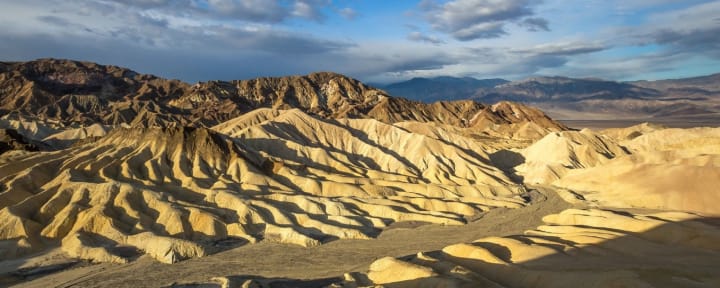
At sunrise or sunset, this iconic viewpoint offers breathtaking views of golden, rippled badlands.
Mesquite Flat Sand Dunes
Channel your inner adventurer by trekking across these picturesque dunes. Just be prepared—sand temperatures can exceed 200°F.
Death Valley: One of the Most Extreme Places on Earth
Strange Phenomena: Death Valley’s Mysteries
Death Valley isn’t just hot—it’s also weird. Some of its natural phenomena have baffled scientists for decades.
The Sailing Stones of Racetrack Playa
In this eerie dry lake bed, rocks seem to move across the surface, leaving long trails behind them. While it was long a mystery, scientists have since discovered that thin layers of ice and wind work together to “push” the stones.
Devil’s Golf Course
A jagged expanse of salt formations, this area is so inhospitable that it earned its ominous name. Stand here, and you’ll hear salt crystals snapping in the heat—like whispers from another world.
Death Valley’s Human History
Native American Roots
Long before prospectors arrived, the Timbisha Shoshone people called this harsh land home. They developed ingenious ways to survive, from harvesting mesquite beans to creating shelter in the shade of cliffs.
The 49ers and the Gold Rush
In the mid-19th century, gold rush pioneers sought a shortcut through the valley and quickly regretted it. The harrowing experience led to the name “Death Valley,” after several travelers lost their lives.
Modern Visitors
Today, over a million people visit Death Valley National Park annually, lured by its extremes and otherworldly beauty.
Extreme Weather: Not Just About Heat
While Death Valley is synonymous with blazing temperatures, it also experiences frigid winters, rare but torrential rainstorms, and flash floods that transform dry washes into raging rivers.
In August 2022, the valley received nearly a year’s worth of rainfall in just three hours, causing significant flooding and damage. It’s a stark reminder that while the heat gets all the headlines, Death Valley’s weather is nothing if not unpredictable.
Final Thoughts: Why Death Valley Captivates Us
Death Valley is more than just a hotspot on a map—it’s a testament to the extremes of our planet. It’s a place where survival feels like a victory, where landscapes look like they belong on Mars, and where every visit reminds you of nature’s raw, untamed power.
So, pack your sunscreen, bring plenty of water, and leave your heavy coats at home. Death Valley doesn’t just welcome visitors—it dares them to endure. Whether you’re here to marvel at its harsh beauty, solve its mysteries, or simply sweat it out, one thing is certain: Death Valley is unforgettable.
About the Creator
Keep reading
More stories from Marveline Merab and writers in Earth and other communities.
Mount Kailash: A Mystical PUZZLE Wrapped in Ice and Legend
Mount Kailash isn’t just a mountain—it’s a riddle carved into the Himalayas, a peak so enigmatic that it leaves scientists scratching their heads, adventurers in awe, and spiritual devotees convinced it’s a stairway to the divine. Rising 6,638 meters (21,778 feet) in the remote Tibetan wilderness, this pyramid-shaped wonder isn’t just famous for its jaw-dropping beauty; it’s the epicenter of sacred traditions, strange phenomena, and mysteries that have baffled humanity for centuries.
By Marveline Merababout a year ago in Earth
New Snow and Ice Warning for Friday and Saturday: What You Need to Know
The UK is bracing for another round of disruptive winter weather as meteorologists issue fresh snow and ice warnings for Friday and Saturday. Across England, Scotland, and Wales, residents are being advised to prepare for hazardous conditions, with local authorities urging people to limit travel and stay safe. The latest forecasts indicate a combination of heavy snowfall, freezing temperatures, and icy patches, all of which could affect daily routines, public transport, and emergency services.
By Fiaz Ahmed 7 days ago in Earth



Comments
There are no comments for this story
Be the first to respond and start the conversation.