
Dead internet satellites can cause climate change and abnormal ozone depletion, study finds
Dead satellites produce 17 tonnes of ozone-depleting particles a year
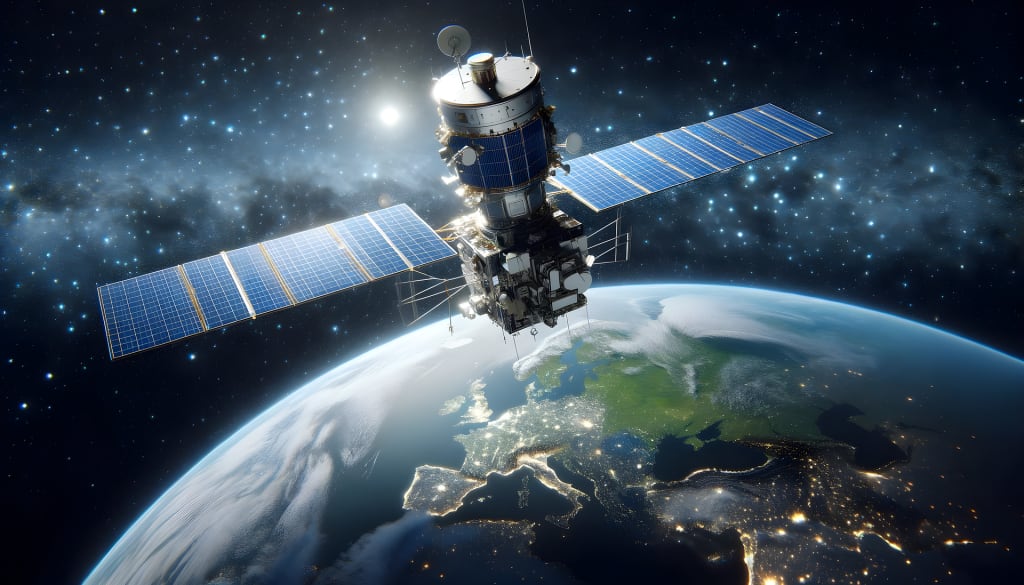
Our ozone is pennies thick – and soon we’ll put at least an Eiffel Tower’s worth of metallic ah into the ionosphere every year.
Heres why! Right now there are more than 9,000 satellites orbiting our Earth, playing vital roles in weather tracking, facilitating communications, aiding navigation as well as monitoring the whole Earth.A dead spacecraft the size of a truck ignites with plasma and pulverizes into dust and litter as it rips through the ionosphere and atmosphere.
“We could get to 100,000 satellites in 10 to 15 years,” Dr Jonathan McDowell, of the Harvard-Smithsonian Center for Astrophysics, told Tme. Those satellites power hyper-connected internet services and may turn some billionaires into trillionaires – at the cost of shrouding the planet with toxic trash.
By 2040, the number of satellites could exceed around 60,000.A recent study suggests that the emissions from expired satellites, as they fall to Earth and burn up, could have a significant impact in future years, with implications for ozone hole recovery and climate.Specially, Internet satellites at the end of their lifespan produce harmful chemicals that damage the ozone layer.
At the end of a satellite’s life, engineers have two choices:they can slow it down enough to force it out of orbit so it burns up in the atmosphere in what is known as an “uncontrolled reentry”.
Besides, most old satellites are disposed of by reducing their altitude and letting them burn up as they fall, releasing pollution into Earth’s atmosphere such as aerosolised aluminium. They produce aluminium oxides: a group of particles that "may remain in the atmosphere for decades," and are known to cause "significant ozone depletion," according to research published in the journal Geophysical Research Letters.
The study found that reentering satellites caused a 29.5 per cent increase or 17 tonnes of the amount of aluminium oxide in the atmosphere in 2022.
To understand the impact, researchers also simulated the effects associated with an annual release of 10,000 tonnes of aluminium oxide by 2040 (the amount estimated to be released from disposal of 3,000 satellites a year, assuming a fleet of 60,000 satellites).
“Only in recent years have people started to think this might become a problem,” said Joseph Wang, a researcher in astronautics at the University of Southern California and corresponding author of the study.
It doesn't end here. The dead internet satelites could also release other metals including titanium, lithium, iron and copper and their impact is yet to be modelled.
SpaceX, the leader in the satellite industry and the European Space Agency and the US Space Development Agency plan to build their own constellations in the near future.
Scientists estimate that of the 8,100 satellites in low Earth Orbit, 6,000 of them are Starlink satellites launched in the last few years.
Euronews Next reached out to SpaceX for comment but did not receive a reply at the time of publication.
Our magnetosphere keeps us alive. It should be protected as an Earth environment. Instead, we’re filling it with electronic waste so that billionaires can trade electromagnetic signals for dollars they really don’t need.
“Our technical civilization poses a real danger to itself,” Carl Sagan warned in his 1997 book Billions and Billions: Thoughts on Life and Death at the Brink of the Millennium. The magnetosphere is our first line of defense against an otherwise lethal solar system, and any pollution of it should be intensely studied and monitored. Indeed, if an asteroid the size of a Starlink satellite was headed towards Earth, it would activate planetary defense monitoring. But since it’s a human-made object impacting the atmosphere, we don’t monitor it at all.
Space companies need to stop launching satellites if they can’t provide studies that show that their pollution will not harm the stratosphere and magnetosphere. Until this pollution is studied perfectly further, we should all reconsider satellite internet.
About the Creator
Keep reading
More stories from writers in Earth and other communities.
All Holidays Cancelled as UK Holiday Firm Goes Bust
Holiday Firm Collapse Sparks Chaos A major UK holiday company has gone bust, resulting in the cancellation of all booked holidays. The collapse has left thousands of travellers without trips, refunds, or alternative arrangements, sparking frustration and concern among affected customers.
By Aarif Lashari5 days ago in Earth
The Duelist
The rays of a dying red sun flashed against the onrushing blade. The grey beards say the key to dueling lies in size, speed, reach, righteous fury, whatever the person in front of them pays them to say. Matteo knew better than any it was none of these and had an undefeated record on these sands to prove it.
By Matthew J. Fromm7 days ago in Fiction



Comments
There are no comments for this story
Be the first to respond and start the conversation.