
Cyclone Bears Down on Koalas
Luckily there are ‘Wildlife Angels’ willing to help


As Queensland, Australia, begins cleaning up from cyclone Alfred, consider the animals affected.
We measure damage from natural disasters by looking at human life loss and property damage. Consider the animals left without homes after these events. They have nowhere to go and no safe place to live.
A brief history
Animals can sense changes in weather long before humans can—not in any psychic way, but because they have finely tuned senses to change. They have these to survive in a natural environment. Animals can react to air pressure, wind, smell, and humidity changes. These changes can trigger a “Warning, Will Robinson” response.
Alfred is one of the few cyclones that hit land. At least twenty others got within 200 kilometers of the coast.
In 1954, the ‘Great Gold Coast Cyclone’ killed 26 people and dumped 900 mm (35 inches) of rain in 24 hours. Boats were found in tree tops, and the entire fishing fleet of a town was swept away.
In 1967, experts rated Cyclone Dinah as a Category Three cyclone. It caused over $5 billion in damage.
In 1974, Cyclone Wanda and ex-cyclone Zoe brought the worst floods since colonization. They dumped 500 mm (20 inches) of rain in just 24 hours and sadly killed sixteen people.
By the time Alfred hit the coast, it was an ex-cyclone. It was not as bad as predicted, but the damage was still extensive. Gale-force winds, heavy rain, and flash floods caused a lot of damage. They also cut power to more than 320,000 people. Alfred
Confused Preparation (maybe it was the Eucalyptus oil!)
As Cyclone Alfred neared, Wildlife rescuers on Minjerribah/North Stradbroke Island, near Brisbane, noticed odd behavior in the koala colony.
Those who follow me know I have written several stories about koalas. They are one of my favorite animals. I studied them for over four years.
Stressed koalas (for example, when there is a bushfire) climb higher up the tree. This is a bad move if there is a cyclone approaching.
Many were seen climbing down from trees. They searched for shelter in unusual spots. People’s houses, sheds, and gardens. It's the end of the breeding season. While most would head deeper into the bush, they are now turning back.
It is not hard to imagine that many suffer horrible deaths in times like these; imagine being up a gum tree in cyclonic winds. If you can’t, then have a look at his video. At the very least, you would end up with a bad case of seasickness, which would disorient you.
Koalas can't swim. If strong winds blow them from trees into floodwaters, they won't survive long.
Many amazing people not only tried to protect their homes but also helped koalas and other wildlife in need.
One ‘wildlife angel’ is Paulie Debono. He leads rescues on Stradbroke and lives on a houseboat there. Paulie, besides caring for his boat, has opened a triage clinic. It has food, syringes, teats, and pain relief. He even has some medi-cribs to warm abandoned or injured joeys (baby koalas).
Groups like Wildlife Information, Rescue, and Education Service (WIRES) have volunteers who dedicate time to rescuing injured animals. WIRES coordinates emergency teams to help native wildlife affected by Cyclone Alfred and ensures that all animals receive the care and assistance they need.
To Paulie and the WIRES folks, I, for one, say a big thank you on behalf of all the injured animals.
If we don't act now, koalas could go extinct by 2050. Habitat loss, diseases, and disasters like Cyclone Alfred are significant threats. Queensland has the largest concentration of koalas along the southeastern coast. Experts think the national population is under 60,000, much lower than the millions from last century.
Without urgent action, koalas will likely become extinct by 2050 due to habitat destruction, disease, and natural disasters like Cyclone Alfred. Queensland has the largest concentration of koalas along the southeastern coast. The national population is believed to be less than 60,000, a far cry from the millions in the last century
[Author’s Note: For more information about WIRES or to donate to their fund, visit their website]
Till next time,
Calvin
About the Creator
Calvin London
I write fiction, non-fiction and poetry about all things weird and wonderful, past and present. Life is full of different things to spark your imagination. All you have to do is embrace it - join me on my journey.
Reader insights
Outstanding
Excellent work. Looking forward to reading more!
Top insights
Expert insights and opinions
Arguments were carefully researched and presented
Heartfelt and relatable
The story invoked strong personal emotions
Keep reading
More stories from Calvin London and writers in Earth and other communities.
Britain in Talks With NATO to Boost Arctic Security
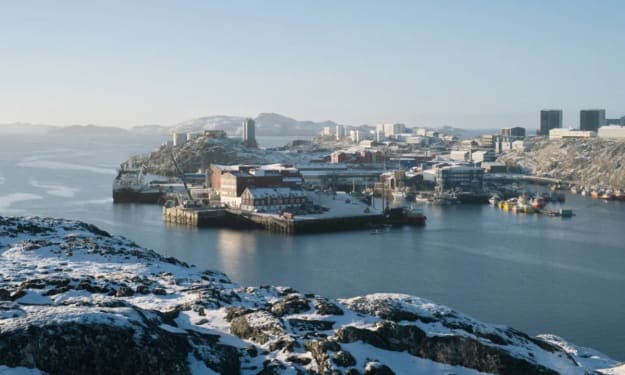
The Arctic Is No Longer a Frozen Backwater For decades, the Arctic sat quietly on the margins of global politics—remote, frozen, and largely ignored. That era is over. Britain is now in talks with NATO to strengthen Arctic security, acknowledging growing risks posed by Russia and China. In a notable shift, London’s assessment aligns closely with warnings long emphasized by Donald Trump, particularly as he continues to express strategic interest in Greenland. What once sounded like an eccentric fixation has evolved into a serious geopolitical conversation. The Arctic is rapidly becoming one of the world’s most contested regions, and Britain is positioning itself to play a larger role. Why Britain Is Paying Attention Now Although the UK is not an Arctic nation, it is an Arctic-adjacent power with significant strategic interests. British officials increasingly view the High North as critical to national and allied security. Melting ice is opening new shipping routes, exposing untapped natural resources, and making military movement easier than ever before. Britain’s talks with NATO focus on intelligence sharing, joint exercises, surveillance capabilities, and protecting undersea infrastructure such as communication cables and energy pipelines. These are not abstract concerns. Any disruption in the Arctic could have immediate consequences for European security and global trade. In short, what happens in the Arctic does not stay in the Arctic. Russia’s Expanding Arctic Footprint Russia is the dominant military power in the Arctic, and it is not slowing down. Moscow has reopened Soviet-era bases, deployed advanced missile systems, expanded its icebreaker fleet, and increased patrols across the region. The Arctic coastline represents a core part of Russia’s nuclear deterrent, making it strategically vital to the Kremlin. From NATO’s perspective, this military buildup creates both risk and uncertainty. Britain, which has long been vocal about Russian aggression—from Ukraine to cyber warfare—sees the Arctic as another front where deterrence must be strengthened before tensions spiral. The concern is not necessarily an immediate conflict, but miscalculation. In a region with harsh conditions and limited communication infrastructure, even minor incidents could escalate rapidly. China’s Quiet but Steady Arctic Ambitions While Russia’s presence is overt, China’s Arctic strategy is more subtle—and equally concerning to Western planners. Beijing calls itself a “near-Arctic state,” a label that has raised eyebrows in Europe and North America. Through investments, research stations, and partnerships, China is laying the groundwork for long-term influence. Britain shares NATO’s concern that China could use civilian projects for dual-use purposes, blending scientific research with intelligence gathering and infrastructure control. As Arctic shipping routes become commercially viable, China’s interest in controlling parts of the supply chain only grows. London’s alignment with these concerns reflects a broader shift in UK foreign policy: China is no longer viewed solely as an economic partner, but as a strategic competitor. Trump, Greenland, and Strategic Reality Donald Trump’s repeated interest in Greenland—most famously his suggestion that the United States should buy it—was widely mocked at the time. Yet behind the headlines was a strategic logic that many Western governments now openly acknowledge. Greenland sits at the heart of the Arctic, hosting vital air and naval routes between North America and Europe. It is also rich in rare earth minerals critical for modern technology and defense systems. As ice recedes, Greenland’s strategic value only increases. Britain’s current position, which aligns with Trump’s warnings about Arctic vulnerabilities, shows how quickly political perceptions can change. What once seemed unconventional now appears prescient. NATO’s Arctic Awakening NATO has traditionally focused on Eastern Europe and the North Atlantic. The Arctic, despite its importance, received less coordinated attention. That is changing. Britain’s talks with NATO reflect a broader alliance effort to integrate Arctic defense into its core strategy. This includes: Increased joint military exercises in cold-weather environments Enhanced monitoring of Russian and Chinese activity Strengthening cooperation with Arctic nations like Norway, Canada, and Denmark Protecting critical undersea and satellite infrastructure For Britain, this is also about credibility. As a leading NATO member and a key military power, the UK wants to demonstrate that it can contribute meaningfully beyond its immediate geography. Climate Change as a Security Multiplier One of the most striking aspects of Arctic security is how closely it is tied to climate change. Melting ice is not just an environmental issue—it is a strategic one. New sea lanes shorten travel between Asia and Europe, while access to oil, gas, and minerals becomes easier. This transformation increases competition and reduces natural barriers that once limited military movement. Britain’s involvement reflects recognition that climate-driven changes are reshaping the security landscape faster than traditional institutions were designed to handle. In this sense, Arctic security is a preview of future global challenges where environmental change and geopolitics collide. Domestic and Diplomatic Balancing Acts Britain’s Arctic engagement is not without challenges. Increased military involvement raises questions about defense spending, priorities, and escalation risks. Diplomatically, London must balance deterrence with dialogue, avoiding actions that could unnecessarily provoke Russia while still protecting allied interests. There is also the question of public awareness. Arctic security lacks the visibility of conflicts like Ukraine, making it harder to sustain political attention. Yet policymakers increasingly argue that prevention is cheaper—and safer—than crisis response. What This Means Going Forward Britain’s talks with NATO mark an important shift in how the Arctic is viewed: not as a distant frontier, but as a central arena in 21st-century security. Agreement with Trump-era assessments on Russia, China, and Greenland underscores how geopolitical realities can outlast political controversies. As competition intensifies, the Arctic will likely become a testing ground for cooperation, deterrence, and strategic foresight. Britain’s involvement signals that mid-sized powers are no longer content to watch from the sidelines. Final Thoughts The Arctic is warming faster than any other region on Earth—and so are the geopolitical tensions surrounding it. Britain’s move to boost Arctic security with NATO reflects a growing consensus that ignoring the High North is no longer an option. Whether driven by Russia’s militarization, China’s quiet expansion, or lessons drawn from Trump’s blunt warnings, one truth stands out: the future of global security may well be shaped at the top of the world, where ice, ambition, and power now intersect.
By Muhammad Hassan3 days ago in Earth



Comments (3)
Oh, thank you for adding in the donation information. We visited Australia and Fiji in Feb 2024 and there was a HEAT WAVE - so hot. I think I wrote a story about it and the Fiji cruise on tiny catamaran on Vocal. Even the Aussies were hot. Anyway, we only saw a couple of koalas on the road trip - they are so precious, I hope we can save them. My trips are generally around wildlife because I want to see the animals more than buildings or churches. Animals do know when weird weather is coming, so people would do better if they paid more attention to nature - the clues are there. https://shopping-feedback.today/wander/down-under-trip%3C/span%3E%3C/span%3E%3C/span%3E%3C/a%3E%3C/p%3E%3C/div%3E%3C/div%3E%3C/div%3E%3Cstyle data-emotion-css="w4qknv-Replies">.css-w4qknv-Replies{display:grid;gap:1.5rem;}
"Warning, Will Robinson" don't tell me this was from 'Lost In Space' on Netflix? That's the show I can watch on repeat, every single day. Emotional and Intellectual ❤🔥 It's actually devastating to think how helpless these animals are during such disasters. Huge respect to those rescuing and caring for them!
Thanks for sharing this excellent informative article. Weather can be incredibly destructive and dangerous to wildlife as well as humans