
CUTTING EARTH INTO TWO HALF
What happens if we cut earth into two

There are many ways you could attempt to divide the planet. You could crack it open with an asteroid, blow it apart with nuclear weapons, or start digging. But no matter what, you'd have your work cut out for you. Having an asteroid do the job would be a risky move. The one that made this 160 kilometer wide, 40 kilometer deep crater in South Africa was bigger than the Jigsalube asteroid that killed the dinosaurs. A planet-splitting space rock would need to be much, much bigger, and we wouldn't fare very well.
Now, blowing things up could get messy too. Just to match the energy of the dinosaur-killing asteroid, you'd need to set up at least one billion nuclear bombs to split the Earth in half. You'd need to make a ring of bombs running around the globe, and yeah, that idea probably wouldn't work very well either. Digging and cutting your way through the planet seems like the least damaging option, and how hard could it be? Humans dig things all the time, right?
Well, I hope you don't mind sweating up a storm because things are about to get high, really hot. To start cutting through the planet, well, first you'd need to get through the crust, and the best place to start digging would be where this first layer is the thinnest. That would mean venturing beneath the ocean, where the crust can be as little as five kilometers in thickness. After that, you'd be staring face to face with the mantle, at about 2,900 kilometers thick. This would be the layer you'd spend the most time working through, but luckily, the drilling would get a little easier thanks to the fact that the mantle is made up of partially melted rock.
But this layer is melted for a reason. It's incredibly hot, and the deeper you get, the higher the temperature and the pressure around you would climb. You'd need some serious heat-resistant gear for this kind of work. Even at the top of the mantle, temperatures can be as high as 1,000 degrees Celsius. Toward the bottom, you'd be surrounded by an even more scorching heat, up to 3,700 degrees Celsius.
Then you'd run into a problem. The kind of heat-resistant gear you need to get through this next layer doesn't exist. Even tantalum hafnium carbide alloy, the most heat-resistant material you'd have at your disposal, wouldn't do you any good once you reached the 4,000 degrees Celsius range. But for the sake of our scenario, you'd invent something new that would get you the rest of the way through.
Now, you'd be working through Earth's 2,200 kilometer thick outer core. Okay, finally reaching the inner core of our planet, you'd be in for a serious amount of heat. But not only that, the pressure within the core is 3.6 million times higher than it is at sea level. Yeah, imagine all that pressure unleashing as you tapped into the core. This would lead to an extremely violent ejection of molten iron, nickel, and silicates from the Earth's mantle.
So, it's a good thing you decided to start drilling at the bottom of the ocean. Otherwise, this molten rock would come all the way up on land to drown landscapes and create massive firestorms. Now, on the other hand, drilling underwater, you'd make a huge mess for a lot of marine life. You'd keep drilling until you came out on the other side. At long last, this continuous ejection of all this material from the core would propel the two halves away from each other. The planet would begin to separate.
Now, one major consequence you probably missed while planning this stunt is that each half would start to collapse in on itself almost immediately. You'd be let alone away by powerful gusts of wind as the atmosphere rushed to cover the planet's broken sides. All of that thanks to gravity that would try to turn these two semi
About the Creator
Keep reading
More stories from Akhil Raju and writers in Earth and other communities.
SURVIVING IN A FOREST
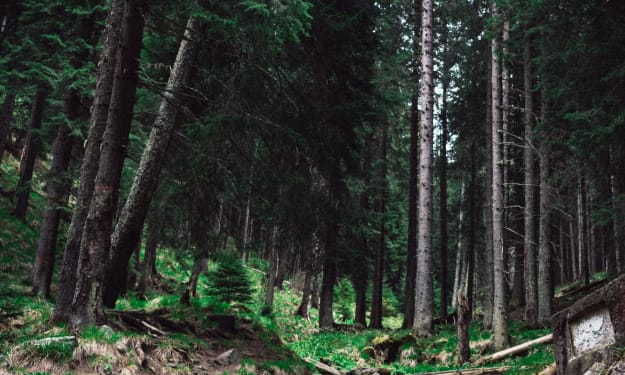
Imagine yourself wandering off on a hiking trail, surrounded by the beauty of Mother Nature. But suddenly, every part of the forest starts to look the same, and you're not sure which direction you came from. You try to check your phone for directions, but the battery's dead. Now, you're lost and completely off the grid. But fear not, we've got you covered on how to survive alone in a forest.
By Akhil Raju2 years ago in Earth
Old Red Cedar
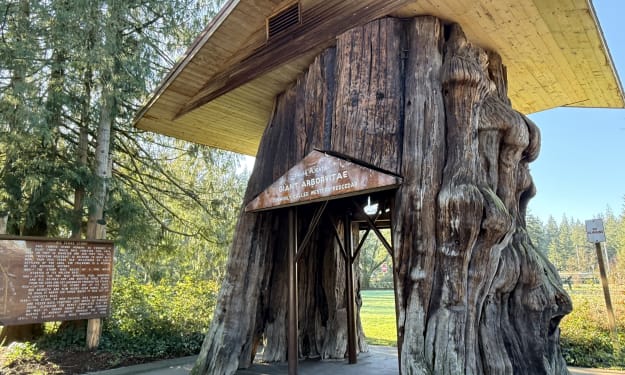
Western red cedar, over 1000 years old, you grew for 200 years and towered over others, silently observing sights in the forest that are no more, your secrets buried within your spirit. The bark covering your tree trunk, said to be about 23 feet around, was hollow when men discovered you. Inside the hollow trunk, a fire somehow began; you cannot tell us when, how, or why, and there is no record of it. The fire caused your death. Slowly, you died, from the inside out. Such a sad loss for an old soul of the forest, with centuries of knowledge in its cells. Houses, watercraft, shingles, bowls, bows and arrows, and paper that men used to write what they knew of your history could have been made from your body, branches, and bark. Truly, fire was a better death for you than a logger’s saw.
By Andrea Corwin 3 days ago in Earth

Comments
There are no comments for this story
Be the first to respond and start the conversation.