
Creatures That Defied Size: Exploring the Giants of the Animal Kingdom
Extinct giants of the animal kingdom
Introduction:
Throughout the history of our planet, there have been remarkable creatures that stood out for their immense size and unique features. These animals, some of which are now extinct, captivate our imagination and leave us in awe of the wonders of nature. In this article, we will delve into the fascinating world of these colossal beings and explore some of the most impressive giants to have ever roamed the Earth.
The Argentinosaurus: A Titan of the Land
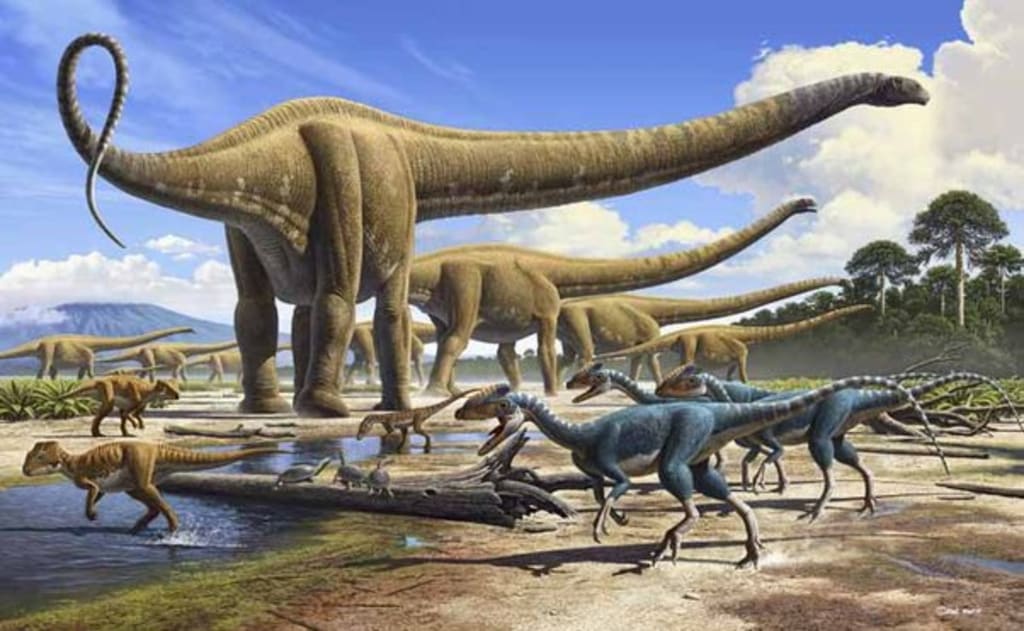
The Argentinosaurus, a genus of sauropod dinosaurs, once dominated the landscapes of South America approximately 94-97 million years ago. As one of the largest land animals to have ever existed, it reached extraordinary proportions. With a length of up to 100 feet and a weight of around 100 tons, this magnificent creature would have dwarfed most other animals of its time. Its fossils were discovered by a farmer in Argentina in 1987, shedding light on the colossal nature of this dinosaur.
The Spinosaurus: A Predatory Behemoth
The Spinosaurus, meaning "spine lizard," was a carnivorous dinosaur that roamed North Africa around 112-97 million years ago. Believed to be one of the largest meat-eating dinosaurs, it measured up to 60 feet in length and weighed approximately 23 tons. The Spinosaurus is renowned for its distinctive sail-like structure on its back, which likely served for thermoregulation. With its long, crocodile-like jaws lined with sharp teeth, this formidable predator hunted large prey such as fish, crocodiles, and even other dinosaurs. Its first fossils were discovered in Egypt in 1912, revealing a glimpse into the ancient world of colossal predators.
The Sperm Whale: A Deep-Diving Behemoth
The Sperm Whale (Physeter macrocephalus) is the largest toothed predator on Earth and boasts the largest brain of any animal species. Found in oceans worldwide, this magnificent creature can dive to depths of up to 7,000 feet in search of food. Sperm whales are easily recognized by their massive block-shaped heads, which can measure up to one-third of their total body length. With their dark brown or grayish-blue skin and wrinkled appearance, they possess a majestic presence in the oceanic realm.
The Titanoboa: The Giant Serpent of the Past
The Titanoboa, an extinct genus of giant snake, inhabited the Earth approximately 60-58 million years ago. Regarded as the largest known snake ever, it could reach lengths of up to 42 feet and weighed around 2,500 pounds. Fossils of the Titanoboa were discovered in a coal mine in Colombia in 2004, providing invaluable insights into the size, behavior, and the overall climate and ecosystem of the paleocene era.
The Blue Whale: A Colossal Marvel of the Oceans
The Blue Whale (Balaenoptera musculus) is the largest animal to have ever existed on Earth. Measuring up to 100 feet in length and weighing as much as 200 tons, these magnificent marine mammals traverse the world's oceans. Blue whales possess a long, streamlined body, usually adorned with a blue-gray hue and mottled patterns. Their small dorsal fin and two pectoral fins, about one-third the length of their body, accentuate their majestic presence. These gentle giants primarily feed on tiny shrimp-like creatures called krill, consuming an astonishing amount of up to 8,000 pounds in a single day.
The Leedsichthys: An Ancient Colossus of the Seas
The Leedsichthys, an extinct genus of large bony fish, flourished during the Jurassic period approximately 165-155 million years ago. It is believed to be one of the largest fish ever to have existed, potentially growing up to 50-55 feet in length. Fossils of the Leedsichthys were initially discovered in England during the 19th century, with subsequent finds in other regions of Europe, South America, and Africa. Despite its enormous size, this fish was a filter feeder, akin to modern-day whale sharks, and likely sustained itself by consuming plankton and other small organisms. It accomplished this by swimming with its colossal mouth open, filtering water through its gills.
The Pterodaustro: A Unique Avian Giant
The Pterodaustro, an extinct species of flamingo-like birds, thrived approximately 70-35 million years ago. These relatively small birds possessed a wingspan of about two to three feet and were characterized by their distinctive long, narrow beaks equipped with comb-like structures used for filter feeding. Inhabiting shallow bodies of water such as lakes and lagoons, the Pterodaustro mainly fed on small crustaceans and other tiny organisms. To obtain its food, it employed the comb-like structures within its beak to filter them from the water while gracefully swimming through its habitat.
Conclusion:
The Earth's history is teeming with awe-inspiring creatures that defied expectations with their colossal size and unique adaptations. From the mighty dinosaurs like the Argentinosaurus and Spinosaurus to the majestic giants of the oceans like the Blue Whale and Sperm Whale, these extraordinary animals left an indelible mark on the natural world. As we uncover their remains and learn more about their existence, we gain a deeper appreciation for the diverse and incredible creatures that once inhabited our planet.
About the Creator
Keep reading
More stories from Loyal Kenneth and writers in Earth and other communities.
Unveiling the Mysteries of Strange Stars and Celestial Phenomena
Introduction In the vast expanse of the universe, scientists have come across intriguing discoveries that challenge our understanding of stars and celestial phenomena. From enigmatic blue blobs in the Virgo Galaxy cluster to diamonds at the heart of stars, these extraordinary findings captivate our imagination and push the boundaries of astronomical knowledge. Let's embark on a journey through these cosmic wonders and explore the mysteries they hold.
By Loyal Kenneth3 years ago in Earth
Man Shot Dead Was 37-Year-Old US Citizen, Minneapolis Police Chief Says
For many residents of Minneapolis, the news landed like a heavy blow. Authorities confirmed that a man shot dead during a law enforcement operation was a 37-year-old U.S. citizen, a detail that immediately intensified public reaction. What began as a breaking news alert quickly became a broader conversation about policing, federal authority, and community trust.
By Muhammad Hassana day ago in Earth
The Sad Nightingale
The Sad Nightingale Writing No. 2402 Saturday, November 26, 2022 By Iman Javed The sun had just set, leaving a soft orange glow lingering on the horizon. The air was calm, carrying a faint chill of the approaching night. Away from the village, frogs croaked in the drying pond, their sounds echoing across the still waters. Crickets intermittently played their tunes, pausing now and then as if checking their tiny instruments for the night ahead. On a branch of a nearby withered tree sat a nightingale, utterly sad. It neither moved nor chirped; it seemed as though it had forgotten the very art of singing. Its eyes reflected deep sorrow, and its feathers drooped in silence.
By Sudais Zakwan2 days ago in Earth



Comments
There are no comments for this story
Be the first to respond and start the conversation.