
Cosmic Marvels: Unraveling the Enigma of Rapid Early Growth in Supermassive Black Holes
A Journey into the Astrophysical Mysteries of Black Hole Formation and Expansion in the Early Universe

Introduction
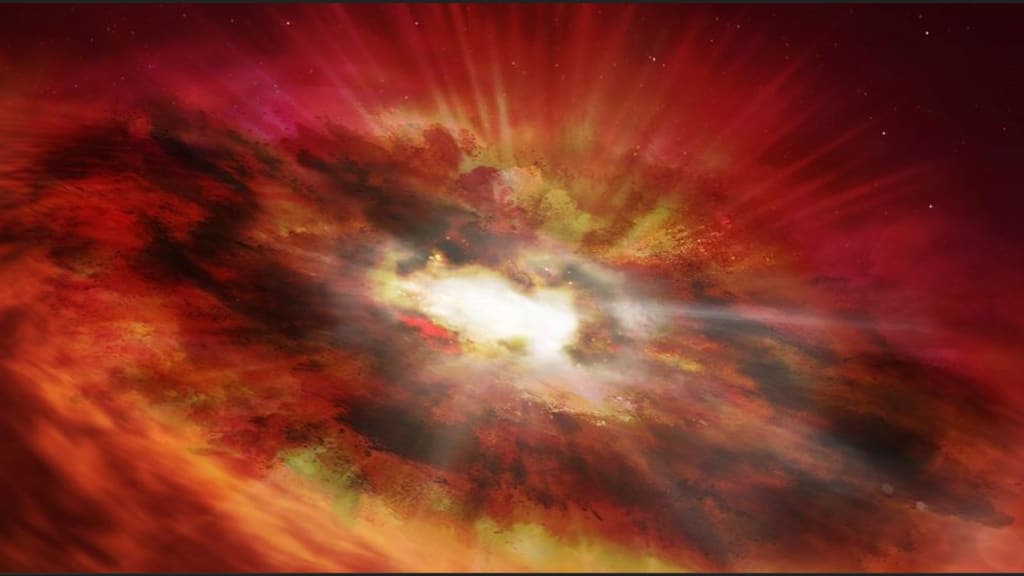
Supermassive black holes, behemoths that lurk at the centers of galaxies, have long captivated astronomers with their immense gravitational pull and enigmatic properties. Among the most intriguing puzzles in astrophysics is how these cosmic giants grew so quickly, so early in the universe's history. Despite their awe-inspiring size, some supermassive black holes are estimated to have formed within a billion years after the Big Bang, leaving scientists to ponder the mechanisms that fueled their rapid growth.
In this article, we embark on a journey into the cosmic realm of supermassive black holes, exploring the leading theories and discoveries that shed light on their early formation and expansion. From massive accretion disks to galaxy mergers, we delve into the captivating world of these celestial enigmas and seek to unravel the secrets of their accelerated growth in the early universe.
Chapter 1: The Mysteries of Supermassive Black Holes
1.1 Unraveling the Cosmic Titans
Supermassive black holes, with masses millions to billions of times that of our sun, are central to the formation and evolution of galaxies. Understanding their origins and rapid growth remains one of the most challenging and compelling questions in astrophysics.
1.2 Early Universe Clues
Recent astronomical observations have revealed supermassive black holes in the early universe, dating back to only a billion years after the Big Bang. These findings have deepened the mystery of how these colossal objects formed so quickly in the cosmic timeline.
Chapter 2: Black Hole Birth: From Stellar Remnants to Supermassive Giants
2.1 Stellar Nucleosynthesis
The formation of supermassive black holes is thought to begin with the collapse of massive stars. Stellar nucleosynthesis and core collapse lead to the birth of stellar black holes, which can later merge and grow into supermassive ones.
2.2 Seed Black Holes
The existence of seed black holes, formed through stellar processes or even primordial fluctuations, is a crucial factor in the early growth of supermassive black holes. Understanding the properties and formation mechanisms of these seeds is central to solving the puzzle.
Chapter 3: Cosmic Feasting: The Role of Accretion Disks
3.1 Cosmic Buffet: Accretion of Matter
The primary process driving the growth of supermassive black holes is the accretion of matter. Gas and dust from surrounding regions fall into the black hole's gravitational grasp, forming an accretion disk that provides the "cosmic buffet" for the voracious black hole.
3.2 Quasars: Luminous Powerhouses
The accretion disks around supermassive black holes emit intense radiation, creating some of the brightest and most distant celestial objects known as quasars. Understanding the mechanisms behind quasars is crucial in deciphering the growth of early supermassive black holes.
Chapter 4: The Influence of Galaxy Mergers
4.1 Cosmic Collisions
Galaxy mergers are frequent events in the universe's history. The collision and merging of galaxies can trigger intense bursts of star formation and provide a rich source of matter for supermassive black holes to consume.
4.2 Synergistic Growth
The interplay between galaxy mergers and the central supermassive black hole is a complex and symbiotic relationship. Understanding this synergy is key to comprehending the rapid growth of black holes during galaxy formation.
Chapter 5: Quenching the Beast: Feedback Mechanisms
5.1 Cosmic Winds and Jets
Astrophysical feedback mechanisms, such as powerful cosmic winds and jets, play a critical role in regulating black hole growth. These mechanisms can expel gas from the black hole's vicinity, halting its accretion and impacting galaxy formation.
5.2 Balancing Act
The delicate balance between black hole accretion and feedback processes determines the long-term evolution of supermassive black holes and their impact on galaxy evolution. Understanding this equilibrium is essential in uncovering the reasons for their rapid early growth.
Chapter 6: Observational Insights and Future Endeavors
6.1 Advancements in Observational Techniques
Astronomers employ a variety of sophisticated instruments, including space telescopes and radio interferometers, to observe and study supermassive black holes across the cosmic timeline. These observations provide valuable data for unraveling their enigmatic properties.
6.2 Future Space Missions
Upcoming space missions, such as the James Webb Space Telescope and the Laser Interferometer Space Antenna (LISA), are expected to revolutionize our understanding of supermassive black holes and their early growth. These missions promise to offer unprecedented insights into the cosmic marvels.
Chapter 7: The Quest Continues
7.1 The Eternal Pursuit of Knowledge
The mystery of how supermassive black holes grew so quickly, so early in the universe, continues to challenge our understanding of astrophysics and cosmology. The quest to unravel the secrets of these cosmic giants reflects humanity's timeless pursuit of knowledge and our curiosity about the mysteries of the universe.
7.2 A Window to the Cosmos
Supermassive black holes are not only celestial enigmas but also a window to the cosmos. Their study offers a unique glimpse into the early universe and the intricate interplay between galaxies and their central giants. As the journey to comprehend
About the Creator
Anthony Gatimu
Being a writer,It requires constancy, discipline, and vulnerability.But inside that weakness lies your most noteworthy strength, for it is through your weakness that you interface with perusers on a significant level.
Keep reading
More stories from Anthony Gatimu and writers in Earth and other communities.
Orbiting Higher: Space Station Preps for Upcoming Missions, Astrobee Powered Off
Introduction The International Space Station (ISS) continues to be humanity's pioneering outpost in space, serving as a hub for groundbreaking scientific research and international collaboration. As space agencies and private companies gear up for ambitious upcoming missions, the ISS is undergoing meticulous preparations to ensure its readiness for these future endeavors. In parallel, the status of the innovative Astrobee robotic assistants, which have been instrumental in supporting astronaut tasks, has drawn attention as they temporarily power off for maintenance and upgrades.
By Anthony Gatimu2 years ago in Earth
A building's lifetime climate impact is mostly determined by its daily energy use.
The majority of a building's climate impact is not caused by its construction. As the heating, lighting, and ventilation systems continue to function year after year, it gradually accumulates.
By Francis Dami4 days ago in Earth
Workers Recover 15,000 Crabs After Lorry Crashes Into Field
An extraordinary scene unfolded when a lorry carrying an estimated 15,000 live crabs crashed into a field, spilling its cargo across farmland and prompting a large-scale recovery effort. The unusual accident quickly drew attention from local residents, emergency services, and animal welfare groups, as workers scrambled to rescue as many crabs as possible before they succumbed to exposure.
By Aarif Lashari5 days ago in Earth
Ludacris and Nelly draw backlash over bookings at MAGA-coded music festival
Ludacris and Nelly headlining a mostly right-wing event is good for them. It’s also great for the genre of hip hop. The two rap veterans have showcased their talents on other stages. Why can’t they perform for mostly MAGA folks and grab that bag?
By Skyler Saunders4 days ago in Beat



Comments
There are no comments for this story
Be the first to respond and start the conversation.