
Come Hear the Weird Interstellar Space Sounds Captured by NASA's Voyager
Weird interstellar space sounds

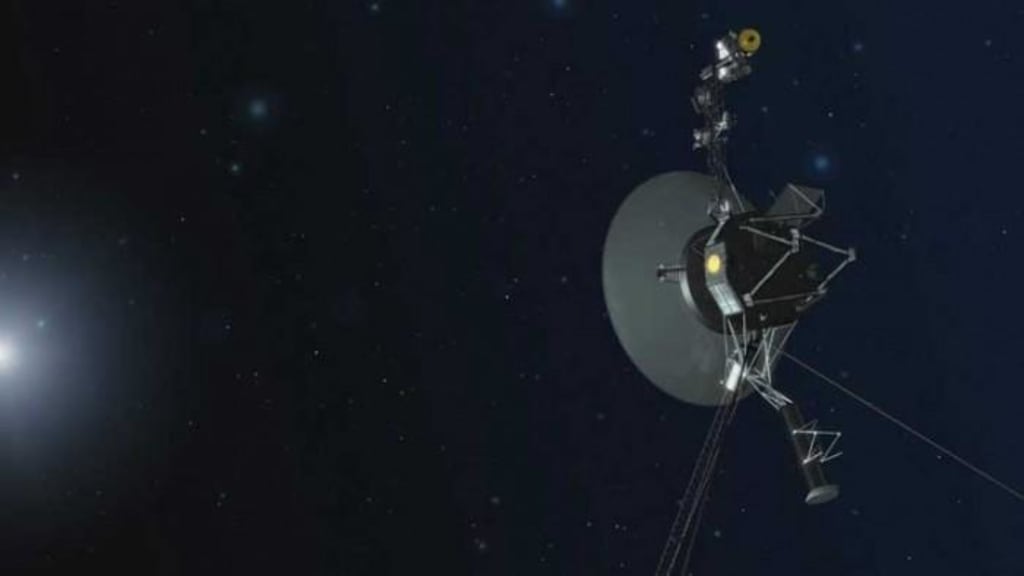
According tomedia reports, until recently, every spacecraft in history took measurements inside our heliosphere, the magnetic bubble inflated by the sun. But on August 25, 2012, NASA's Voyager 1 changed that. When it crossed the boundary of the heliosphere, it became the first man-made object to enter and measure interstellar space.
Voyager 1 has been on an interstellar journey for eight years, and careful listening to its data has shed new light on the frontier.
If our heliosphere is a ship sailing in interstellar waters, Voyager 1 is a life raft just dropped from the deck, determined to survey ocean currents. At present, any turbulent "sea water" it feels is mainly from the wake of the heliosphere. But further afield, it can sense disturbances from the depths of the universe. Eventually, our heliosphere will disappear entirely from its measurements.
"It's fair to say that we have some idea of how far Voyager needs to go to start seeing purer interstellar water," said Stella Ocker, a Ph.D. student at Cornell University in Ithaca, New York, and the newest member of the Voyager team. , "But we're not entirely sure when we'll get to that point."
Ocker's new study, published Monday in Nature Astronomy, reports what may be the first continuous measurement of the density of matter in interstellar space. "This detection gives us a new way to measure the density of interstellar space and opens up a new avenue for us to explore the structure of the very close interstellar medium," Ocker said.
When depicting the matter between stars -- what astronomers call the "interstellar medium," one thinks of a dispersed soup of particles and radiation -- a calm, quiet, serene environment. And that would be an error.
"I've used the term 'stationary interstellar medium' -- but you can find a lot of places that aren't particularly stationary," notes Jim Cordes, a space physicist at Cornell University and co-author of the paper.
Like the ocean, the interstellar medium is filled with turbulent waves. The largest one comes from the rotation of our galaxy, which arises as space churns against itself and creates fluctuations that span tens of light-years. Smaller waves (still large, in fact) emerge from the supernova explosion, stretching from crest to crest for billions of miles. The smallest ripples usually come from our own sun, and are produced when the sun erupts, sending shock waves through space and then penetrating into our heliosphere.
These collision waves reveal clues about the density of the interstellar medium -- a value that affects our understanding of the shape of the heliosphere, how stars form and even our place in the Milky Way. As these waves reverberate through space, they vibrate electrons around them, and those electrons are emitted at specific frequencies, depending on how tightly they are packed together. The higher the pitch, the higher the electron density. Voyager 1's plasma wave subsystem -- which includes two "rabbit-eared" antennas that stick out 30 feet (10 meters) behind the spacecraft -- is designed to hear that sound.
In November 2012, three months after leaving the heliosphere, Voyager 1 heard interstellar sounds for the first time. Six months later, another "whistle" came -- this time louder and higher pitched. The interstellar medium appears to be getting thicker and faster.
In today's Voyager data, these momentary whistles continued at irregular intervals. They are an excellent way to study the density of the interstellar medium, but do require some patience. "They're only found once a year, so relying on these chance events means that our map of the density of interstellar space is a bit sparse," Ocker said.
Now, Ocker and their team set out to find an operational measurement of interstellar mid-density to fill in these gaps -- one that doesn't rely on the occasional shock wave propagating from the Sun. After sifting through Voyager 1 data for weak but consistent signals, she found a promising candidate. In mid-2017, just as another whistle blew, it started to increase.
"It's actually a single tone," Ocker said. "We do hear it change over time, but the way the frequency moves tells us how the density changes."
The new signal, which Ocker calls a plasma wave emission, also appears to track the density of interstellar space. When there is a sudden whistle in the data, the pitch of the transmitted signal also rises or falls. The signal is also similar to that observed in Earth's upper atmosphere, which is known to track electron density there.
"It's really exciting because we're able to regularly sample the density of a very long stretch of space, the longest stretch of space we've ever had. This gives us the most complete density the traveler has ever seen. and the interstellar medium map," Ocker said.
According to the signal, the electron density around Voyager 1 began to rise in 2013 and reached its current level around mid-2015, during which time the density increased by a factor of about 40. In the entire dataset they analyzed through early 2020, the spacecraft appeared to be in a similar density range, albeit with some fluctuations.
Now, Ocker and her colleagues are trying to build a physical model of how plasma waves are created, which will hold the key to explaining them. Meanwhile, Voyager 1's plasma wave subsystem keeps sending data back further and further from Earth, where every new discovery has the potential to make us reimagine our home in the universe.
About the Creator
sondra mallen
Share a little bit of science every day
Keep reading
More stories from sondra mallen and writers in Earth and other communities.
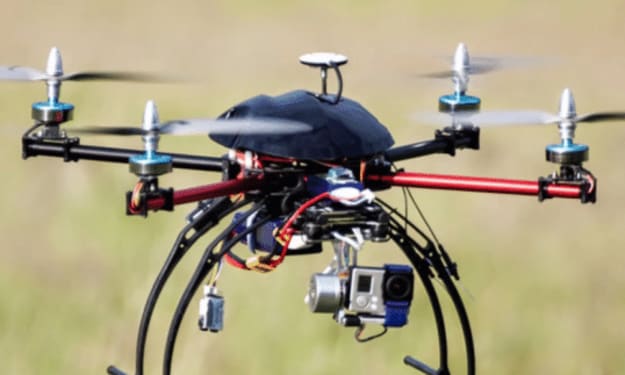
Human drone makes its first flight to Mars! What core technologies did you use to hover at a height of 3 meters for 30 seconds?
A piece of good news came from the Jet Propulsion Laboratory, a subsidiary of NASA in the United States, that the Witness drone carried by the Perseverance rover made its maiden flight.
By sondra mallen3 years ago in Earth
Supreme Court to Review Monsanto’s Bid for Immunity in Roundup Lawsuits
The U.S. Supreme Court has agreed to review Monsanto’s appeal seeking immunity from lawsuits related to its popular herbicide, Roundup. This decision marks a critical moment for both the company and individuals claiming health damages from the chemical, which contains glyphosate—a substance under scrutiny for potential links to cancer. The review could have wide-reaching implications for corporate accountability, public health, and the legal landscape surrounding chemical products. Background on Roundup and Legal Challenges Roundup, a herbicide produced by Monsanto (now owned by Bayer), has been a staple in agriculture and home gardening for decades. Glyphosate, its active ingredient, was introduced as a highly effective solution for weed control. However, in recent years, scientific studies and lawsuits have raised concerns about its potential carcinogenic effects. Thousands of plaintiffs have claimed that exposure to Roundup caused non-Hodgkin lymphoma and other health issues. Numerous state and federal courts have seen extensive litigation, with some plaintiffs receiving multimillion-dollar verdicts. Monsanto has consistently defended the product, emphasizing that regulatory agencies worldwide have deemed glyphosate safe when used as directed. Monsanto’s Bid for Immunity Monsanto is appealing for legal immunity, arguing that its use of Roundup was regulated and approved by federal agencies, and therefore the company should not be held liable in civil lawsuits. The company contends that federal oversight should preempt individual claims, a legal doctrine known as federal preemption. In essence, Monsanto is asserting that because the Environmental Protection Agency (EPA) has evaluated and permitted glyphosate use, states or courts should not hold the company personally accountable for alleged harm. Why the Supreme Court’s Review Matters The Supreme Court’s decision to hear the case is significant for several reasons: Corporate Accountability: A ruling in favor of Monsanto could strengthen corporate defenses in cases where products are federally regulated, potentially limiting lawsuits against companies producing similar chemicals or pharmaceuticals. Public Health: Plaintiffs and advocacy groups argue that a corporate victory could undermine accountability for harmful products and reduce incentives for companies to rigorously test safety. Legal Precedent: The case could set a nationwide precedent regarding federal preemption, influencing how courts balance regulatory approval with civil liability. The Supreme Court’s interpretation could reshape the legal landscape for product liability and consumer protection in the United States. Stakeholder Perspectives Plaintiffs and Advocacy Groups For those affected by Roundup, the Supreme Court review is a critical opportunity to hold a powerful corporation accountable. Many plaintiffs argue that Monsanto failed to adequately warn users of the potential risks associated with glyphosate exposure. “People shouldn’t have to choose between using a product as intended and risking their health,” says Laura Mitchell, an attorney representing multiple plaintiffs in Roundup lawsuits. “A ruling that shields Monsanto from liability could leave victims without recourse.” Advocacy groups, such as environmental and cancer prevention organizations, emphasize that transparency and accountability are essential, particularly for chemicals widely used in agriculture and landscaping. Monsanto and Bayer Monsanto, now part of Bayer, maintains that Roundup is safe when used according to label instructions. Bayer has publicly stated that legal challenges have cost billions but that the company continues to stand behind its products. The firm argues that courts must respect federal regulatory authority to avoid creating conflicting standards between federal law and state-level lawsuits. “If companies could be held liable despite following federal regulations, it would set a concerning precedent for innovation and regulatory compliance,” a Bayer spokesperson said. Broader Implications The Supreme Court review has implications far beyond Monsanto and Roundup: Agricultural Industry: Glyphosate and similar herbicides are widely used in crop production. Legal outcomes could influence labeling, usage guidelines, and liability risk for other companies in agriculture. Consumer Products: The ruling could affect cases involving pharmaceuticals, chemicals, and other regulated products, particularly when federal agencies approve them. Regulatory Authority vs. Civil Liability: The decision may clarify the balance between federal oversight and state-level tort claims, potentially shaping how courts interpret the limits of corporate immunity. Previous Court Decisions Lower courts have issued mixed rulings in Roundup lawsuits. Some courts awarded substantial damages to plaintiffs, while others limited awards or found in favor of Monsanto. These inconsistent outcomes underscore the complexity of balancing scientific evidence, regulatory approval, and legal responsibility. Federal appeals courts have previously sided with both sides in separate cases, making Supreme Court intervention necessary to establish uniform legal standards nationwide. Public and Media Reaction Media coverage of Monsanto’s legal challenges has been extensive, reflecting public concern over chemical safety and corporate responsibility. Many reports highlight the tension between regulatory approvals and individual health claims, questioning whether federal endorsements automatically protect companies from lawsuits. Public sentiment is divided. Supporters of corporate immunity argue that companies need protection to operate and innovate without fear of excessive litigation. Opponents worry that such immunity could prioritize corporate interests over public health. What to Expect The Supreme Court will now evaluate key questions: Does federal regulatory approval preempt state-level claims of harm? Can companies be held liable even if they followed federal guidelines? How should courts balance scientific uncertainty with civil justice? The decision, expected within the next year or two, will be closely watched by lawyers, plaintiffs, corporations, and advocacy groups alike. Conclusion The Supreme Court’s review of Monsanto’s bid for immunity in Roundup lawsuits represents a landmark moment in American legal history. The case has the potential to redefine corporate liability, influence public health policy, and set precedent for future disputes involving federally regulated products. For plaintiffs, the stakes are deeply personal—seeking justice for alleged health impacts caused by widespread chemical exposure. For Monsanto and other corporations, the outcome could determine the limits of accountability in a regulated marketplace. As the Supreme Court deliberates, the nation watches closely, recognizing that the ruling will resonate far beyond Monsanto, affecting consumers, companies, and the broader debate over safety, regulation, and responsibility in the United States.
By Muhammad Hassanabout 15 hours ago in Earth
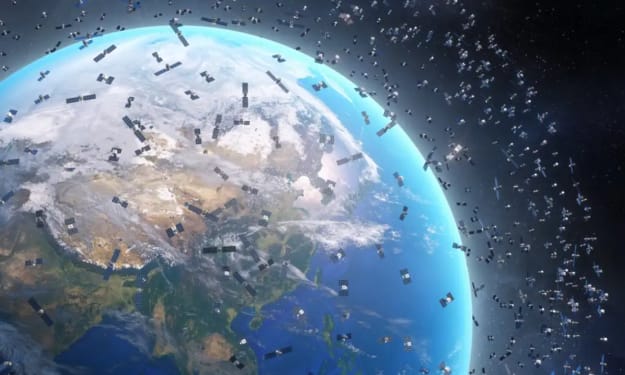
China’s Ambitious Satellite Plan: 200,000 Satellites and Counting
China has submitted an astonishing application to the International Telecommunication Union (ITU) to launch 200,000 satellites over the coming years. To put this into perspective, the entire world currently operates far fewer than this number. Even SpaceX’s Starlink project, one of the largest satellite networks globally, has plans for around 42,000 satellites. China’s proposal signals an unprecedented escalation in space activity and raises important questions: what are these satellites for, and what implications do they hold for global technology, security, and the environment? The Purpose Behind the Numbers At first glance, launching 200,000 satellites may seem excessive, but China’s goals are strategic and multifaceted. Experts suggest that these satellites could serve several purposes: 1. Global Internet Coverage China is aiming to build a massive low-Earth orbit (LEO) satellite network, similar to Starlink and OneWeb. By positioning thousands of satellites closer to Earth, they can provide high-speed internet to remote regions, rural areas, and even ships or aircraft in the oceans. This could help China expand its digital influence globally, offering connectivity in areas where traditional internet infrastructure is weak or non-existent. 2. Enhanced Military and Surveillance Capabilities A satellite network of this scale is also a game-changer for defense and surveillance. Satellites can monitor troop movements, track ships, and provide early warning systems. China’s military has been investing heavily in space-based technology, and these satellites could be a crucial part of modernizing its intelligence, surveillance, and reconnaissance (ISR) capabilities. 3. Scientific Research and Earth Observation Some of these satellites may be dedicated to Earth observation, collecting data on climate, agriculture, natural disasters, and urban development. With thousands of satellites constantly orbiting the planet, China could achieve near real-time monitoring of environmental changes and resource management, giving scientists and policymakers an unprecedented level of insight. 4. Competition in the Commercial Space Sector China’s plan is not purely for government use. The commercial potential of satellite networks is massive, from providing satellite internet services to supporting the burgeoning space economy. Companies under Chinese state and private ownership could leverage this infrastructure to offer services domestically and internationally, challenging Western tech giants in global space markets. The Scale of the Ambition Launching 200,000 satellites is not just ambitious; it’s historic. If approved and executed, China would operate more satellites than all other countries combined, fundamentally reshaping how space is utilized. However, there are serious logistical challenges. Manufacturing, launching, and maintaining hundreds of thousands of satellites requires enormous resources, advanced technology, and careful orbital planning to avoid collisions. China has made major progress in its space launch capacity, with frequent missions through the Long March rocket family and ongoing developments at the Wenchang and Jiuquan Spaceports. Yet, sustaining such a colossal fleet will test even the most advanced space programs. Global Implications The potential consequences of China’s satellite plan are profound, both technologically and geopolitically. 1. Space Traffic Management A network of 200,000 satellites could drastically increase the risk of collisions in orbit. Space debris is already a growing concern, and introducing tens of thousands of new satellites may exacerbate this problem. International cooperation and sophisticated traffic management systems will be essential to prevent catastrophic accidents in space. 2. Geopolitical Tensions China’s space ambitions may intensify global rivalry in space technology, particularly with the United States, Europe, and other spacefaring nations. Control over satellite networks can translate into strategic advantages, from military surveillance to dominance in global communications infrastructure. This may lead to a new phase of space competition reminiscent of the Cold War’s space race. 3. Impact on Astronomy Astronomers have already expressed concern over satellite mega-constellations interfering with observations. Thousands of bright satellites moving across the night sky can distort telescope images and hinder research into deep space phenomena. If China proceeds with 200,000 satellites, the challenge to professional and amateur astronomers will be enormous. 4. Global Connectivity Revolution On the positive side, if managed responsibly, China’s satellite network could revolutionize global connectivity, bringing internet access to millions of people who currently have none. It could accelerate digital development in underserved regions, support education, and foster global commerce in unprecedented ways. Regulatory Hurdles The ITU regulates global satellite usage, including frequency allocation and orbital slots. For China to launch 200,000 satellites, it must secure approval from the ITU, which evaluates whether such an immense network could interfere with other countries’ satellites or violate international agreements. This is not a mere formality—approval for a project of this scale could take years and may require negotiations with multiple nations. Conclusion: A Bold Step Toward the Future China’s application to launch 200,000 satellites is a bold statement about the future of space and global technology. It reflects the country’s ambition to dominate in digital infrastructure, military capability, and commercial space enterprise. While challenges abound—from space debris and regulatory hurdles to geopolitical tensions—the potential benefits are significant, particularly for connectivity and scientific advancement. As the world watches China’s next steps, one thing is clear: the age of satellite mega-constellations is here. How humanity navigates the risks and rewards of this new frontier will shape the future of communication, security, and our presence in space for decades to come.
By Muhammad Hassan2 days ago in Earth


Comments
There are no comments for this story
Be the first to respond and start the conversation.