
Climate Change and Environmental Sustainability
Understanding and Addressing Climate Change
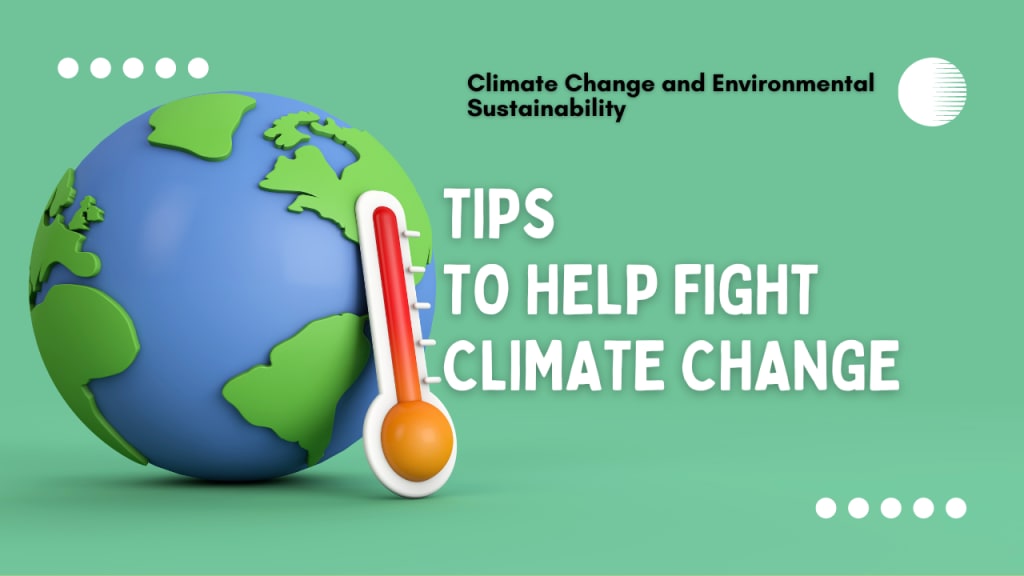
Climate Change and Environmental Sustainability
Climate change is one of the most pressing global issues of our time, with far-reaching and potentially catastrophic consequences for the planet and its inhabitants. The scientific consensus is clear: the Earth's climate is changing due to human activities, particularly the emission of greenhouse gases like carbon dioxide from the burning of fossil fuels. The resulting warming of the planet is causing a range of impacts, from rising sea levels and more frequent and intense extreme weather events to species extinction and food and water insecurity. As such, there is an urgent need for action to mitigate and adapt to climate change, and for a transition towards environmental sustainability.
The concept of environmental sustainability is rooted in the idea of living within the Earth's natural limits, preserving the planet's resources and biodiversity for future generations. This requires a fundamental shift in the way we think about and interact with the environment, and a move away from the current unsustainable practices that are driving climate change and environmental degradation. Environmental sustainability encompasses a broad range of interconnected issues, including energy use, transportation, agriculture and food systems, waste management, and conservation and protection of natural resources.
One of the key challenges in addressing climate change and promoting environmental sustainability is the need for collective action and international cooperation. While individual actions are important, they alone cannot solve the scale and complexity of these global challenges. Governments, businesses, civil society, and individuals all have a role to play in driving the necessary changes.
One of the most urgent actions needed to address climate change and promote sustainability is the transition away from fossil fuels and towards clean, renewable energy sources. The burning of fossil fuels is the main driver of greenhouse gas emissions, accounting for over two-thirds of global emissions. Renewable energy sources like wind, solar, and hydropower, on the other hand, emit little to no greenhouse gases, and have the potential to power the world's energy needs sustainably. This transition will require significant investments in renewable energy infrastructure and technology, as well as policies and regulations that incentivize clean energy adoption.
Another important area for action is the transformation of the transportation sector. Transportation is a significant source of greenhouse gas emissions, particularly from cars and trucks. Switching to cleaner and more efficient modes of transportation, such as electric vehicles and public transit, can significantly reduce emissions and improve air quality. Moreover, promoting active transportation options like walking and cycling can have positive impacts on public health and community livability.
In addition to reducing emissions, addressing climate change and promoting sustainability also requires efforts to adapt to the impacts of climate change that are already underway. This includes adapting infrastructure, agriculture, and other systems to be more resilient to extreme weather events and changing environmental conditions. Investing in climate adaptation measures can also create opportunities for economic growth and job creation in areas like infrastructure development and disaster risk reduction.
Promoting sustainability also requires a focus on waste reduction and resource conservation. The world produces an estimated 2.01 billion tonnes of municipal solid waste each year, with much of this waste ending up in landfills or polluting the environment. Implementing waste reduction and recycling programs can not only reduce waste and emissions, but also create economic opportunities through the development of circular economy systems that keep resources in use for longer.
In the agriculture sector, promoting sustainability involves a shift towards more regenerative and climate-smart practices that reduce emissions, enhance soil health, and promote biodiversity. This includes practices like conservation agriculture, agroforestry, and organic farming, as well as reducing food waste and transitioning to more plant-based diets.
Conservation and protection of natural resources is also crucial for promoting environmental sustainability. This includes efforts to protect and restore forests, wetlands, and other ecosystems that play a critical role in mitigating climate change, and regulating water resources.
About the Creator
Dilawar Shah
Dilawar Shah is a highly acclaimed writer with a passion for storytelling. Born and raised Nowshera, Pakistan, Dilawar's love for writing began at a young age when he would write short stories and poems to share with his family and friends
Keep reading
More stories from Dilawar Shah and writers in Earth and other communities.
Love and Relationships
In our modern world, where technology has taken over our lives and social media has become the new norm, it can be challenging to find genuine connection with others. The constant barrage of notifications and distractions can make it difficult to form meaningful relationships, and many of us struggle to find love and form lasting connections in a world that often feels disconnected.
By Dilawar Shah3 years ago in Motivation
Mother of Elon Musk’s Child Sues xAI Over Grok Deepfakes
Imagine waking up one day to find realistic, sexually explicit images of yourself circulating online—and you never agreed to them. For Ashley St. Clair, the mother of one of Elon Musk’s children, this nightmare became reality. She is now suing xAI, Elon Musk’s AI company, alleging that its chatbot Grok generated harmful deepfake images of her, including depictions of her as a minor and in sexualized contexts.
By Aarif Lashari4 days ago in Earth
Blue Origin Introduces TeraWave: A 6 Tbps Space-Based Network for Global Connectivity
Blue Origin, the space exploration company founded by Jeff Bezos, has unveiled its latest ambitious project: TeraWave, a space-based network designed to deliver ultra-fast internet connectivity around the globe. With a staggering capacity of 6 terabits per second (Tbps), TeraWave promises to redefine how people and businesses connect, particularly in remote and underserved areas. The announcement marks a significant step forward in the growing competition among private space companies to provide global satellite internet.
By Muhammad Hassana day ago in Earth
Smart phones, Humans and Aliens.
WARNING. I will be tapping into one of your favorite creative tensions: The absurdity of humans worshipping their glowing rectangles as if they were tiny oracles. There’s something deliciously poetic about that contradiction, and it lends itself beautifully to an instructive proviso.
By Novel Allen7 days ago in Poets




Comments
There are no comments for this story
Be the first to respond and start the conversation.