
China Tests a Giant 5,000-Square-Meter Kite That Generates Clean Energy — A New Leap in High-Altitude Power
Kite for clean energy


As the world races toward cleaner and more sustainable energy solutions, China has once again captured global attention with an unprecedented experiment: a giant 5,000-square-meter power-generating kite capable of harvesting wind energy from high altitudes. This innovative platform—larger than many commercial billboards and wider than some aircraft wings—marks a bold step into the future of renewable power.
Recently tested in Inner Mongolia, the kite is part of a major national research project exploring “high-altitude wind energy,” a field that many scientists believe could unlock one of the world’s largest untapped renewable resources. Unlike traditional wind turbines that rely on relatively unpredictable ground-level winds, this kite operates hundreds of meters above the earth, where the air is thinner, winds are steadier, and energy potential is dramatically greater.
---
How the Giant Power-Kite Works
At the start of each test, the 5,000-square-meter kite is lifted into the sky using a massive helium balloon system. Once it reaches an altitude of around 300 meters, it automatically deploys into its full wing-like shape. Strong winds at that height pull the kite forward, and the tension on its tether turns ground-based generators—producing clean, renewable electricity.
The test also involved two smaller 1,200-square-meter kites, which together formed a coordinated flight array. According to the engineering team behind the project, this combination helps stabilize the system and maximize the traction forces required for optimal power generation.
Imagine a wind turbine—but without a tower, blades, or heavy foundation. Instead, imagine a flying wing harnessing powerful upper-atmosphere winds and sending energy down through a cable. That’s the promise of this technology.
---
Why High-Altitude Wind Energy Matters
Scientists have long known that the strongest and most consistent winds on Earth blow far above the reach of modern wind turbines. These high-altitude winds are a vastly underutilized resource, estimated to hold more than 20 times the total energy humanity currently consumes.
China’s research team highlights several major advantages of kite-based wind systems:
1. Up to 95% Less Land Usage
Unlike sprawling wind farms or solar installations, these kites require minimal ground space. The entire system relies on a small base station, making it ideal for remote desert regions, mountains, and even offshore platforms.
2. 90% Less Steel
Traditional turbines rely on massive steel towers. This kite system eliminates the need for those expensive structures, reducing material use and lowering environmental impact.
3. Lower Energy Costs
Early estimates suggest the technology could reduce electricity production costs by up to 30%, especially when deployed at large scales.
4. Round-the-Clock Power Potential
High-altitude winds are more stable, meaning the kite could generate energy even during times when traditional turbines remain idle.
---
A Step Toward China’s Clean-Energy Future
This project reflects China’s growing commitment to renewable energy innovation. The country already leads the world in wind and solar capacity, but tapping into high-altitude winds could push clean power generation far beyond current limits.
A fully developed version of this technology could enable:
Off-grid power for remote regions
Large-scale clean energy production for industrial use
Offshore floating systems with minimal environmental footprint
Portable renewable-energy solutions for disaster relief
Researchers say a 10-megawatt kite array—a realistic future goal—could generate around 20 million kilowatt-hours per year, enough to supply electricity for over 10,000 households.
---
The Challenges Ahead
Of course, the technology is still in experimental stages. Engineers need to address several critical questions:
How will the kite withstand extreme weather over long periods?
What safety measures are needed to prevent tether failures?
How will maintenance and automated retrieval systems work at scale?
Can the system operate efficiently in different climates?
These challenges are significant—but so is the potential payoff.
---
A Glimpse Into the Future of Renewable Power
With this test, China has demonstrated not just an engineering achievement, but a vision for a new era of clean energy. The idea of generating electricity from enormous airborne kites might sound like science fiction, but it’s now a real and operational concept.
If future trials confirm its safety, performance, and cost-effectiveness, this technology could complement or even transform current wind-energy strategies worldwide.
High-altitude wind is one of Earth’s last great clean-energy frontiers—and China’s giant kite may have just opened the door.
About the Creator
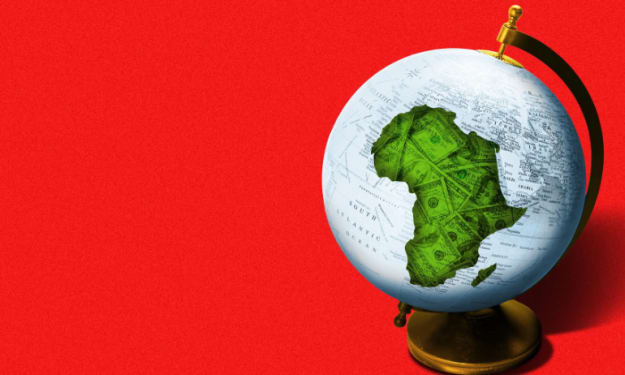
Inside Trump's $11 Billion Health Plan to Replace “Neo-Colonial” USAID
In the landscape of global health aid, few proposals have stirred as much debate as former President Donald Trump’s ambitious plan to restructure American assistance abroad. Dubbed an $11 billion health initiative aimed at replacing USAID’s current framework, the plan seeks to pivot away from what Trump and his allies have criticized as the “neo-colonial” approach of U.S. foreign aid. While the plan promises greater efficiency and impact, experts are split on whether it is a practical solution or a politically driven gamble. Trump’s Critique of USAID The United States Agency for International Development (USAID) has long been a central pillar of American foreign assistance, distributing billions in aid annually to address health crises, food insecurity, and development challenges worldwide. However, Trump’s administration and its supporters have often described USAID’s approach as bureaucratic, inefficient, and reflective of a “neo-colonial” mindset. In public statements, Trump argued that the U.S. was spending taxpayer dollars on programs that benefited foreign governments or contractors more than the intended local communities. Critics of the plan say that while USAID has flaws—as any large bureaucracy does—its extensive networks and decades of experience provide an unmatched capacity to deliver aid efficiently and safely. The Core of the $11 Billion Proposal At the heart of Trump’s proposal is an $11 billion fund designed to consolidate, modernize, and streamline U.S. health aid. Unlike the traditional USAID model, which relies heavily on long-term partnerships with governments and NGOs, the new plan emphasizes: Direct Impact Funding: Allocating resources to frontline health workers and local initiatives rather than intermediaries. Data-Driven Investments: Using real-time health data to target outbreaks and crises more efficiently. Private Sector Partnerships: Leveraging U.S. pharmaceutical companies, tech firms, and healthcare startups to deliver vaccines, treatments, and medical infrastructure. Shorter Program Cycles: Moving away from multi-year funding commitments in favor of more flexible, results-oriented programs. Proponents argue that this approach could reduce bureaucratic overhead and ensure U.S. aid reaches communities faster. By “cutting out the middlemen,” Trump supporters claim, America can avoid the pitfalls of slow-moving aid programs that sometimes fail to adapt to crises. Reactions from the Global Health Community Global health experts, however, have expressed concern about both the logistics and philosophy of the plan. Dr. Melissa Ortega, a senior researcher at the Global Health Policy Institute, explained, “The idea of bypassing established structures like USAID may sound appealing on paper, but in practice, it risks undermining decades of institutional knowledge. Health systems are complex, and short-term projects cannot replace long-term capacity building.” Some critics have also questioned the characterization of USAID as “neo-colonial.” While U.S. foreign aid has historically been tied to geopolitical interests, many programs today are designed collaboratively with recipient countries and local organizations. Reducing oversight could unintentionally increase the risk of misuse, corruption, or health inequities. On the other hand, supporters of Trump’s plan point to examples of inefficiency in USAID programs, citing cases where aid was delayed or mismanaged. By introducing more direct funding models, they argue, U.S. taxpayer dollars could achieve a higher “return on health outcomes.” Political Implications Trump’s health aid overhaul proposal is not just about international development—it is also deeply political. Framing USAID as a “neo-colonial” institution resonates with a populist narrative that America should prioritize its own citizens and assert greater control over how taxpayer money is spent abroad. Domestically, the $11 billion plan faces scrutiny from Congress. Lawmakers from both parties have questioned whether dismantling USAID’s systems could destabilize ongoing health programs in countries where the U.S. has long-term commitments. The potential impact on global health security—including the fight against pandemics like COVID-19—adds another layer of concern. Internationally, U.S. allies and partner nations are watching closely. Sudden shifts in aid delivery could disrupt health programs in low- and middle-income countries, many of which rely on predictable funding cycles to maintain vaccination campaigns, maternal health services, and disease surveillance. Possible Benefits and Risks If executed carefully, the Trump-backed model could bring several benefits: Faster Response Times: Direct funding could accelerate delivery of vaccines, treatments, and emergency support. Innovation Boost: By partnering with private sector companies, the plan could accelerate development of new health technologies. Accountability: With performance-based metrics, the plan may better measure the impact of U.S. aid. However, the risks are equally significant: Disruption of Existing Programs: Abrupt changes could destabilize ongoing health projects. Loss of Expertise: USAID’s decades of experience in navigating local governance, supply chains, and community engagement may be hard to replace. Geopolitical Fallout: Allies accustomed to collaborating with USAID might see the move as destabilizing, reducing cooperation on global health initiatives. Looking Ahead As Trump and his allies continue to advocate for this $11 billion overhaul, the debate over the future of U.S. health aid is intensifying. Proponents view it as a necessary modernization of an outdated system, while critics fear it could undercut decades of carefully built infrastructure and global partnerships. Ultimately, the success of this plan will hinge on its ability to balance efficiency with stability, innovation with oversight, and political objectives with humanitarian needs. For now, the proposal remains controversial, representing a dramatic departure from traditional approaches to U.S. foreign aid. Whether it will reshape global health for the better—or simply create more uncertainty—remains to be seen. In the end, the Trump health plan is as much about ideology as it is about dollars. It challenges the conventional wisdom of international development and asks whether a more streamlined, results-focused approach can truly replace a system built over decades. As the world watches, the stakes could not be higher: the future of U.S. global health aid—and the lives it touches—hangs in the balance.
By Muhammad Hassan5 days ago in Earth
Nitrogen is necessary for young tropical rain forests to combat climate change.
By absorbing carbon dioxide from the atmosphere and storing it in wood, tropical rainforests contribute to the slowing of climate change. Forests that develop quickly are even more important because they absorb carbon more quickly.
By Francis Dami4 days ago in Earth



Comments
There are no comments for this story
Be the first to respond and start the conversation.