
Chichén Itzá
Exploring the History, Culture, and Engineering Marvels of Chichén Itzá, Mexico's Iconic Archaeological Site.

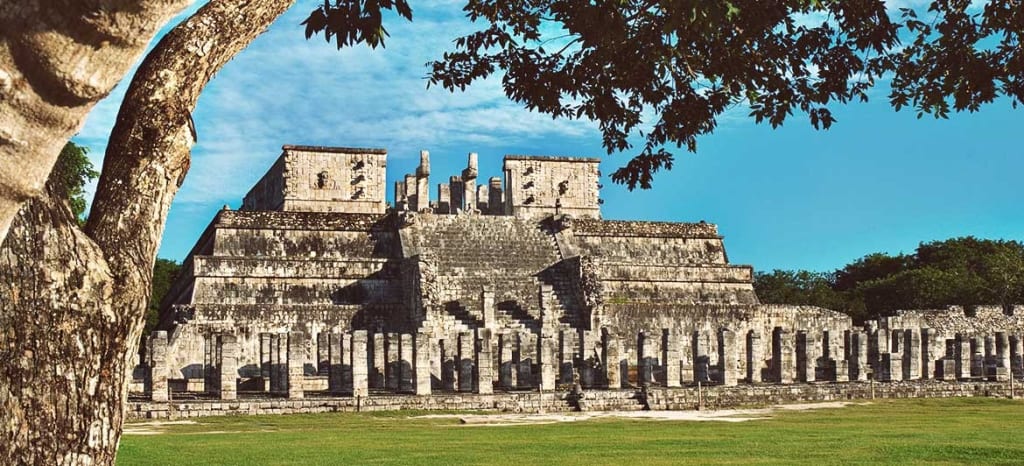
Chichén Itzá is a large and well-known archaeological site located in the Yucatán Peninsula in Mexico. It was one of the major cities of the Maya civilization and was later inhabited by the Toltecs in the 10th century AD.
The site contains a variety of impressive buildings and structures, including the Pyramid of Kukulcan (also known as El Castillo), which is the most famous structure at the site. The pyramid was built by the Maya people and later modified by the Toltecs. It is a four-sided structure with a staircase on each side, and it is believed to have been used for astronomical observations and rituals.
Other notable structures at Chichén Itzá include the Temple of the Warriors, the Great Ball Court, the Platform of the Eagles and Jaguars, and the Caracol, which is an astronomical observatory.
Chichén Itzá was declared a UNESCO World Heritage Site in 1988 and is one of the most popular tourist destinations in Mexico.
Chichén Itzá was an important political and cultural center in Mesoamerica and played a significant role in the development and spread of Mayan and Toltec culture throughout the region. The site covers an area of about 6.5 square kilometers and is believed to have been home to a population of up to 50,000 people at its peak.
One of the most intriguing aspects of Chichén Itzá is its use of advanced engineering and architectural techniques. For example, the Pyramid of Kukulcan is aligned in such a way that during the spring and fall equinoxes, the sun casts a shadow on the pyramid that resembles a serpent slithering down the staircase. This phenomenon is known as the "serpent of light" and attracts thousands of visitors to the site every year.
Another notable structure at Chichén Itzá is the Great Ball Court, which is the largest ball court in Mesoamerica. The court is 168 meters long and 70 meters wide and was used for a ritual game known as "pok-a-tok". The game involved two teams attempting to score points by getting a rubber ball through a stone hoop on the wall of the court. The game was highly symbolic and was believed to have religious significance.
Chichén Itzá was abandoned by the Maya people in the 13th century, likely due to a combination of political instability and environmental factors such as drought. The site was rediscovered by Spanish conquistadors in the 16th century, and archaeological work at the site began in the 19th century.
Today, Chichén Itzá is a popular tourist destination and attracts millions of visitors each year. Visitors can explore the site's many buildings and structures, as well as learn about the history and culture of the Maya and Toltec people who once inhabited the area.
In addition to the impressive structures and engineering feats, Chichén Itzá also has a rich cultural and religious history. The site contains many sculptures, carvings, and other works of art that reflect the beliefs and practices of the Maya and Toltec cultures.
One such example is the Temple of the Warriors, which is a large complex of buildings that includes a large statue of Chac Mool, a pre-Columbian deity. The temple was likely used for religious ceremonies and was dedicated to the god of war and the planet Venus.
Another notable structure is the Platform of the Eagles and Jaguars, which is a low-lying platform that features numerous stone carvings of eagles and jaguars. The platform is believed to have been used for ceremonies involving the sacrifices of animals or humans, although this has not been definitively proven.
Chichén Itzá is also home to a large cenote, which is a natural sinkhole that was believed to be sacred to the Maya people. Cenotes were often used for water storage and as a source of fresh water, but they were also believed to be portals to the underworld and were used for religious ceremonies and sacrifices.
Overall, Chichén Itzá is a fascinating site that offers a glimpse into the rich history and culture of Mesoamerica. Its impressive structures, advanced engineering techniques, and rich artistic and religious traditions make it a must-see destination for anyone interested in archaeology, history, and culture.
About the Creator
Nature’s Hidden Gems: Discovering the Rarest Flowers on Earth
Introduction: When Beauty Meets Rarity Nature is filled with wonders, but few are as captivating—and as elusive—as the rarest flowers on Earth. From enormous parasitic blooms to delicate orchids that appear only under precise conditions, these plants challenge our understanding of survival, evolution, and beauty.
By Ahmed aldeabella5 days ago in Earth
Verizon Outage Today
A sudden Verizon outage can feel unsettling, especially when your phone switches to “SOS” or “emergency calls only” without warning. Across social media and outage-tracking platforms, users often rush to ask the same questions: Is Verizon down right now? Why is my phone in SOS mode? What happened to Verizon today, and when will Verizon be back up? While outages are never convenient, they are not uncommon for large national carriers like Verizon Wireless. Understanding what a Verizon service outage means—and how to respond—can help reduce confusion during moments when connectivity disappears. Is Verizon Down? Understanding Service Outages A Verizon wireless outage occurs when part of Verizon’s cellular or data network becomes unavailable. This can affect voice calls, text messages, mobile data, or all services at once. Some outages are isolated to specific cities, such as Verizon outage NYC, Atlanta, Houston, or New Jersey, while others expand into a broader Verizon nationwide outage. When service is disrupted, users commonly report: Verizon down today Verizon network down Verizon not working Is Verizon down in my area? Verizon service outage These reports often surface within minutes, especially on outage-monitoring platforms. Why Does My Phone Say SOS? One of the most alarming signs during a Verizon outage today is seeing SOS, SOS only, or emergency calls only at the top of an iPhone. This leads many to ask, “Why is my phone in SOS mode Verizon?” SOS mode does not mean your phone is broken. It indicates that your device cannot connect to the Verizon network but can still place emergency calls using any available carrier signal. Common searches during outages include: Why does my phone say SOS only? iPhone stuck in SOS mode Why is my phone on SOS Verizon? What does SOS mean on iPhone? How to get phone out of SOS mode In most cases, the issue resolves automatically once Verizon restores network connectivity. What Caused the Verizon Outage Today? When connectivity drops, users naturally want immediate answers to what caused the Verizon outage today. Verizon does not always publish technical details right away, but outages are typically linked to: Network maintenance or system upgrades Fiber or backend routing failures Power outages affecting Verizon towers Severe weather or environmental damage Unexpected network congestion Despite online speculation, most Verizon outages are not related to cyberattacks. Searches like “Verizon cyber attack today” often trend during disruptions, but confirmed causes are usually infrastructure-related and temporary. How to Check Verizon Outage Status in Real Time If you’re wondering “Is Verizon still down?”, there are several reliable ways to check. Downdetector Verizon Platforms like Downdetector and Down Detector Verizon track real-time user reports. A spike in complaints usually confirms a Verizon outage before official statements are released. Verizon Outage Map Verizon provides a Verizon wireless outage map, sometimes including outage views by ZIP code. This helps answer questions like: Is there a Verizon outage near me? Is Verizon down in my area? My Verizon App and Network Status Pages The My Verizon app and Verizon’s official network status tools may display service alerts and updates during larger outages. Verizon Customer Service During an Outage During a widespread Verizon service outage, many users attempt to call Verizon customer service or search for the Verizon customer service number. While support teams remain active, wait times often increase significantly during major disruptions. Important things to keep in mind: Customer service representatives usually cannot provide exact repair timelines Rebooting your phone repeatedly during an outage rarely helps Network restoration often happens region by region Monitoring Verizon outage updates is typically more effective than calling support during peak outage periods. When Will Verizon Be Back Up? The most pressing question remains: When will Verizon service be restored? The answer depends on: Whether the outage is local or nationwide The cause of the disruption Whether physical repairs are required Minor outages may resolve within minutes or hours. Larger incidents—such as a Verizon cellular outage affecting multiple states—can take longer. Verizon generally prioritizes emergency communications before restoring full voice and data services. Search trends during outages often include: When will Verizon be fixed? How long will Verizon be down? When is Verizon going to be back up? While exact times are rarely guaranteed, service usually returns gradually rather than all at once. Verizon, Competition, and Broader Impact High-profile outages often spark comparisons with competitors like AT&T and T-Mobile. Searches for AT&T outage or T-Mobile outage frequently rise at the same time, as users explore alternative networks. Although outages generate headlines and social media frustration, they rarely have lasting effects on Verizon stock unless disruptions become frequent or prolonged. What to Do If Your Phone Is in SOS Mode If your phone shows SOS only during a Verizon outage: Enable Wi-Fi calling if available Avoid changing SIM or resetting network settings mid-outage Keep your device charged and updated Check Verizon outage updates periodically Once Verizon’s network stabilizes, most phones exit SOS mode automatically. Final Thoughts A Verizon outage can be disruptive, especially when communication suddenly feels out of reach. However, seeing SOS mode does not mean your phone is damaged—it simply reflects a temporary network issue. Staying informed through trusted sources like Downdetector, Verizon’s outage maps, and official Verizon updates can help users navigate these moments with clarity. While outages are frustrating, they are typically temporary, and service restoration is usually a matter of time rather than cause for alarm.
By Saboor Brohi 6 days ago in Earth



Comments
There are no comments for this story
Be the first to respond and start the conversation.