
Challenging the Status Quo: Himba Youth in Namibia Call for Change in Drought Relief Programme
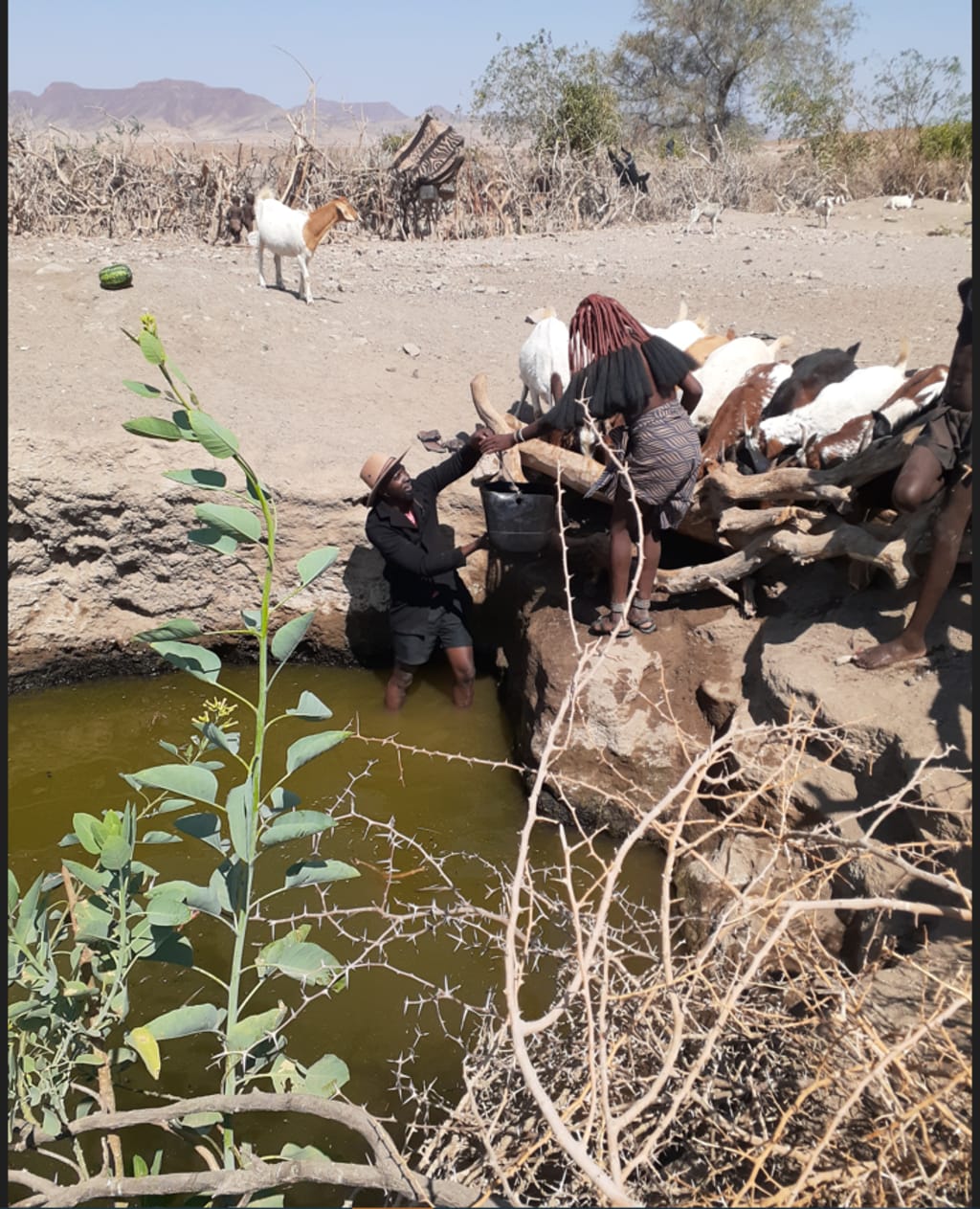
Kunene Region anticipates another period of extreme drought.
Introduction:
Namibia, a vast and arid land in south western Africa, has been grappling with the devastating effects of recurrent droughts. The Himba people, a semi-nomadic indigenous community residing in the country's northern regions, have long endured the hardships brought about by these dry spells. As the consequences of climate change intensify, the Himba youth are stepping forward, determined to challenge the status quo and demand a more effective and inclusive approach to the government's drought relief programme. In this article, we will delve into the plight of the Himba people, explore the issues surrounding the existing drought relief efforts, and highlight the actions and aspirations of the Himba youth as they strive for change.
Historical Context and the Plight of the Himba:
The Himba people have a rich cultural heritage deeply intertwined with their pastoral lifestyle, living off the land and their livestock. However, with the increasing frequency and severity of droughts, their traditional way of life has been severely disrupted. Water scarcity and the resultant loss of livestock have eroded their livelihoods, leading to food insecurity and economic vulnerability. The Himba youth, witnessing their community's struggle, have recognized the urgent need for change and have chosen to challenge the existing drought relief programme.
Issues with the Existing Drought Relief Programme:
The Namibian government, acknowledging the severity of the situation, has implemented drought relief programmes to provide assistance to affected communities. However, the Himba youth argue that these initiatives fall short in addressing their unique needs and fail to effectively include their voices in the decision-making process. They assert that the current relief efforts are characterized by a top-down approach, lacking in cultural sensitivity, and often result in inadequate distribution of resources.
The Call for Change:
The Himba youth are demanding a fundamental shift in the government's approach to drought relief. They emphasize the importance of inclusivity and the need to involve the Himba community in the design and implementation of the programmes. They argue that the Himba people possess invaluable traditional knowledge and sustainable practices that should be integrated into any long-term solution. Moreover, they stress the importance of gender equality, as women play a central role in Himba society and should have a prominent voice in decision-making processes.
Youth-Led Initiatives and Empowerment:
In their pursuit of change, the Himba youth have taken up various initiatives to amplify their voices and advocate for their community. They have formed youth-led organizations, organized protests, engaged in dialogue with government officials, and utilized social media platforms to raise awareness about their cause. These efforts not only empower the Himba youth but also serve as a catalyst for broader societal change, sparking conversations about indigenous rights, climate justice, and the need for sustainable development.
Collaboration and Partnerships:
Recognizing the significance of collaboration, the Himba youth have sought partnerships with local and international organizations, academic institutions, and NGOs. These alliances enable them to access resources, knowledge, and expertise that can strengthen their advocacy efforts. By forging these alliances, the Himba youth are transcending geographical boundaries and fostering a global network of support for their cause.
Vision for the Future:
The Himba youth envision a future where their community is resilient in the face of droughts. They aspire for sustainable development that balances modern techniques with traditional wisdom. They advocate for the implementation of climate-smart strategies, such as water harvesting, drought-resistant crop cultivation, and alternative livelihood options. They strive for the recognition and protection of their cultural heritage and the preservation of their ancestral lands. Ultimately, their vision is one of self-determination, where the Himba people actively participate in shaping their own destiny.
Conclusion:
The Himba youth of Namibia are challenging the status quo and calling for a transformative change in the government's drought relief programme. Through their determination, advocacy, and collaborative efforts, they are shedding light on the shortcomings of the existing initiatives and demanding a more inclusive and sustainable approach. As we navigate an increasingly uncertain climate future, it is crucial to heed their call and ensure that indigenous communities like the Himba are at the forefront of decision-making processes. Only by embracing their wisdom and perspectives can we build a resilient and equitable future for all.
About the Creator
Koruhama Kahuhu Alphons
Mr. Koruhama, being an indigenous OmuHimba youth himself, not only pursues the development of technologies to preserve Indigenous Knowledge but also acts as a mediator, facilitator and translator in many of the community interactions.
Keep reading
More stories from Koruhama Kahuhu Alphons and writers in Earth and other communities.
Fulfilling the Promise: Paramount Chief Prof Mutjinde Katjiua Adopts New Constitution for Ovaherero Traditional Authority Chiefs Council at Hosea Kutako Homestead
In a historic move, the Ovaherero Traditional Authority Chiefs Council has adopted a new constitution to govern their traditional affairs. This significant event marks the first time in over a century that the council has updated its governing framework since its establishment in 1863.
By Koruhama Kahuhu Alphons3 years ago in History
Nature’s Hidden Gems: Discovering the Rarest Flowers on Earth
Introduction: When Beauty Meets Rarity Nature is filled with wonders, but few are as captivating—and as elusive—as the rarest flowers on Earth. From enormous parasitic blooms to delicate orchids that appear only under precise conditions, these plants challenge our understanding of survival, evolution, and beauty.
By Ahmed aldeabella5 days ago in Earth
Verizon Outage Today
A sudden Verizon outage can feel unsettling, especially when your phone switches to “SOS” or “emergency calls only” without warning. Across social media and outage-tracking platforms, users often rush to ask the same questions: Is Verizon down right now? Why is my phone in SOS mode? What happened to Verizon today, and when will Verizon be back up? While outages are never convenient, they are not uncommon for large national carriers like Verizon Wireless. Understanding what a Verizon service outage means—and how to respond—can help reduce confusion during moments when connectivity disappears. Is Verizon Down? Understanding Service Outages A Verizon wireless outage occurs when part of Verizon’s cellular or data network becomes unavailable. This can affect voice calls, text messages, mobile data, or all services at once. Some outages are isolated to specific cities, such as Verizon outage NYC, Atlanta, Houston, or New Jersey, while others expand into a broader Verizon nationwide outage. When service is disrupted, users commonly report: Verizon down today Verizon network down Verizon not working Is Verizon down in my area? Verizon service outage These reports often surface within minutes, especially on outage-monitoring platforms. Why Does My Phone Say SOS? One of the most alarming signs during a Verizon outage today is seeing SOS, SOS only, or emergency calls only at the top of an iPhone. This leads many to ask, “Why is my phone in SOS mode Verizon?” SOS mode does not mean your phone is broken. It indicates that your device cannot connect to the Verizon network but can still place emergency calls using any available carrier signal. Common searches during outages include: Why does my phone say SOS only? iPhone stuck in SOS mode Why is my phone on SOS Verizon? What does SOS mean on iPhone? How to get phone out of SOS mode In most cases, the issue resolves automatically once Verizon restores network connectivity. What Caused the Verizon Outage Today? When connectivity drops, users naturally want immediate answers to what caused the Verizon outage today. Verizon does not always publish technical details right away, but outages are typically linked to: Network maintenance or system upgrades Fiber or backend routing failures Power outages affecting Verizon towers Severe weather or environmental damage Unexpected network congestion Despite online speculation, most Verizon outages are not related to cyberattacks. Searches like “Verizon cyber attack today” often trend during disruptions, but confirmed causes are usually infrastructure-related and temporary. How to Check Verizon Outage Status in Real Time If you’re wondering “Is Verizon still down?”, there are several reliable ways to check. Downdetector Verizon Platforms like Downdetector and Down Detector Verizon track real-time user reports. A spike in complaints usually confirms a Verizon outage before official statements are released. Verizon Outage Map Verizon provides a Verizon wireless outage map, sometimes including outage views by ZIP code. This helps answer questions like: Is there a Verizon outage near me? Is Verizon down in my area? My Verizon App and Network Status Pages The My Verizon app and Verizon’s official network status tools may display service alerts and updates during larger outages. Verizon Customer Service During an Outage During a widespread Verizon service outage, many users attempt to call Verizon customer service or search for the Verizon customer service number. While support teams remain active, wait times often increase significantly during major disruptions. Important things to keep in mind: Customer service representatives usually cannot provide exact repair timelines Rebooting your phone repeatedly during an outage rarely helps Network restoration often happens region by region Monitoring Verizon outage updates is typically more effective than calling support during peak outage periods. When Will Verizon Be Back Up? The most pressing question remains: When will Verizon service be restored? The answer depends on: Whether the outage is local or nationwide The cause of the disruption Whether physical repairs are required Minor outages may resolve within minutes or hours. Larger incidents—such as a Verizon cellular outage affecting multiple states—can take longer. Verizon generally prioritizes emergency communications before restoring full voice and data services. Search trends during outages often include: When will Verizon be fixed? How long will Verizon be down? When is Verizon going to be back up? While exact times are rarely guaranteed, service usually returns gradually rather than all at once. Verizon, Competition, and Broader Impact High-profile outages often spark comparisons with competitors like AT&T and T-Mobile. Searches for AT&T outage or T-Mobile outage frequently rise at the same time, as users explore alternative networks. Although outages generate headlines and social media frustration, they rarely have lasting effects on Verizon stock unless disruptions become frequent or prolonged. What to Do If Your Phone Is in SOS Mode If your phone shows SOS only during a Verizon outage: Enable Wi-Fi calling if available Avoid changing SIM or resetting network settings mid-outage Keep your device charged and updated Check Verizon outage updates periodically Once Verizon’s network stabilizes, most phones exit SOS mode automatically. Final Thoughts A Verizon outage can be disruptive, especially when communication suddenly feels out of reach. However, seeing SOS mode does not mean your phone is damaged—it simply reflects a temporary network issue. Staying informed through trusted sources like Downdetector, Verizon’s outage maps, and official Verizon updates can help users navigate these moments with clarity. While outages are frustrating, they are typically temporary, and service restoration is usually a matter of time rather than cause for alarm.
By Saboor Brohi 5 days ago in Earth



Comments
There are no comments for this story
Be the first to respond and start the conversation.