
Building an Artificial Planet
Challenges and Possibilities for Humanity's Future
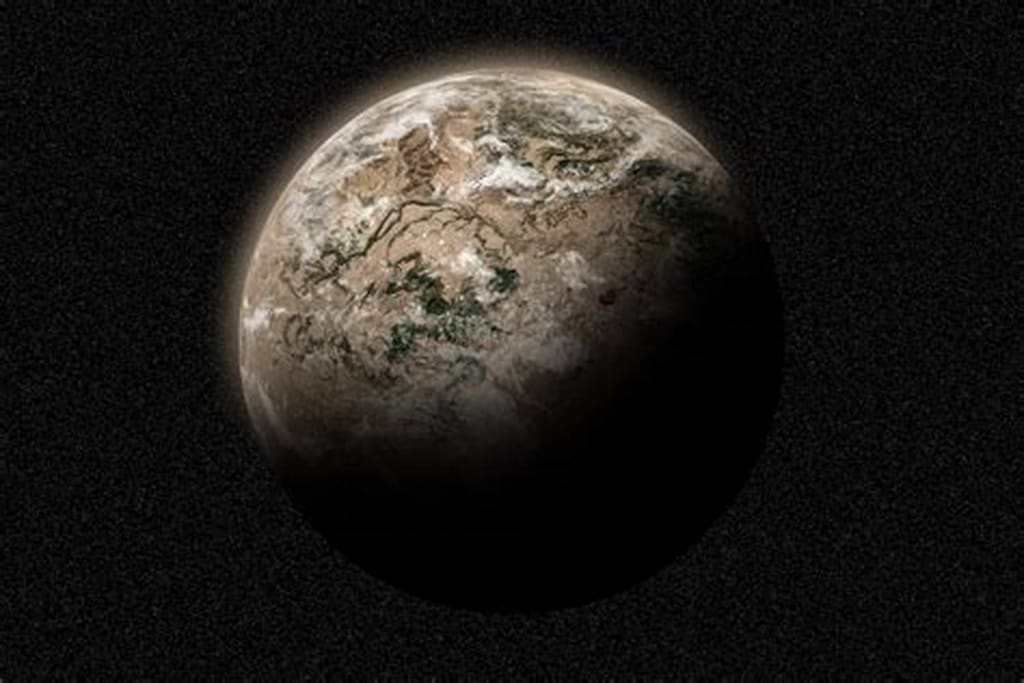
The longevity of Earth as a habitable planet is not guaranteed. Natural disasters like giant meteor impacts or other catastrophic events could one day render our home uninhabitable. As a species, we must consider our options for the future and explore the possibility of building colonies elsewhere in the universe. While space travel presents numerous complexities and uncertainties, the idea of constructing an entirely new planet ourselves has captured the imagination of many. While such concepts are often depicted in science fiction, the practicality of building an artificial planet raises significant challenges. Let us delve deeper into the various aspects and explore the possibilities and limitations of such an endeavor.
Constructing a space station comparable in size to a small moon or planet would require immense engineering feats. A prime example from science fiction is the Death Star, a massive structure estimated to have a diameter of 74 miles, significantly smaller than Earth's 8,000 miles. To construct such a colossal space station, materials weighing approximately one quadrillion tons would be required. Currently, obtaining such an enormous amount of materials is an insurmountable task given our technological limitations. Additionally, the cost would be astronomical, reaching around 852 quadrillion dollars. The logistics of transporting these materials into space also present substantial challenges.
Assuming we could overcome these obstacles and acquire the necessary materials, the construction process itself would be relatively straightforward. Robots could be employed to complete most of the work in low gravity environments. While it would undoubtedly be time-consuming, it would be feasible to move and assemble the materials into place. However, it is worth considering alternative approaches, such as mining materials from existing asteroids in space. Several companies are already exploring the feasibility of asteroid mining, and successful implementation could significantly reduce the cost and complexity of constructing large structures in outer space. Furthermore, the choice of materials is crucial, as the need to create artificial gravity to prevent structural deformation may render traditional materials like steel inadequate. Researchers suggest that carbon-based materials harvested from asteroids may be better suited for the task.
Replicating an actual planet like Earth presents far greater challenges. Earth, with its 4.5 billion-year history, is the result of intricate natural processes and conditions. However, precisely duplicating Earth's characteristics may not be necessary to achieve similar habitable conditions. For example, gravity is closely related to mass. By collecting an equivalent mass of rock, approximately one-tenth of Earth's mass, and shaping it into a moon-sized structure, we could potentially achieve comparable gravitational effects. The abundance of rock and debris in space provides ample raw materials, and technological advancements in collecting and shaping these resources could lay the foundation for constructing a new planet.
One concept proposed by scientists involves building a fusion facility near the Sun to produce the heavier elements required for planetary construction. These dense metals could be layered on top of each other, allowed to cool, and eventually form a stable structure. However, it is essential to note that such a project would span tens of thousands of years, far beyond our current capabilities. Building an entire planet from scratch is an immense undertaking that exceeds our technological prowess at present.
While constructing an entirely new planet may be beyond our current capabilities, terraforming existing planets offers a more realistic avenue for exploration. Mars, for instance, has long been a subject of interest in terms of potential habitability. Scientists have proposed various methods to transform Mars into a more Earth-like environment. One approach involves using nuclear detonations to warm Mars' atmosphere, thereby kickstarting a process that could eventually lead to a greenhouse effect. Additionally, creating an artificial magnetic field to deflect solar winds, similar to a naturally formed one, could help thicken Mars' atmosphere. These combined efforts could
lead to a rise in temperature, approximately 7 degrees Fahrenheit, and the melting of polar ice, contributing further to a warming effect.
While the process of terraforming Mars is complex and would require meticulous planning, it is considered a more feasible endeavor compared to building an entire planet from scratch. Researchers estimate that the transformation of Mars into a more habitable environment could potentially occur within a few decades, making it a compelling target for future human colonization.
The concept of building an artificial planet is undoubtedly captivating, stirring the imagination and inspiring visions of grandeur. However, the practical realization of such an ambitious undertaking remains far beyond our current technological capabilities. Nonetheless, advancements in asteroid mining and the development of reliable robotics hold promise for constructing large-scale space stations or habitats. In the pursuit of ensuring humanity's future beyond Earth, it is more pragmatic to focus on adapting the environments of neighboring planets through terraforming. By leveraging scientific knowledge and innovative technologies, we can strive to make these planets less hostile and more accommodating to human life.
As we continue to explore the possibilities of space travel and colonization, it is crucial to approach these endeavors with careful consideration and realistic expectations. The challenges and complexities inherent in constructing or terraforming celestial bodies necessitate ongoing research, technological advancements, and collaborative efforts. By doing so, we can push the boundaries of human exploration, increase our understanding of the universe, and secure the future of our species in the vastness of space.
About the Creator
Nashiru Musa
Experienced and passionate writer delivering high-quality content that engages, informs, and inspires readers. Proven success and always seeking new challenges. Trustworthy and captivating storyteller with diverse expertise.
Keep reading
More stories from writers in Earth and other communities.


Comments
There are no comments for this story
Be the first to respond and start the conversation.