
Boldly Going Beyond Earth
The Human Journey into Space
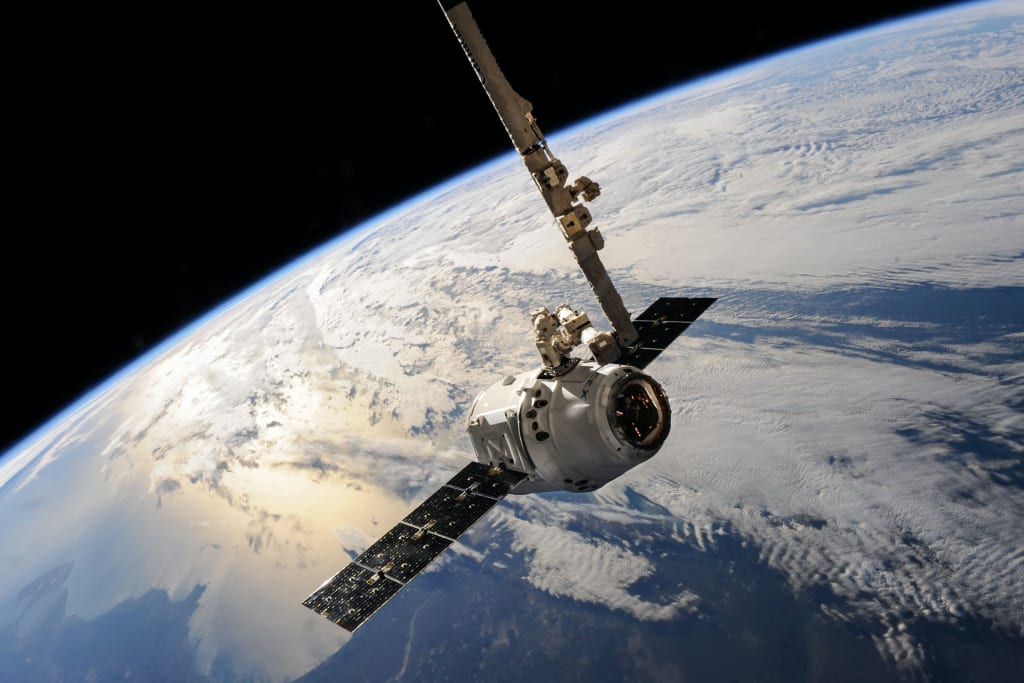
Since the dawn of time, humans have gazed up at the stars in wonder, imagining what it would be like to travel to the heavens and explore the unknown. In the past century, those dreams have become a reality, as humans have ventured beyond Earth and into space. From the early days of space exploration to the present, humans have made incredible strides in understanding and mastering the challenges of space travel.
In this blog post, we will explore the history of humans traveling to space, the physical and psychological challenges of living in space, the search for extraterrestrial life, the economics of space tourism, and the future of human space exploration.
The Evolution of Space Travel: From Sputnik to SpaceX
The first human-made object to orbit Earth was the Soviet Union's Sputnik 1, launched on October 4, 1957. This historic event ushered in the Space Age and launched a race between the United States and the Soviet Union to be the first to send humans into space. On April 12, 1961, Yuri Gagarin became the first human to orbit Earth, and less than a month later, Alan Shepard became the first American in space.
Over the next several decades, humans continued to make incredible advances in space exploration. In 1969, the United States sent Neil Armstrong and Buzz Aldrin to the moon as part of the Apollo 11 mission. This was the first time humans had ever set foot on another celestial body. The Space Shuttle program, which ran from 1981 to 2011, was another major milestone in space travel. The Shuttle was designed to be reusable, which made it more cost-effective than previous spacecraft and allowed for more frequent trips to space.
Today, space travel is no longer the exclusive domain of governments. Private companies like SpaceX, Blue Origin, and Virgin Galactic are making significant strides in space exploration and making it more accessible to everyday people. SpaceX, in particular, has made headlines in recent years with its reusable Falcon 9 rocket and Crew Dragon spacecraft. The company has sent astronauts to the International Space Station and is working on its Starship spacecraft, which it hopes will eventually take humans to Mars.
The Physical and Psychological Challenges of Living in Space
Space is an incredibly hostile environment, and humans are not naturally suited to living there. In space, there is no gravity, no atmosphere, and no protection from cosmic radiation. Even something as simple as drinking a glass of water becomes a challenge in microgravity. Astronauts must learn to adapt to this new environment, both physically and mentally.
One of the most significant physical challenges of living in space is the loss of bone and muscle mass. In microgravity, there is no need for the body to support its weight, so bones and muscles begin to weaken and deteriorate. Astronauts must exercise for several hours each day to maintain their strength and bone density.
Another physical challenge of space travel is the increased exposure to radiation. Earth's atmosphere and magnetic field protect us from the harmful effects of cosmic radiation, but in space, astronauts are exposed to much higher levels of radiation.This can increase the risk of cancer and other health problems.
The psychological challenges of living in space are just as significant as the physical challenges. Astronauts are isolated from their families and friends for months at a time and must learn to live and work in close quarters with their fellow crew members. They must also cope with the stress and uncertainty of living in a high-risk environment.
The Search for Extraterrestrial Life: What Are We Looking For?
One of the most significant questions in science is whether life exists beyond Earth. The search for extraterrestrial life is an ongoing area of research, with scientists using a variety of methods to explore the possibility of life beyond our planet. One of the primary tools used in this search is the study of exoplanets, or planets that orbit stars outside our solar system. Scientists are looking for planets that are similar in size, composition, and distance from their star to Earth, as these factors could increase the likelihood of the planet having the right conditions for life.
One of the most exciting discoveries in recent years has been the detection of liquid water on other planets and moons in our solar system. Water is essential for life as we know it, and the discovery of water on other planets and moons has led to increased interest in the search for extraterrestrial life. For example, in 2015, NASA's Mars Reconnaissance Orbiter detected evidence of liquid water flowing on Mars, leading scientists to investigate the possibility of microbial life on the planet.
Another method used in the search for extraterrestrial life is the study of extremophiles, organisms that can survive in extreme environments on Earth. Scientists study these organisms to understand how they survive in harsh conditions and whether similar life could exist on other planets. For example, in 2010, scientists discovered a bacterium that can survive in arsenic-rich environments, which has led to increased interest in the possibility of life on other planets with arsenic-rich environments.
The economics of space tourism: A new frontier for business
Space tourism is another exciting area of development in the field of space exploration. In recent years, several private companies have started to offer trips to space for wealthy individuals. The cost of these trips is still extremely high, but as the technology develops, it is likely that the cost will come down, making space tourism more accessible to the public. The development of space tourism has the potential to become a significant industry, with the potential to create jobs and generate revenue for governments and businesses.
However, it also raises important ethical and environmental questions. For example, the carbon emissions associated with space tourism could have a significant impact on the environment, and there are concerns about the impact of space tourism on the delicate balance of the Earth's atmosphere and ecosystems.
The future of human space exploration: Mars, beyond, and back again
The future of human space exploration is both exciting and uncertain. In the short term, the focus is on returning humans to the moon, with NASA's Artemis program aiming to land humans on the lunar surface by 2024. Beyond the moon, the next destination for human exploration is likely to be Mars. Several companies and government agencies are currently working on missions to Mars, with the ultimate goal of establishing a human settlement on the planet.
However, the future of human space exploration also faces significant challenges. The cost of space travel remains extremely high, and there are questions about the feasibility of establishing a human settlement on Mars. In addition, there are concerns about the impact of space exploration on the environment and the need to ensure that the benefits of space exploration are distributed fairly.
In conclusion, the history of humans traveling to space is one of incredible achievements and ongoing challenges. From the early days of space exploration to the present and into the future, humans continue to push the boundaries of what is possible in the exploration of the cosmos.
However, there are significant physical, psychological, and ethical challenges that must be addressed as we continue on this journey. The search for extraterrestrial life, the development of space tourism, and the future of human space exploration all have the potential to transform our understanding of the universe and our place within it.
About the Creator
Keep reading
More stories from writers in Earth and other communities.




Comments
There are no comments for this story
Be the first to respond and start the conversation.